|
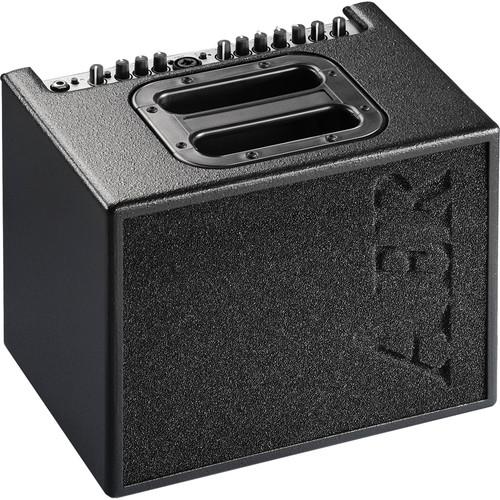
User Manual for AER Compact 60 3 Twin-Channel Acoustic Amplifier Click to enlarge the picture
 Contents of the user manual for the AER Compact 60 3 Twin-Channel Acoustic
- Product category: Guitar Amplifiers AER
- Brand: AER
- Description and content of package
- Technical information and basic settings
- Frequently asked questions – FAQ
- Troubleshooting (does not switch on, does not respond, error message, what do I do if...)
- Authorized service for AER Guitar Amplifiers
|
User manual for the AER Compact 60 3 Twin-Channel Acoustic contain basic instructions
that need to be followed during installation and operation.
Before starting your appliance, the user manual should be read through carefully.
Follow all the safety instructions and warnings, and be guided by the given recommendations.
User manual is an integral part of any AER product,
and if it is sold or transferred, they should be handed over jointly with the product.
Following the instructions for use is an essential prerequisite for protecting
health and property during use, as well as recognition of liability on the part of the manufacturer
for possible defects should you make a warranty claim. Download an official AER user manual in which you will find instructions on how to install, use, maintain and service your product.
And do not forget – unsuitable use of a AER product will considerably shorten its lifespan!
|
Product description The black Compact 60/3 Twin-Channel Acoustic Amplifier from AER is a professional, compact, and powerful amplifier system which features two input channels. Especially developed for the enhancement of acoustic instruments, it is also suitable for use with other instruments, even electrical ones. The combination XLR / 1/4" input on Channel 2 can be used to connect either a second instrument or a microphone, making the Compact 60/3 an ideal choice for singer/songwriters playing club gigs. The triple-/dual-band equalizer of the Compact 60/3 provides you with an active and high-quality sound interaction tool that supports the natural tone of instruments and voice whilst simultaneously offering you the possibility of a controlled accentuation. With all controls in mid position, the filters are set to produce a very pleasing and natural sound impression that you can "color up" by using the color filter with the effect of lowering the mids and lifting the trebles. The tone becomes more open and light, and is especially suited for fingerpicking techniques. The equalization can support or soften the effect of the color filter and allows a differentiated mids accentuation. The Compact 60/3 has a built-in digital effects processor, and with the select-switch you can choose between 4 different effects: reverb 1, reverb 2, delay, and chorus. The efx-level-control determines the intensity of the internal effects. Additional external effects units can be connected using the send and return jacks for the amp's effects loop. With the efx-pan control, the internal and external effects can be blended with the original signal. Furthermore, the effects can be switched on and off using a standard double footswitch and stereo cable (both available separately), which can be connected to the footswitch jack on the back of the amp. UPC: 846614000940 In the Box AER Compact 60/3 Twin-Channel Acoustic Amplifier (Black) Limited 2-Year Warranty Table of Contents
|
Upload User Manual
Have you got an user manual for the AER Compact 60 3 Twin-Channel Acoustic Amplifier in electronic form? Please send it to us and help us expand our library of instruction manuals.
Thank you, too, on behalf of other users.
To upload the product manual, we first need to check and make sure you are not a robot. After that, your "Submit Link" or "Upload File" will appear.
Technical parametersAER COMPACT-60/3 Specs | | | Channels | Channel 1:
High impedance, unbalanced input for instruments (pickups) and line-level sources
1/4" Mono phone jack socket
Sensitivity: 22 mV @ 33 dBV
High/low (attenuator) switch: -10 dB
Impedance: 2.2 MOhms
Equivalent input noise, A-weighted: 1 uV @ -120 dBV
Phantom power: 9 VDC / maximum 100 mA
Headroom: minimum 8 dB
Channel 2:
Switchable instrument or microphone input
Combo socket, 1 x XLR and 1 x 1/4" phone jack
Line mode:
High impedance, unbalanced input for instruments (pickups) and line-level sources
Sensitivity: 27 mV @ -31 dBV
Impedance: 1 MOhm
Equivalent input noise, A-weighted: 2.4 uV @ -112 dBV
Microphone mode:
XLR (balanced), stereo phone jack (balanced), or mono phone jack (unbalanced) input
Sensitivity: 3.3 mV @ 50 dBV
Impedance (balanced mode): 1.2 kOhms
Impedance (unbalanced mode): 2.7 kOhms
Voice filter: -10 dB at 270 Hz (referred to 10 kHz)
Equivalent input noise, A-weighted: 0.8 uV @ 122 dBV
Phantom power (XLR only): 48 V, maximum 10 mA
Headroom: minimum 8 dB | | Return | Input from external parallel effect loop, or supplementary input, before master volume
1/4" Mono phone jack
Sensitivity: 320 mV @ 10 dBV
Impedance: 20 kOhms | | | | Headphones | 1/4" Stereo phone jack socket, L/R connected
Maximum output power: 2 x 100 mW / 1000 Ohms
Input sensitivity for 2 x 50 mW / 1000 Ohms
Channel 1 input: 23 mV @ 33 dBV
Impedance: 470 Ohms
Note: Suitable for headphones with stereo phone jack. Does not work with mono phone jacks. | | Tuner | 1/4" Mono phone jack socket
Output voltage: 340 mV @ 9 dBV | | Line Out | 1/4" Mono phone jack
Output voltage: 1.4 V @ +3 dBV | | DI Output | Balanced XLR output before master, after tone controls, without effects
1 = ground
2 = positive
3 = negative
Differential output voltage: 140 mV @ 17 dBV | | Send | Output to external parallel effect loop
Before master, after tone controls
1/4" Mono phone jack
Output voltage: 1.4 V @ +3 dBV | | Footswitch | 1/4" Stereo phone jack socket for a dual footswitch
Tip = internal effect on/off
Ring = external effect on/off
Sleeve = common (ground) | | Tone Control | Channel 1:
Color -3 dB at 700 Hz, +10 dB at 8 kHz
Bass: ±8 dB at 100 Hz
Middle: ±6 dB at 800 Hz
Treble: ±8 dB at 10 kHz
Channel 2:
Bass: ±8 dB at 100 Hz
Treble: ±11 dB at 10 kHz | | Effects | Internal Effects: Reverb 1, Reverb 2, Delay, Chorus
External Effects: Parallel effects loop | | | | Amplifier Power | 60 W / 4 Ohms, DMOS, monolithic I.C.
Dynamic range, A-weighted: 92 dB | | Limiter Threshold Range | 50 W | | Signal Processing | Analog Signal Processing: Dedicated equalizer, subsonic filter, adaptive peak limiter | | Speaker System | 8.0" (200.0 mm) twin-cone full-range speaker, bass reflex enclosure | | Mains Power | Mains voltage: 100, 120, 230, or 240 VAC, 50 to 60 Hz
Power consumption: maximum 120 W | | Fuse | Mains: 5 x 20 mm
T 1 A L / 250 V for 230 and 240 V models
T 2 A L / 250 V for 100 and 120 V models | | | | Cabinet | 0.47" (12.0 mm) birch plywood | | Finish | Water-based acrylic | | Dimensions | 10.2 x 12.8 x 9.3" (260.0 x 325.0 x 235.0 mm) | | Weight | 14.3 lb (6.5 kg) | | | | Package Weight | 21.15 lb | | Box Dimensions (LxWxH) | 16.6 x 14.0 x 13.3" |
Rating70% users recommend this product to others. And what about you?

This product has already been rated by 31 owners. Add your rating and experience with the product.
Discussion
 Ask our technicians if you have a problem with your settings,
or if anything is unclear in the user manual you have downloaded.
You can make use of our moderated discussion.
The discussion is public and helps other users of our website who may be encountering similar problems.
Ask our technicians if you have a problem with your settings,
or if anything is unclear in the user manual you have downloaded.
You can make use of our moderated discussion.
The discussion is public and helps other users of our website who may be encountering similar problems.
The discussion is empty - enter the first post
Post a new topic / query / comment:
|
|
|
| Request for user manual |
You can’t find the operation manual you are looking for? Let us know and we will try to add the missing manual:
I’m looking for a manual / Request for manual
Current requests for instruction manuals:
Call Of Duty World War Two For Xbox...
controller stratus XL...
stratus XL...
smart whatch serie S11 42mm...
Allen & Heath SQ-6 manual...
|
| Discussion |
Latest contributions to the discussion:
AEW R 4100
Name: MAURICIO ANGARITA
Audio-Technica AEW-R4100 UHF Diversity Receiver for
AEW R 4100 has the mute function blocked and does not allow audio to pass. I tried several times to turn off the mute from the transmitter but it does nothing, the mute stays on. Solution?
Thank you...
Instructions for assembling the 2015 Forecast Image Master Consoles GC3-A
Name: mike elam
Forecast Consoles GC3-A ImageMaster Editing Console
Looking for instructions for assembling this console. ...
EMPTY TONER ERROR MESSAGE AFTER REPLACING TONER
Name: LINDA BAD YELLOW EYES
Brother TN223BK Standard-Yield Toner
I HAD TO CHANGE OUT ALL THREE TONERS DUE TO LEAKS IN THE YELLOW AND CYAN. AFTER I REPLACED THEM, THE MACHINE KEEPS GIVING ME AN EMPTY TONER ERROR MESSAGE. HELP!!...
PS480D 20/24 pin Switching 480W Power Supply
Name: swkargo
Logisys 480W Power Supply
This item states in can run -5vdc .It is NOT listed on the board or I beleive is r4 is missing the resitior. Any body have thid issue. Shawn
...
Help needed
Name: Ann Carter
SanDisk 1TB Extreme Portable USB 3.1
When I click the link to download the user manual for my Sandisk Extreme external hard drive, it gives me the manual for the LG Cricket. Can you please change the link so I can download the Sandisk manual and begin using this drive? Thank you....
|
|