|
User Manual for Boris FX Sapphire 11 Continuum 11 Bundle for OFX Click to enlarge the picture
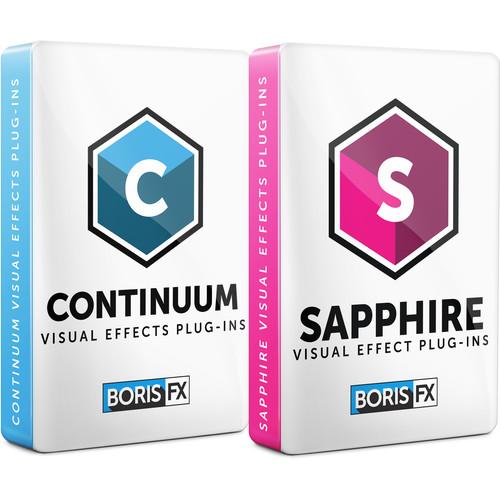 Contents of the user manual for the Boris FX Sapphire 11 Continuum 11
- Product category: Video Editing Plug-Ins Boris FX
- Brand: Boris FX
- Description and content of package
- Technical information and basic settings
- Frequently asked questions – FAQ
- Troubleshooting (does not switch on, does not respond, error message, what do I do if...)
- Authorized service for Boris FX Video Editing Plug-Ins
|
User manual for the Boris FX Sapphire 11 Continuum 11 contain basic instructions
that need to be followed during installation and operation.
Before starting your appliance, the user manual should be read through carefully.
Follow all the safety instructions and warnings, and be guided by the given recommendations.
User manual is an integral part of any Boris FX product,
and if it is sold or transferred, they should be handed over jointly with the product.
Following the instructions for use is an essential prerequisite for protecting
health and property during use, as well as recognition of liability on the part of the manufacturer
for possible defects should you make a warranty claim. Download an official Boris FX user manual in which you will find instructions on how to install, use, maintain and service your product.
And do not forget – unsuitable use of a Boris FX product will considerably shorten its lifespan!
|
Product description Enjoy close to 500 advanced visual effects filters and thousands of presets with the Sapphire 11 + Continuum 11 Bundle for OFX from Boris FX. Both applications are compatible with select OFX applications while Sapphire also works with Adobe After Effects and Premiere. - Sapphire 11 for Adobe/OFX (with 1 Year of Upgrades & Support, Download) Boris FX Sapphire 11 for Adobe/OFX features 200+ advanced and highly stylized effects, transitions, and looks and over 3000 presets for all aspects of your films and videos. It's compatible with Adobe After Effects and Premiere, and with DaVinci Resolve, Fusion, Nuke, Vegas Pro, Sony Catalyst, Baselight, ToonBoom Harmony, SAM Rio, EDIUS Pro, and Silhouette. It can be used in all host applications at the same time as long as they are on the same computer.
Combining everything from the individual Sapphire 11 Units, Sapphire 11 provides large collections of Adjust, Blur and Sharpen, Distort, Lighting, Render, Stylize, and Transitions filters. Many of these are considered must-haves in the film, TV, and commercial production industries, with the Lighting effects perhaps the most widely relied on.
The entire package is resolution-independent and can be used on footage in any format, including 8K and above. All effects also use full floating-point processing for improved image quality and full 32-bit HDR support.
Sapphire 11 also integrates the Academy Award-winning Mocha planar tracking and masking engine right into the interface. You can now launch Mocha right from within most of the included effects and create and track a mask. Mocha offers multiple ways of applying masks, including simple isolation and full rotoscoping.
After Effects and Premiere support Sapphire's built-in, sophisticated Sapphire Builder, which allows you to create and save your own complex custom effects using a simple workflow. The Builder is a node-based effect compositor where you can create from scratch, stack and connect other effects/transitions, and control every aspect of an effect using extensive parameter sets and numerous on-screen widgets. The Builder is now filtered by common tasks, such as "color-correction" and "lighting," rather than by effect name, for much easier browsing.
Sapphire 11 for Adobe/OFX with 1 Year of Upgrades & Support includes one year of upgrades to new releases of the software as well as phone/email technical support. Note: 1) Mocha tracking is only supported in the Studio version of DaVinci Resolve 14. 2) Although Autodesk Flame is one of the OFX applications that Sapphire 11 works with, it is not supported in the Adobe/OFX version. It is only compatible via the individual Sapphire 11 for Autodesk Flame version or in the Adobe/Avid/Flame/OFX version. New Features - Mocha Planar Tracking & Masking
- Sapphire 11 features the Mocha planar tracking and masking tool integrated right into the interface. You can now launch Mocha right from within most of the included effects and create and track a mask. Mocha offers multiple ways of applying masks, including simple isolation and full rotoscoping.
- New Effects & Transitions
- Sapphire 11 adds over 50 multi-effect presets and transitions created by professionals in the Effect Builder. These advanced presets are like totally new effects and you can drag-and-drop them onto a project or customize them as you like.
- Performance Improvements & Effect Enhancements
- With every major release of Sapphire, CPU and GPU benchmarks are scrutinized and an effort is made to increase overall speed and performance. Sapphire 11 also implements feedback-based enhancements to several classic Sapphire effects and transitions, such as the Swish3D transition preset.
All Effects Adjust - Monochrome
- Generates a monochrome version of the source clip using adjustable weights for the red, green, and blue channels. This can simulate the use of a color filter applied to the lens of a black and white camera. For example, use more red weight to darken blue sky areas of the input. The weights are scaled so they sum to 1 before being used to reduce overall brightness changes when they are adjusted.
- ClampChroma
- Reduces the chrominance of the input clip if necessary so it is not above a specified maximum. This effect can be used to make broadcast-safe colors. It can also be used to scale the chrominance, clamp the luminance, or scale the luminance.
- Tint
- Tints the dark and light regions of the input clip towards given colors. The dark colors are tinted by the Tint Dark color, and the brighter colors are tinted by the Tint Lights color.
- Threshold
- Sets the color channels of the source clip to Full On or Full Off using a given softness and threshold. This can be used to increase the contrast of each color channel independently.
- ShowBadColors
- Identifies all pixels that fall outside a given color range, and flags them with the same color so they can be seen easily.
- QuadTone
- Performs an interpolation between four specified colors using the brightness of the source clip.
- TriTone
- Performs an interpolation between three specified colors using the brightness of the source clip.
- Invert
- Inverts the colors of the source clip, so black becomes white, and white becomes black. This can optionally also invert luma, chroma, RGB and alpha channels independently and do some basic color correction on the inverted result.
- HueSatBright
- Adjusts the hue, saturation, brightness, and/or offset of the input clip.
- HotSpots
- Generates a hotspot image containing areas of the source clip brighter than a given threshold. The colors of the hotspots should match the original source. This can be used for increasing contrast or finding the bright areas of a clip, but without changing the color saturation or hue of the result.
- Gamma
- Applies a gamma correction to the input clip. The red, green, and blue channels can be adjusted independently. From Gamma just causes the inverse effect of adjusting Gamma.
- DuoTone
- Performs an interpolation between two specified colors using the brightness of the source clip.
- ChannelSwitcher
- Reorders the RGBA channels of the source clip. Allows mapping any source channel into any output channel, with scaling and offset for each output channel.
Blur and Sharpen - RackDefocus
- Simulate a real, defocused camera lens and preserve delicate highlights.
- Beauty
- Apply smoothing, de-aging, color correction, soft focus, and glow to skin regions.
- Blur
- Produce a high-quality blur effect without sacrificing speed or interactivity.
- ZBlur
- Blurs areas of the source clip by different amounts using depth values from a ZBuffer input.
- BlurMotion
- Add realistic motion blur to any clip with full control over angle, size, direction, and complexity.
- EdgeAwareBlur
- Blur the fine textures of an image while preserving crisp, defined edges.
- Deband
- Smooth out a clip by removing banding artifacts and diffusing pixels across the banded areas.
- Sharpen
- Amplify edges and fine details in your footage to create crisp and defined edges.
- GrainRemove
- Smooths the source clip while retaining the edges.
- Convolve
- Convolves a source image with a kernel.
- ZConvolve
- Convolves areas of the source clip using a kernel which is made larger or smaller using depth values from a ZBuffer input.
- ZDefocus
- Defocuses areas of the source clip by different amounts using depth values from a ZBuffer input.
- SoftFocus
- Combines a blurred version of the source with the original to give a soft focus effect.
- Median
- Applies a median filter to the source image, useful for cleaning up isolated spots and noise.
- DefocusPrism
- Defocuses the color channels of the source clip into rings of different widths.
- BlurMoCurves
- Performs a motion blur and optionally transforms the source clip using the animated curves of the Z Dist, Rotate, and Shift parameters. If these parameters are constant, no motion blur will occur.
- BlurDirectional
- Blurs the source clip in a given direction using a gaussian, triangle, or box filter. It can also blur each channel by different amounts.
- BlurChroma
- Separates the source into luminance and chrominance components, blurs the chrominance and/or the luminance independently, and recombines them. You can also scale the luma and chroma independently to enhance or remove either.
- BlurChannels
- Blurs each channel of the source clip by an arbitrary amount using a gaussian, triangle, or box filter.
Distort - Distort
- Warp the source clip to generate optical glass-like effects.
- Shake
- Shake your video on the x, y, and z axis in three different styles: twitchy, jumpy, and standard.
- WarpCornerPin
- Performs a 3D perspective warp of the source image to align the corners with the four indicated points.
- WarpPerspective
- Transforms the source clip onto a 3D plane with perspective.
- WarpChroma
- Separate your footage into multi-colored bands and warp them by different amounts.
- InfiniteZoom
- Zoom into a repeating copy of an image to create looks such as endless hallways or downward spirals.
- DistortChroma
- Generate optical glass-like effects as if an image were viewed through a textured prism.
- DistortRGB
- Separate and warp the red, green, and blue color channels of an image.
- ZBlur
- Adjust the depth of field of 3D modeled objects and scenes without having to re-render from a 3D application.
- WarpMagnify
- Magnifies an elliptical region of the source to create a glass lens refraction effect.
- WarpVortex
- Twists the source clip into a vortex around a given center location.
- WarpWaves
- Warps the source clip by a wave pattern.
- WarpWaves 2
- Warps the source clip using two sets of overlapping wave patterns.
- WarpFishEye
- Expands the center of the source clip as if viewed through a fish-eye lens.
- WarpPolar
- Warps the source clip into a rounded disk shape.
- DistortBlur
- Blurs the source input clip in the direction of the gradient of the Lens input clip.
- WarpRepeat
- Transforms the source input multiple times and averages the results.
- WarpPuff
- Warps the source clip based on its gradient.
- WarpBubble
- Warps the source clip by a smooth noise function. This can be used to create heat diffusion or under water types of effects.
Lighting - Glow
- Generate natural, organic light from the brighter areas of your video.
- GlowDarks
- Areas of the source clip darker than the given threshold are blurred and combined with the input clip to give a deep smoky look.
- ZGlow
- Glows areas of the source clip with varying widths depending on the depth values from a ZBuffer input.
- EdgeRays
- Generate high-quality beams of light that emit from the edges of objects within your video footage.
- LensFlare
- Generate photorealistic and stylized lens flares or build your own custom flare.
- LightLeak
- Render sheer, abstract patterns of color that simulate light leaking through gaps in a camera body.
- Flashbulbs
- Simulates lots of flashbulbs going off, like a stadium scene with many small flashes or celebrity red carpet with a few large flashes.
- Rays
- Generate high-quality beams of light that emit from the brightest parts of your footage.
- Glare
- Composite halos and glint rays into your video by detecting the brightest areas of the frame.
- Glint
- Generate star-shaped glimmers in brighter areas of your video.
- EmbossDistort
- Emboss or concave your video by using a custom relief map. Create large, bold, bumpy distortions or thin, glassy indentations.
- EmbossGlass
- Emboss or concave your video using a custom relief map while adding a vibrant chroma distortion.
- EmbossShiny
- Emboss or concave your video using a custom relief map while adding lighting effects to bring out highlights, reflections, and shadows.
- SpotLight
- Highlight a specific area of your footage with a range of harsh and soft spotlights.
- BokehLights
- Generates random, defocused lights that move around the screen.
- GlowRings
- Generates glows of colored rings around the areas of the source clip that are brighter than the given threshold.
- GlowRainbow
- Generates rainbow-colored glows based on the distances from the edges of the source input.
- GlowEdges
- Creates glowing light from the edges of the source clip. This differs from the default Glow in that small or thin objects generate as much glow around their edges as large objects. Also, the glow colors are not affected by the colors of the source clip.
- Streaks
- Creates motion blurs in the bright areas of the source causing streaks between the From and To transformations. This can be used to create an extended film exposure effect or simulate soft beams of light.
- GlowOrthicon
- Darkens the source clip at areas that are brighter than the given threshold to give an 'orthicon' or 'dark glow' look.
- GlowDist
- Generates glows based on the distances from the edges of the source input. Any edges in the input image where the brightness crosses the given threshold value will generate an equally bright glow into the darker side of the edges.
- GlintRainbow
- Generates star-shaped, rainbow-colored glints at locations where the source clip is brighter than the threshold.
- GlowNoise
- Generates glowing light from areas of the source clip that are brighter than the given threshold. The glows are also attenuated by a solid noise texture to give them a noisy or grainy effect.
Render - Aurora
- Generates a two-colored swirl of light along a user-controlled spline reminiscent of the Northern Lights.
- Caustics
- Simulates the patterns created when light rays are reflected or refracted by a curved surface.
- Grunge
- Add natural textural elements to dirty up a shot.
- Zap
- Create photorealistic lighting with this versatile tool.
- Luna
- Create photorealistic renderings of the moon that feature accurate lunar cycles.
- NightSky
- Create accurate star-fields by inputting date, time, and location.
- MuzzleFlash
- Simulates the flash and smoke that is generated when a gun is fired.
- TextureFlux
- Create abstract textures of fluctuating liquid or cellular patterns.
- TextureFolded
- Create an abstract texture resembling folded cloth or liquid that can be animated.
- TextureTiles
- Create animated backgrounds and textures from geometric patterns.
- Clouds
- Generate a noise texture that recreates the look of clouds to enhance or replace skies.
- Gradient
- Quickly create a smooth color gradient, which can be combined with the background clip.
- GradientMulti
- Generate a quick and easy multiple color gradient.
- GradientRadial
- Generate a quick and easy circular color gradient.
- Sparkles
- Create a field of sparkling glint effects.
- TestureSpots
- Creates a field of spots that can be distorted and animated. The warp speed parameter causes the spots to be distorted over time by a random warping pattern.
- TextureMoire
- Creates an abstract moire texture by adding together two patterns of concentric rings.
- TextureNeurons
- Creates an abstract texture resembling moving nerve cell tendrils.
- TextureNoiseEmboss
- Creates an abstract texture by applying a EmbossShiny effect to a procedurally-generated noise texture.
- TextureNoisePaint
- Creates an abstract texture by applying an AutoPaint effect to a procedurally-generated noise texture.
- TexturePlasma
- Creates an abstract texture resembling an electrical plasma effect.
- TextureWeave
- Creates an abstract texture resembling perpendicular woven strands.
- Grid
- Generates a grid of lines and combines it with a background clip.
- TextureMicro
- Generates a procedural texture that looks a bit like a surface of a rough object under an electron microscope.
- TextureChromaSpiral
- Creates an abstract texture by applying a WarpChroma effect to a procedurally-generated noise texture.
- Shape
- Draws a shape into the image. It provides a wide variety of shapes, including polygons, circles, stars, flower shapes, and swirled starfish shapes.
Stylize - FilmEffect
- Make your video footage look like it was shot on film with realistic film exposure and processing looks.
- FilmDamage
- Give your video a nostalgic archival film look by adding many different damage elements.
- TVDamage
- Give your video a retro television look by applying a variety of transmission issues.
- DigitalDamage
- Add a glitchy, digital transmission error look to your videos.
- ScanLines
- Add a scan line pattern to your video to create a retro TV look.
- BleachBypass
- Simulate a film processing technique in which silver is not removed from the negative.
- StripSlide
- Cut your video into strips that slide off the screen to reveal a background image.
- RomanTile
- Add a slate textured mosaic overlay of hexagons or squares to your footage.
- Brush
- Transform your video footage into a stylish hand-painted work of art.
- MuzzleFlash
- Accurately simulate the flash and smoke of a variety of different caliber guns.
- VintageColor2Strip
- Simulate the warm vintage two-strip film process from the 1920s.
- VintageColor3Strip
- Simulate the color 3-strip film process from 1935 through 1955.
- Grain
- Add colored or black and white grain to give your video a shot-on-film look.
- EdgeDetect
- Create looks like chalk outlines, cartoons, or even neon lights.
- Vignette
- Adjust the border areas of your video to create a vignette effect.
- FlysEyeCircles
- Breaks the image into circle shaped tiles and transforms the image within each shape to create a fly's eye view effect.
- AutoPaint
- Generates a 'paint-brushed' version of the source clip. Use the Frequency and Stroke Length parameters to adjust the density and shape of the brush strokes.
- Kaleido
- Reflects the source clip into a kaleidoscopic pattern of triangles, squares, diamonds, or octagonal shapes.
- KaleidoPolar
- Warps the source clip around in a disk shape and reflects radially as if viewed through a reflecting cylinder.
- KaleidoRadial
- Simulates a traditional 2 or 3-mirror kaleidoscope.
- ZebrafyColor
- Modulates the brightness of the source clip with sinusoids for each color channel to give a color striped effect.
- Zebrafy
- Modulates the brightness of the source clip with a sinusoid to give a black and white solarized look.
- TileScramble
- Breaks the image into rectangular tiles and shifts the image within each tile to create an effect like a wall of small randomly oriented mirrors reflecting the source image.
- ScanLinesMono
- Monochrome version of ScanLines. Creates a version of the source clip with a scan lines pattern resembling a black and white TV monitor.
- PsykoStripes
- Combines the source clip with a stripe pattern and then passes them through a colorization process.
- PsykoBlobs
- Combines the source clip with a field of 'blob' shapes and then passes them through a colorization process.
- PseudoColor
- Colorizes the source image.
- Posterize
- Generates a posterized version of the input by limiting the number of colors in the source, and replacing detailed texture and noise with solid colors.
- Mosaic
- Generates a pixelated version of the source clip.
- JPEGDamage
- Creates a version of the source input that is subjected to JPEG compression artifacts and errors.
- HalfToneRings
- Generates a duotone version of the source clip using a repeating pattern of concentric rings.
- HalfToneColor
- Generates a version of the source clip using a colored dot pattern.
- HalfTone
- Generates a halftone version of the source clip using a black and white pattern of dots.
- GrainStatic
- Adds color and/or monochrome random noise of given amplitudes to every pixel of the source clip.
- FlysEyeRect
- Breaks the image into rectangle shaped tiles and transforms the image within each shape, to create a fly's eye view effect.
- FlysEyeHex
- Breaks the image into hexagon shaped tiles and transforms the image within each shape, to create a fly's eye view effect.
- Etching
- Generates a version of the source clip using two sets of black and white lines of varying thickness to give an 'etching' or 'lithograph' look.
- EmbossShiny
- Embosses the source clip using the Bumps input as a relief map.
- EmbossGlass
- Embosses and warps the source image using the bumps input as a relief map and lens image.
- EmbossDistort
- Embosses and warps the source clip using the bumps input as a relief map and also distorts the result using the bumps as a 'lens' image.
- EdgeColorize
- Assigns different colors to the edges of the source clip depending on their direction.
- DogVision
- Generates a dual color-channel version of the input image, as might be perceived by the limited color vision system of dogs.
- CartoonPaint
- Auto-generates a version of the source clip with a cartoon paint-brushed look.
- Cartoon
- Generates a version of the source clip with a cartoon look.
- BandPass
- Generates an X-ray-like effect using a band-pass filter.
- Solarize
- Inverts the colors of the input clip that are brighter than the threshold value, to create a 'solarization' effect.
- Sketch
- Generates a version of the input with a hand drawn sketched look.
- Crosshatch
- Simulates a pen-sketch crosshatched look using overlapping strokes.
Transitions - DissolveGlow
- Transitions between two input clips using a bright glowing flash.
- DissolveBlur
- Transitions between two input clips while blurring each.
- SwishPan
- Transitions between two input clips by giving the appearance of a quick pan.
- FilmRoll
- Transitions between two clips by rolling one off screen vertically and rolling the other on.
- DissolveShake
- Transitions between two clips by applying a shaking motion along with a quick dissolve.
- DissolveLensFlare
- Transitions between two input clips using an animated lens flare.
- StripSlideTransition
- Transitions between two clips by breaking them into strips and sliding them off the screen one at a time to reveal the incoming clip.
- TVChannelChange
- Transitions between two input clips by simulating a channel change on an old television set.
- WipeWedge
- Performs a wipe transition between two input clips using a wedge shape.
- WipeTiles
- Performs a wipe transition between two input clips using a pattern of growing or shrinking hexagons, triangles, diamonds, or stars.
- WipeStar
- Performs a wipe transition between two input clips using a star shape.
- WipeStripes
- Performs a wipe transition between two input clips using a series of stripes.
- WipeRings
- Performs a wipe transition between two input clips using a pattern of concentric rings.
- WipeRectangle
- Performs a wipe transition between two input clips using a growing or shrinking rectangle.
- WipePointalize
- Transitions between two input clips by adding brush-like polygon shapes from one clip onto another in a semi-random order.
- WipePlasma
- Performs a wipe transition between two input clips using a plasma texture with moving tendrils.
- WipePixelate
- Transitions between two input clips by adding blocks of pixels of one clip onto another in a semi-random order.
- WipeMoire
- Performs a wipe transition between two input clips using a pattern of combined concentric rings.
- WipeLine
- Performs a simple line wipe transition between two input clips.
- FlutterCut
- Transitions between two clips by rapidly cutting back and forth between them, optionally inserting solid colored or inverted frames as well.
- CardFlip
- Transitions between two clips by sliding or spinning the outgoing clip to reveal the incoming clip behind it.
- WipeFourWedges
- Performs a wipe transition between two input clips using a pattern of four wedges merging into an 'X' shape.
- WipeFlux
- Performs a wipe transition between two input clips using a flux texture with mostly round cells.
- WipeDoubleWedge
- Performs a wipe transition between two input clips using two wedge shapes.
- WipeDots
- Performs a wipe transition between two input clips using a grid of growing or shrinking dots.
- WipeDiffuse
- Wipes between two input clips with a pixel-diffusion process performed within the transition area.
- WipeClouds
- Transitions from the first clip to the second using a moving cloud texture.
- WipeClock
- Performs a clock wipe transition between two input clips.
- WipeChecker
- Performs a wipe transition between two input clips using a grid of growing or shrinking checkers.
- WipeCells
- Performs a wipe transition between two input clips using a pattern of procedurally generated cellular shapes.
- WipeBubble
- Wipes between two input clips with a bubble-warp process performed within the transition area.
- WipeBlobs
- Performs a wipe transition between two input clips using a pattern of blobs generated by a noise function.
- WipeWeave
- Performs a wipe transition between two input clips using a texture resembling perpendicular woven strands.
- Swish3D
- Dissolves between two input clips while performing 3D moves on each.
- DissolveZap
- Transitions between two clips using animated lightning bolts.
- DissolveWaves
- Transitions between two input clips using a waves warping function.
- DissolveVortex
- Transitions between two input clips using a vortex warping function.
- DissolveSpeckle
- Transitions between two input clips using a speckled noise pattern.
- DissolveStatic
- Transitions between two input clips using random pixel static.
- DissolveTiles
- Transitions between two input clips while breaking each up into tiles and scrambling them.
- DissolveStatic
- Transitions between two input clips using random pixel static.
- DissolveSpeckle
- Transitions between two input clips using a speckled noise pattern.
- DissolveRays
- Transitions between two input clips using animated rays.
- DissolvePuddle
- Transitions between two input clips while warping by a circular pattern of waves.
- DissolveLuma
- Transitions between two input clips using a pattern derived from their luminance.
- DissolveGlintRainbow
- Transitions between two input clips using a bright glowing glint.
- DissolveGlint
- Transitions between two input clips using a bright glowing glint.
- DissolveGlare
- Transitions between two input clips using animated glares.
- DissolveFlashblulbs
- Simulates lots of flashbulbs going off while dissolving between two clips.
- DissolveFilm
- Transitions between two input clips using a film dissolve with selectable gamma.
- DissolveEdgeRays
- Transitions between two input clips using animated edge rays.
- DissolveDistort
- Transitions between two input clips while distorting each using the gradient of the other.
- DissolveDiffuse
- Transitions between two input clips by scrambling the pixels of the inputs within an area determined by max amount.
- DissolveDefocus
- Transitions between two input clips while defocusing each.
- DissolveBubble
- Transitions between two input clips using a bubble warping function.
- WipeCircle
- Performs a wipe transition between two input clips using a growing or shrinking circle.
- Swish3DBat
- Customized swish.
- Continuum 11 for OFX (with 1 Year of Upgrades & Support, Download) Boris FX Continuum 11 for OFX is a comprehensive visual effects and compositing plug-in collection. It consists of all 17 individual Continuum 11 Units and features approximately 240 filters and thousands of presets, which are customizable. If you customize a preset, you can save the personalized version as a new preset that can be recalled later. Many of the filters also feature a built-in PixelChooser with integrated Mocha planar tracking that allows for greater control over which areas of the image the filter should affect.
Continuum 11 for OFX is a multi-host plug-in compatible with DaVinci Resolve, Nuke, HitFilm Pro, and Vegas Pro. It can be used in all host applications at the same time as long as they are on the same computer. This is a permanent version of Continuum 11 for OFX and includes one year of upgrades to the latest releases and phone/email technical support.
Between all the different filters you can create 3D titles, logos, and shapes; apply various art styles; create various blurs and manipulate focus; make grading and toning adjustments; add film looks; restore images; apply compositing and cleanup; simulate most types of light; manipulate motion data; design realistic particle effects; display images in different perspectives, such as shattered and dispersed into space; add stylized visual effects, like damaged TV looks; add textures; manipulate time with loop and other effects; add transitions; apply common VFX solutions for VR/360 video; and distort and morph video in various ways.
The new features in Continuum 11 are: a Primate Studio blue screen/green screen toolset filter, which lets you easily chroma key and composite; a VR/360 filter set; a Broadcast Safe filter; and 100 new presets in the Title Studio filter. See more about these features in the Filters list below.
For managing and browsing all the effects presets, Continuum 11 features the FX Browser, which can be accessed within each filter, as well as independently wherein you can browse the entire presets library. When you want to check out what a particular effect will look like on your footage, simply select a preset in the FX Browser, and Continuum 11 will provide a preview of the effect on your actual clip as opposed to a sample poster frame.
Continuum 11 for OFX can be used in your host application on Mac or Windows, as supported by the host. Note: Some of the filters may not work within every host application. Filters 3D Objects - Title Studio (100 New Presets)
- Title Studio is a 3D titling and animation plug-in that allows quick and easy creation of 2D/3D titling and motion graphics (including C4D model import) directly inside the host of your choice. Title Studio supports a custom UI to enable a vastly richer motion graphics toolset than can be achieved with just native host parameters. Yet, in addition to that flexibility and power, it offers very simple browsing, applying, and customizing pre-made animation presets/templates using the FX Browser (not supported in Apple hosts). Title Studio adds 100 new presets and new 3D render options, including depth-of-field.
- Extruded EPS
- Extruded EPS enables you to import, extrude, and animate 2D vector artwork using either the native Adobe Illustrator .ai or .eps format. You have the option to retain the original colors of the imported eps/ai file or create your own using the built-in material shader controls.
- Extruded Spline
- Extruded Spline generates true 3D primitive shape objects with separate control options for each of the 4 sides of the extruded object.
- Extruded Text
- Extruded Text generates true 3D text objects with separate control options for each of the 4 sides of the extruded object.
- Layer Deformer
- Layer Deformer allows you to transform, warp, and deform any image clip or layer into 3D primitive shapes, which can be animated in 3D space with full automation and manual override over the 3D animation.
- Type-On Text
- Type-On Text enables you to generate true 3D type-on text animations, with full automation for the type-on / type-off effect and manual override controls for the animation timing.
Art Looks - Cartooner
- Cartooner allows you to draw an outline around the edges in one of an image's color or alpha channels. You can also use the Cartooner filter to turn a video source into an outline animation.
- Median
- Median makes each pixel look like the majority of its neighboring pixels. It produces a smeary, painterly look, but with sharp edges (at neighborhood boundaries). Median also reduces noise by eliminating "spikes" or pixels that are very different from their neighbors (also referred to as "salt and pepper noise").
- Artist's Poster
- Artist's Poster creates a posterized effect by reducing the image to eight "pure" colors (Red, Green, Blue, Cyan, Magenta, Yellow, Black, and White) and processing each color separately. At its default settings, the filter outputs the NTSC-safe color that is closest to each of these eight colors.
- Bump Map
- Bump Map is used to create 3D detail on an image based on the luminance information in the image. The luminance value of each pixel of the image creates height, with brighter pixels creating more height.
- Cartoon Look
- Cartoon Look is designed to emulate the look of rotoscoped animation, popularized by the film remake of "A Scanner Darkly" and also seen in broadcast TV advertisements for the Charles Schwab company.
- Halftone
- Halftone simulates the look of printed material by converting the image to simulated halftone dots. Print images are comprised of a rosette pattern of colored ink dots. To avoid moire or interference patterns, the dots are printed at different angles. This process is known as halftone screening.
- Charcoal Sketch
- Charcoal Sketch takes input from an image clip and converts this into a charcoal sketch style animation. In addition to advanced controls to fine-tune the result of contouring and line generation, the filter allows for detailed control over line softness, line style, and line threshold.
- Pencil Sketch
- Pencil Sketch takes input from an image clip and converts this into a hand-drawn pencil-sketch-style animation. In addition to advanced controls to fine-tune the result of contouring and line generation, the filter allows for detailed control over line softness, line style, and line threshold.
- Spray Paint Noise
- Spray Paint Noise generates a flat spray paint color on the image.
- Tile Mosaic
- Tile Mosaic is designed to emulate the look of an image that has been formed of cut ceramic or glass tiles. This filter is based on hardware-assisted rendering technology and will deliver a high level of performance when paired with a supported graphics card. The tile patterns that this filter is capable of generating can be arranged in either a symmetric grid pattern, as one might find in a modern home, or they can be cut into random ragged shapes, with the amount of jaggedness controlled by the algorithm at the heart of this filter.
- Water Color
- Water Color takes input from an image clip and converts this into a water-color stylized animation. In addition to advanced controls to fine-tune the result of contouring and line generation, the filter allows for detailed control over line softness, line style, and line threshold.
Blur and Sharpen - Directional Blur
- Directional Blur blurs the image by displacing it in one direction. The effect is similar to how a photograph of a speeding object appears if taken with a slower shutter speed. In addition to advanced controls to fine-tune the quality of the blur, the filter allows for detailed control over Blur Amount, Angle, Thin, Spread, and Blur Threshold.
- Fast Lens Blur
- Fast Lens Blur is a 100% GPU-accelerated (OpenCL) filter that emulates a lens blur defocus/rack-focus effect where out-of-focus highlights of an image clip take on the shape of the lens diaphragm. When a lens is used with its aperture fully open, the out-of-focus highlights are typically in the shape of a circle, however, when the lens is stopped down the highlights turn into multi-sided shapes. This filter includes a pop-up that can be used to match the different looks that can be achieved in the physical world based on the lens aperture setting. Fast Lens Blur also includes a comprehensive depth-of-field (Z-Depth) option whereby a separate image can be used to control the depth and position of the focus field.
- Gaussian Blur
- Gaussian Blur implements a popular blur algorithm that produces very smooth blurs. Gaussian Blur softens the image by averaging each pixel with its neighboring pixels. The word "Gaussian" refers to the bell- shaped curve commonly used in statistical analysis. The shape of this curve determines how much each averaged pixel contributes to the output.
- Lens Shape
- Lens Shape emulates a lens blur defocus/rack-focus effect where out-of-focus highlights of an image clip take on the shape of the lens diaphragm, however, Lens Shape takes an image input and uses this for the highlight shape. When a lens is used with its aperture fully open, the out-of-focus highlights are typically in the shape of a circle, however, when the lens is stopped down the highlights turn into multi-sided shapes. This filter includes a pop-up that can be used to match the different looks that can be achieved in the physical world based on the lens aperture setting. Fast Lens Blur also includes a comprehensive depth-of-field (Z-Depth) option whereby a separate image can be used to control the depth and position of the focus field.
- Motion Blur
- Motion Blur creates a realistic blur on the motion in an image, simulating the effect of shooting a moving object on film. The blur is based on the motion of the pixels in the image. For example, you can apply Motion Blur to a clip of a speeding car and the car's motion would blur while the background would not. The blur is most pronounced when the object moves quickly and more subtly when it moves slowly. Motion blur is not visible if the image is static. Based upon optical flow technology, this filter examines past and future frames to determine the motion of the pixels in the image. Depending upon the selected settings, a blur or a smear is applied to the pixels that move from one frame to the next. You can use an image in the timeline as a source for motion and then apply the motion from the chosen image to the filtered track.
- Pyramid Blur
- Pyramid Blur emulates the look of shooting in soft focus or with lens diffusion. It allows you to blur the horizontal and vertical components of the image separately. Pyramid Blur uses a refined algorithm that speeds rendering approximately 20 - 40 percent.
- Radial Blur
- Radial Blur creates a blur around a specific point, simulating the effect of a zooming or rotating camera. The Amount option specifies the amount of blur, depending on the selection for Type. For a Spin blur, which applies blurs in circles around the center point, the Amount value indicates the degree of rotation. For a Zoom blur, which applies blur that radiates out from the center point, the Amount value specifies the degree of radial blurring.
- Spiral Blur
- Spiral Blur creates a blur or smear that appears as though it is spiraling toward the center of the image. In addition to the ability to adjust the amount of blur, users are able to fine-tune other aspects of the filter: Blur Type, Center, and Spin Angle.
- Unsharp Mask
- Unsharp Mask uses a classic image sharpening technique similar to the method used to sharpen film images. The source image is blurred, and the blurred image is then subtracted from the source. The resulting image is sharper and has more contrast. Unsharp Mask sharpens areas in an image with significant color changes by adjusting the contrast of edge details to create the illusion of image sharpness. This filter is useful for refocusing an image that appears blurry due to scanning, poor lighting, or other factors.
- Z-Blur
- Z-Blur uses a Z-map image to emulate a rack focus effect. Move the focal plane through the source image, using the Z-map to control the focus. Adjust the focal point, depth-of-field, and blur parameters to fine-tune the area of the image to blur. You can also set a channel from the image clip, then use that channel to control the Z-blur effect. This type of effect is most noticeable in real life with a long focal lens, such as a 105mm or greater zoom lens.
Color and Tone - Correct Selected Color
- Correct Selected Color allows you to adjust a specified range of colors in the source image, leaving colors outside the range unaffected. To correct two or more separate colors within an image, apply the Correct Selected filter as many times as needed.
- Tritone
- Tritone creates a toned image from the source image's luma channel or any of its RGB channels. The Input Channel maps to a color range that goes from the Black Color to the Middle Color to the White Color. The default Tritone uses the source's luma channel as the Input Channel to produce an image that is black where the source is black, white where the source is white, and blue-toned in the gray regions.
- Brightness and Contrast
- Adjusts the brightness and contrast in your image.
- Color Balance
- Color Balance performs a true photographic RGB color correction, allowing you to make independent adjustments to the red, green, and blue channels of the image.
- Color Correction
- Color Correction improves the color of images or creates dramatic color effects. In addition to the ability to adjust luminance levels and saturation, the filter allows users to fine-tune Brightness, Contrast, and Hue.
- Color Match
- Color Match simplifies the process of matching the color or luma values of two clips in the timeline. For instance, if two clips with different lighting conditions are spliced together, the color and luma values will differ between the clips. Match Color automates the process of removing or balancing the difference between the two clips by setting color or luma values for the quarter, mid, and three-quarter areas of the image. Ideally, you want to view both the Source and Target clips so that you can sample colors.
- Colorize
- Colorize uses a gradient of up to six colors to tone the image. All of the parameters in this filter can be animated and linked to other parameters.
- 3 Way Color Grade
- 3 Way Color Grade enables you to color-correct an input image using industry standard Lift-Gamma-Gain controls with an intuitive color sphere and slider interface. The filter includes a built-in keying option for isolating secondary colors from the primaries and power window style masking (with 2-point motion tracking), which allow you to isolate or selectively apply the color correction to specific region of the image. Independent color correction adjustments can be applied to points inside and outside of the key-mask selection within a single instance of the filter. Compare controls, located at the top of the filter, let you compare the input and processed image, or two independent color correction settings applied to the image. All internal processing in this filter is done in 32-bit floating point for maximum precision, thereby eliminating any round-off errors. This allows you to combine extreme settings of the different controls without introducing banding on the image output.
- Hue-Sat-Lightness
- Hue-Saturation-Lightness converts the image to the Hue/Saturation/Lightness color space, makes corrections to the image, and converts it back to RGB.
- Invert Solarize
- Invert Solarize inverts one or more channels in the source image. With the Channels menu, you can specify which channels to invert. You can choose from a number of available options, such as RGB, RGBA (RGB and Alpha), Alpha, Luminance, Hue, Saturation, Lightness, and any combination of red, green, and blue.
- Levels Gamma
- Levels Gamma provides options for adjusting contrast and eliminating noise in your image. Video shot at night or in poorly-lit settings often contains noise in the dark areas. Increasing Input Black removes this noise by treating all areas darker than the Input Black setting as black. Washed out or overexposed images do not contain the full range of levels. Increasing Input Black and/or decreasing Input White can boost the contrast of the image.
- MultiTone Mix
- MultiTone Mix uses the source image's color, luma, or alpha information to create a toned image that uses up to five independent colors. MultiTone Mix works by creating a color map based on a specific channel in the source image, then replacing each color range in the map with a new color.
- Safe Colors
- Safe Colors prevents clips from having saturation values that exceed the legal limits of broadcast standards. Use this filter to limit the values that are present in the image. In addition to being able to adjust the saturation limits, the filter allows you to fine-tune the pixels in the image that are affected.
- Videoscope
- Videoscope was designed to provide a helpful way to measure the chroma and luma values in a clip. Because it is applied as a filter, it can be moved or positioned anywhere in the filter effects stack in the effects controls window and thereby display important information.
Film Style - Deinterlace
- Deinterlace converts interlaced video clips into progressive-scan clips. Deinterlace can render "simulated TeleCine" style by adding pulldown. It can also convert 29.97 fps NTSC video into 24 fps film-style frames.
- Fast Film Glow
- Fast Film Glow generates a traditional film glow look where the frame is subjected to a strong light source causing the image to bloom. It does this "fast" thanks to 100% GPU-acceleration.
- Fast Film Process
- Fast Film Process allows you to give video footage the appearance of having been shot on film, and it does this "fast" thanks to 100% GPU-acceleration. This filter integrates different types of media in a single project. For example, match computer-generated animations with archival film stock, make video appear like color-pushed film, infrared film, or color reversal film, or make images appear warmer or cooler. You may want to combine this filter with the Deinterlace, Film Grain, Film Damage, or Match Grain filters for the most realistic results.
- Film Damage
- Film Damage simulates the appearance of old film stock, allowing you to create a wide variate of age related damage. Among some of the features of the filter, you can add scratches, grain particles, hair or fibers, dirt, dust, and water spots. Film Damage also allows you to simulate camera shake and a flickering image.
- Film Grain
- Film Grain generates an auto-animated noise effect designed to simulate the appearance of grain particles in the emulsion of movie or photo film. Built-in filter parameters provide the ability to fine-tune film tinting, grain size, and monochromatic or RGB grain amount.
- Match Grain
- Match Grain copies the grain signature from a source clip and applies it to a destination clip. This allows for more realistic compositing. Grain that has been sampled from a source clip can also be stored and reused with the separate Grain Preset options.
- Two Strip Color
- Two Strip Color simulates the look of vintage two-strip or three-strip film color processes. It allows for greater control over the mixing of color through additive and subtractive processes to simulate a look such as Technicolor.
- Vignette
- Vignette provides a convenient way to darken and / or blur the outer region of the input clip. Built-in controls allow for the vignette shape to be anything between an oval and a square, with hard or completely smooth feathered edges and the built-in apply modes offer the ability to generate truly unique and interesting vignette effects.
Image Restoration - Broadcast Safe (New)
- Broadcast Safe ensures that all of your projects are color and luma safe for delivery to any broadcast market. Simply apply the filter at the top level of your sequence or comp, select the preset that corresponds to the broadcast standard that you require and render. The advantage of this filter over those that come standard within many NLEs or compositors is that it utilizes a soft knee approach to maintaining safe color and luma levels and by default does not hard clip the output. This allows you to avoid crushed highlights in the corrected output. The included Custom option opens up all of the controls for you to create your own customized presets.
- Motion Key
- Motion Key allows you to isolate and remove a moving foreground object based on motion estimation. For example, you have a static shot of some buildings and a car passes by on the street in front of the buildings. You could use this filter to remove the car and replace it with the buildings.
- Beauty Studio
- Akin to digital make-up, Beauty Studio was designed to automate the process of eliminating wrinkles, pores, and other undesirable blemishes from the skin-tones in a close up shot of a person's face. There are two stages to the filter: Building an isolation matte for the skin-tone, and smoothing the skin-tone. Additionally, you can use the integrated color correction tools to modify the hue, saturation, and brightness of the image. The color correction can be applied to the entire image or confined to the masked skin-tone. In this filter, the built-in PixelChooser by default has a color key enabled to begin isolating skin tones. It is critical for optimum results in Beauty Studio to review and if necessary fine-tune the skin isolation matte/mask generated by the PixelChooser.
- DV Fixer
- DV Fixer is designed to remove diagonal stair-casing (also known as aliasing or jaggies) that are apparent in images or clips that have been subject to DV compression, while maintaining the overall sharpness of the original image.
- Dropout Fixer
- Dropout Fixer lets you fix field glitches / artifacts in a source clip which are present as a result of digitizing tape-based media with faulty equipment. Sometimes digitized media will have fields that contain artifacts due to brief signal loss; Dropout Fixer provides a way to isolate the exact frame with the field artifact and replace the damaged portion of the field with data from a near field. (Note: This filter only works on interlaced media, and output rendering must be fielded. Each instance of the filter affects only one field, but can affect that field on multiple frames. If the same area of the same field has dropouts on several consecutive frames, they can be fixed with one instance by setting a higher value in the Dropout Length parameter.)
- Dust and Scratches
- Dust and Scratches removes unwanted dust and scratches from an image to help restore old and damaged footage.
- Lens Correction
- Lens Correction is designed to reduce or remove image distortion in source clips that were shot using a wide-angle or fish-eye lens. It can also be used to make simple perspective corrections. Lens Correction includes a number of presets specifically designed for GoPro action cameras.
- Magic Sharp
- Magic Sharp uses algorithms to enhance image detail while minimizing artifacts associated with traditional sharpening tools. The core sharpening algorithm performs up to four passes labelled: Fine, Small, Medium, and Course. Each pass targets physical details that have wider and wider pixel dimensions, with each stage focusing on details of roughly twice the pixel dimensions as the previous stage. Additional controls allow fine tuning the amount of sharpening applied to individual color channels and to independent luma ranges along with the ability to suppress noise or grit introduced during the sharpening process.
- Flicker Fixer
- Flicker Fixer is designed to eliminate flicker from source footage. It provides three different methods for removing flicker: Frame Analysis and two Temporal Smoothing methods. Frame Analysis is for clips with flicker that is uniform throughout the frame -- e.g. flicker that is caused by unintended shutter speed or aperture variations from frame to frame. The Temporal Smoothing methods are for use with clips in which the flicker varies from pixel to pixel within the frame -- e.g. a scene that is lit partly by natural light and partly by a flickering artificial light.
- Noise Reduction
- Noise Reduction smooths out noise by comparing each pixel with the pixels in its immediate temporal and spatial neighborhood. For each pixel, it blends in pixels that are close (in color) to the pixel, while ignoring pixels that are distant in color. This allows us to smooth out the noise without losing detail. This filter is designed to remove noise from camera images and will not work properly unless the input is fully opaque.
- Optical Stabilizer
- Optical Stabilizer enables you to quickly and easily stabilize shaky video footage, such as clips that were shot with a handheld camera. Optical Stabilizer uses optical flow technology to analyze every frame in the source clip to determine the movement of the camera and then adjusts the position, rotation, and scale of the clip to compensate for the unwanted camera movement. Depending upon filter parameter settings, the motion in the clip will either be smoothed or completely locked down. Unlike many image stabilization tools, Optical Stabilizer does not require you to set and keyframe user-defined tracking points, which is very useful for images where point tracking data is unreliable. Because the very nature of post camera image stabilization causes the image to be cropped, this filter includes post image stabilization options to fill the blank areas around the of the frame.
An autoscale function is also included in the filter, which automatically transform-scales the image so that it fills the frame across time. Also included are seven user-selectable transform scale algorithms that ensure optimal post-transform image sharpness. (Note: Optical Stabilizer is designed to be applied to individual clips without cuts. If you have a "compound" clip that contains multiple cuts you should first split the content into separate segments for each cut and apply Optical Stabilizer separately to the individual segments. Similarly, Optical Stabilizer is not designed to be applied to Adjustment Layers or Precomps that span multiple separate clips, but instead should be applied separately to each individual clip.) - Pixel Fixer
- The primary purpose of the Pixel Fixer is to fix bad pixels caused by bad pixels on the sensor in digital video and still cameras. The filter may also be used to fix bad spots on digital still images caused by dust on the sensor.
- Reframer
- Reframer was designed to ease the work of integrating video that was shot in portrait format into a landscape video frame. Typical application of this filter might be inserting footage that was sourced on a smartphone into an HD format sequence. Due to the special nature of this filter, the parameter list and suggested workflow can vary considerably from one host to another.
- Remover
- Remover provides a semi-automatic way of removing small undesired elements from an image or video clip by cloning pixels from one user-defined section of the image to another section of the image. There are three stages involved in setting up this filter: Setting the destination (pixels to be removed / replaced), setting the source (pixels to fill the area to be removed), and selecting a method of removal.
There are four distinct modes of object removal: Auto-Fill Sharp (fills the distinction shape with surrounding pixels), Auto-Fill Smooth (fills the distinction shape with surrounding pixels, then smooths the result), Clone Spot (clone stamp from source to destination, similar to paint cloning), and Clone Shape (fills the destination region with pixels from the source region). Each of these methods will yield a different result and, given the subjective nature of object removal from an image frame, a trial and error approach of going through the different modes is recommended. As you become more familiar with the filter and how it will operate on different types of images, the mode selection will become more predictable. - Smooth Tone
- Smooth Tone controls the smoothness of an input image or clip while retaining as much of the original image detail as possible. This process is achieved via the use of the image processing algorithms that are at the heart of the filter. The degree of smoothing is controlled by adjustments to the radius parameter, with higher values generating a smoother result, and the degree of image sharpness is controlled by making adjustments to the range parameter, with higher values preserving less image detail.
- Uprez
- Uprez is used to increase the resolution of source clips (for example SD to HD or SD/HD to 4K) while ensuring maximum possible image quality. Uprez uses advanced techniques to maintain and fine-tune image details, generating much higher-quality final images than can be obtained with standard host upscaling. Due to the special nature of this filter the parameter list and suggested workflow can vary considerably from one host to another.
- Wire Remover
- Wire Remover removes wires and unwanted objects from still or moving images by either cloning or blending pixels together from surrounding areas. This filter has several uses. When working with blue or green screen shots, use this filter to remove wires or eliminate unwanted rigs or objects prior to keying. You can also use it to blend replacement pixels over video dropouts or film scratches. Wire Remover also includes two motion tracker parameter groups. This allows you to track the ends of the wire if the ends move.
Key and Blend - Primatte Studio (New)
- Primatte Studio is a comprehensive blue/green screen toolset that allows you to easily chroma key and composite using the same Academy Award-nominated compositing technology as films such as the Lord of the Rings and Spider-Man. Exclusive features include automatic green/blue screen analysis, manual transparency tuning, adjust lighting to correct unevenly lit screens, foreground object detection to deliver a perfect key with a single color sample, and an integrated Mocha masking and planar tracking system.
- Light Matte
- Light Matte uses applied light to create or modify an alpha channel. Rays of light spread from the light source point in all directions. As the
|
Upload User Manual
Have you got an user manual for the Boris FX Sapphire 11 Continuum 11 Bundle for OFX in electronic form? Please send it to us and help us expand our library of instruction manuals.
Thank you, too, on behalf of other users.
To upload the product manual, we first need to check and make sure you are not a robot. After that, your "Submit Link" or "Upload File" will appear.
Technical parameters - Sapphire 11 for Adobe/OFX (with 1 Year of Upgrades & Support, Download)
| | | Delivery Method | Download | | Version | Upgrade | | Number of Users Supported | 1 | - Continuum 11 for OFX (with 1 Year of Upgrades & Support, Download)
| | | Delivery Method | Download | | Version | Upgrade | | Number of Users Supported | 1 | | | | VRAM Requirement | 1 GB (Minimum)
2 GB (Recommended) |
Rating100% users recommend this product to others. And what about you?

This product has already been rated by 34 owners. Add your rating and experience with the product.
Discussion
 Ask our technicians if you have a problem with your settings,
or if anything is unclear in the user manual you have downloaded.
You can make use of our moderated discussion.
The discussion is public and helps other users of our website who may be encountering similar problems.
Ask our technicians if you have a problem with your settings,
or if anything is unclear in the user manual you have downloaded.
You can make use of our moderated discussion.
The discussion is public and helps other users of our website who may be encountering similar problems.
The discussion is empty - enter the first post
Post a new topic / query / comment:
|
|
|
| Request for user manual |
You can’t find the operation manual you are looking for? Let us know and we will try to add the missing manual:
I’m looking for a manual / Request for manual
Current requests for instruction manuals:
Call Of Duty World War Two For Xbox...
controller stratus XL...
stratus XL...
smart whatch serie S11 42mm...
Allen & Heath SQ-6 manual...
|
| Discussion |
Latest contributions to the discussion:
AEW R 4100
Name: MAURICIO ANGARITA
Audio-Technica AEW-R4100 UHF Diversity Receiver for
AEW R 4100 has the mute function blocked and does not allow audio to pass. I tried several times to turn off the mute from the transmitter but it does nothing, the mute stays on. Solution?
Thank you...
Instructions for assembling the 2015 Forecast Image Master Consoles GC3-A
Name: mike elam
Forecast Consoles GC3-A ImageMaster Editing Console
Looking for instructions for assembling this console. ...
EMPTY TONER ERROR MESSAGE AFTER REPLACING TONER
Name: LINDA BAD YELLOW EYES
Brother TN223BK Standard-Yield Toner
I HAD TO CHANGE OUT ALL THREE TONERS DUE TO LEAKS IN THE YELLOW AND CYAN. AFTER I REPLACED THEM, THE MACHINE KEEPS GIVING ME AN EMPTY TONER ERROR MESSAGE. HELP!!...
PS480D 20/24 pin Switching 480W Power Supply
Name: swkargo
Logisys 480W Power Supply
This item states in can run -5vdc .It is NOT listed on the board or I beleive is r4 is missing the resitior. Any body have thid issue. Shawn
...
Help needed
Name: Ann Carter
SanDisk 1TB Extreme Portable USB 3.1
When I click the link to download the user manual for my Sandisk Extreme external hard drive, it gives me the manual for the LG Cricket. Can you please change the link so I can download the Sandisk manual and begin using this drive? Thank you....
|
|