|
User Manual for Cisco SG220-26 Smart Switch with 26 x Gigabit Ethernet Ports Click to enlarge the picture
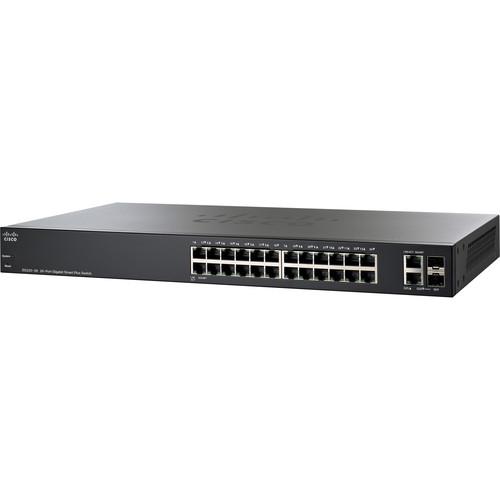 Contents of the user manual for the Cisco SG220-26 Smart Switch with 26
- Product category: Network Switches, Bridges & Hubs Cisco
- Brand: Cisco
- Description and content of package
- Technical information and basic settings
- Frequently asked questions – FAQ
- Troubleshooting (does not switch on, does not respond, error message, what do I do if...)
- Authorized service for Cisco Network Switches, Bridges & Hubs
|
User manual for the Cisco SG220-26 Smart Switch with 26 contain basic instructions
that need to be followed during installation and operation.
Before starting your appliance, the user manual should be read through carefully.
Follow all the safety instructions and warnings, and be guided by the given recommendations.
User manual is an integral part of any Cisco product,
and if it is sold or transferred, they should be handed over jointly with the product.
Following the instructions for use is an essential prerequisite for protecting
health and property during use, as well as recognition of liability on the part of the manufacturer
for possible defects should you make a warranty claim. Download an official Cisco user manual in which you will find instructions on how to install, use, maintain and service your product.
And do not forget – unsuitable use of a Cisco product will considerably shorten its lifespan!
|
Product description Add secure and energy-saving switching capacity to a small mid-size corporate network with the SG220-26 Smart Switch from Cisco. The SG220-26 Smart Switch comes equipped with 24 Gigabit RJ45 ports, two Gigabit combo RJ45/SFP uplink ports, a total switching capacity of 52 Gb/s and a total forwarding capacity of 38.69 Mpps. Boasting 128MB of processor RAM, the SG220-26 comes with security features such as 802.11x authentication, guest VLANs, access control lists, and denial of service protection, while support for Energy-Efficient Ethernet helps to conserve power during low-activity periods. General Features - Flexible Management
- Management options for the Cisco SG220-26 Smart Switch include Simple Network Management Protocol (SNMP), a Command-Line Interface (CLI), a web-based interface, and the Cisco FindIT utility.
- Configuration and Deployment Features
- Cisco Discovery Protocol (CDP) and Link Layer Discovery Protocol-Media Endpoint Discovery (LLDP-MED) automatically detects the devices connected to your network, then automatically configures the switch with the appropriate settings and instructs end devices on the appropriate voice VLAN or QoS parameters to use. In addition, the Cisco FindIT Network Discovery Utility discovers Cisco devices on the network and display basic information, such as serial numbers and IP addresses.
- Remote Management
- Using SNMP (Simple Network Management Protocol), you can set up and manage all switches and other Cisco devices in your network remotely.
- Dual Image Support
- With the ability to maintain two images in permanent storage instead of only a single image, you can perform software upgrades without taking the network offline or worrying about an outage because of a bad image file.
- Dual Configuration Files Support
- Configures the device, validating the configuration, and then save the configuration to take effect after reboot. Additionally, a mirror configuration file provides automatic backup of the latest stable configuration file.
- IPv6 Support
- The SG220-26 provides native support for IPv6, making it easier to migrate to the next generation of networking applications and operating systems without an equipment upgrade.
- Network Security
- Support for network security applications such as IEEE 802.1X and port security can tightly limit access to specific segments of your network. Guest virtual LANs (VLANs) let you provide internet connectivity to nonemployee users while isolating critical business services from guest traffic. Extensive ACLs can restrict sensitive portions of the network from unauthorized users and guard against network attacks. Security mechanisms such as broadcast/multicast/unknown unicast storm control and Bridge Protocol Data Unit (BPDU) guard can protect the network from invalid configurations or malicious intent. Denial of service (DOS) attack prevention helps to increase uptime in the event of a network attack. Finally, RADIUS, TACACS+, local database authentication, and secure management communication over SSL, SSH, and SNMPv3 can help protect management sessions.
- IP Telephony Support
- Embedded QoS intelligence prioritizes delay-sensitive services such as voice and video and simplifies unified communications deployments, helping to ensure consistent network performance for all services. For example, automated voice VLAN capabilities let you plug any IP phone (including third-party phones) into your IP telephony network and receive an immediate dial tone. The switch automatically configures the device with the right VLAN and QoS parameters to prioritize voice traffic.
- Energy Efficiency
- Energy Efficient Ethernet (IEEE 802.3az) and Energy Detect support help you save operational expenses and reduce your environmental footprint.
Layer 2 Switching Features - MAC Table
- Support for up to 8,192 MAC addresses.
- Spanning Tree Protocol (STP)
- Standard 802.1d Spanning Tree support, enabled by default
Fast convergence using 802.1w (Rapid Spanning Tree [RSTP])
Multiple Spanning Tree instances using 802.1s (MSTP)
16 instances are supported - Port Grouping
- Support for IEEE 802.3ad Link Aggregation Control Protocol (LACP)
Up to 8 groups
Up to 8 ports per group with 16 candidate ports for each (dynamic) 802.3ad link aggregation
Load balance based on source and destination MAC address, or source and destination MAC/IP - VLAN Features and Specifications
- Support for up to 256 VLANs simultaneously
Port-based and 802.1q tag-based VLANs
Management VLAN
Guest VLAN - Auto Voice VLAN
- Voice traffic is automatically assigned to a voice-specific VLAN and treated with appropriate levels of QoS.
- QinQ VLAN
- VLANs transparently cross a service provider network while isolating traffic among customers.
- Generic VLAN Registration Protocol (GVRP) and Generic Attribute Registration Protocol (GARP)
- Protocols for automatically propagating and configuring VLANs in a bridged domain.
- Head-of-Line (HOL) Blocking
- Supports HOL blocking prevention.
- Loopback Detection
- Provides protection against loops by transmitting loop protocol packets out of ports on which loop protection has been enabled. Loopback detection operates independently of STP.
- Automatic Media-Dependent Interface Crossover (MDIX)
- Automatically adjusts transmit and receive pairs if an incorrect cable type (crossover or straight-through) is installed.
Security Features - ACLs
- Drop or rate limit based on source and destination MAC, VLAN ID or IP address, protocol, port, Differentiated Services Code Point (DSCP)/IP precedence, TCP/UDP source and destination ports, 802.1p priority, Ethernet type, Internet Control Message Protocol (ICMP) packets, IGMP packets, and TCP flag. Supports up to 512 rules.
- Port Security
- Creates the ability to lock source MAC addresses to ports, and limits the number of learned MAC addresses.
- IEEE 802.1x Features
- RADIUS authentication
Guest VLAN
Single-host, multiple-host, and multisession mode - STP Bridge Protocol Data Unit (BPDU) Guard
- Protects the network from invalid configurations. A port enabled for BPDU Guard is shut down if a BPDU message is received on that port.
- Spanning Tree Loop Guard
- Provides additional protection against Layer 2 forwarding loops (STP loops).
- Secure Shell (SSH) Protocol
- A secure replacement for Telnet traffic. SCP also uses SSH. Both SSH version 1 and version 2 are supported.
- Secure Sockets Layer (SSL)
- Encrypts all HTTPS traffic, allowing highly secure access to the browser-based management GUI in the switch.
- Additional Security Features
- Supports RADIUS and TACACS authentication (switch functions as a client), storm control (broadcast, multicast, and unknown unicast), and DOS attack prevention.
Quality of Service Features - Priority Levels
- Supports 8 hardware queues per port.
- Scheduling
- Strict priority and Weighted Round-Robin (WRR) queue assignment based on DSCP and class of service (802.1p/CoS).
- Class of Service
- Port-based; 802.1p VLAN priority-based; IPv4/v6 IP precedence, Type of Service (ToS), and DSCP-based; Differentiated Services (DiffServ); classification and re-marking ACLs, trusted QoS.
- Rate Limiting
- Ingress policer; egress shaping and rate control; per VLAN, per port, and flow-based.
- Congestion Avoidance
- A TCP congestion avoidance algorithm is required to reduce and prevent global TCP loss synchronization.
Multicast Features - Internet Group Management Protocol (IGMP) Versions 1, 2, and 3 Snooping
- Limits bandwidth-intensive multicast traffic to only the requesters. Supports 256 multicast groups.
- IGMP Querier
- Used to support a Layer 2 multicast domain of snooping switches in the absence of a multicast router.
IPv6 Features - General IPv6 Features
- IPv6 host mode
IPv6 over Ethernet
IPv6/IPv4 Dual Stack
IPv6 neighbor and router discovery (ND)
IPv6 stateless address auto-configuration
Path Maximum Transmission Unit (MTU) discovery
Duplicate Address Detection (DAD)
ICMP version 6 - IPv6 ACL
- Drop or rate limit IPv6 packets in hardware.
- IPv6 QoS
- Prioritize IPv6 packets in hardware.
- Multicast Listener Discovery (MLD v1/2) Snooping
- Deliver IPv6 multicast packets only to the required receivers.
- IPv6 applications
- Supports Web/SSL, Telnet server/SSH, DHCP Client, DHCP Autoconfig, CDP, and LLDP.
Management Features - Web User Interface
- Built-in switch configuration utility for easy browser-based device configuration (HTTP/HTTPS). Supports configuration, system dashboard, system maintenance, and monitoring.
- Text-Editable Config Files
- Config files can be edited with a text editor and downloaded to another switch, facilitating easier mass deployment.
- Command-Line Interface
- Scriptable CLI; a full CLI is supported. User privilege levels 1 and 15 are supported for the CLI.
- SNMP
- SNMP versions 1, 2c, and 3 with support for traps, and SNMP version 3 User-based Security Model (USM).
- Remote Monitoring (RMON)
- Embedded RMON software agent supports 4 RMON groups (history, statistics, alarms, and events) for enhanced traffic management, monitoring, and analysis.
- IPv4 and IPv6 Dual Stack
- Coexistence of both protocol stacks to ease migration.
- Port Mirroring
- Traffic on a port or VLAN can be mirrored to another port for analysis with a network analyzer or RMON probe. Up to 8 source ports can be mirrored to one destination port. Four sessions are supported.
- Firmware Upgrade
- Web browser upgrade (HTTP/HTTPS) and Trivial File Transfer Protocol (TFTP). Dual images for resilient firmware upgrades.
- DHCP (Option 12, 66, 67, 82, 129, and 150)
- DHCP options facilitate tighter control from a central point (DHCP server) to obtain IP address, auto-configuration (with configuration file download), DHCP relay, and hostname.
- Time Synchronization
- Supports Simple Network Time Protocol (SNTP).
- Login Banner
- Configurable multiple banners for web as well as CLI.
- Other Management
- Includes HTTP/HTTPS, TFTP upgrade, DHCP client, BOOTP, cable diagnostics, ping, traceroute, and syslog.
Discovery Features - Bonjour
- The switch advertises itself using the Bonjour protocol.
- Link Layer Discovery Protocol (LLDP) (802.1ab) with LLDP-MED Extensions
- LLDP allows the switch to advertise its identification, configuration, and capabilities to neighboring devices that store the data in a MIB. LLDP-MED is an enhancement to LLDP that adds the extensions needed for IP phones.
- Cisco Discovery Protocol
- The switch advertises itself using the Cisco Discovery Protocol. Display brief information for connected Cisco network devices, IP phones, and wireless access points.
Power Efficiency - EEE Compliance (802.3az)
- Supports 802.3az Energy Efficient Ethernet on all ports; substantially reduces power consumption when link bandwidth is not at full utilization.
- Energy Detect
- Automatically turns power off on Gigabit Ethernet and 10/100 RJ-45 ports when detecting a link down. Active mode is resumed without loss of any packets when the switch detects the link up
- Disable Port LEDs
- LEDs can be manually turned off to save on energy.
- Time-Based Port Operation
- Link up or down based on user-defined schedule (when the port is administratively up).
UPC: 882658625114 In the Box Cisco SG220-26 Smart Switch with 26 x Gigabit Ethernet Ports Power Cord Mounting Kit Console Cable Limited Lifetime Warranty Table of Contents
|
Upload User Manual
Have you got an user manual for the Cisco SG220-26 Smart Switch with 26 x Gigabit Ethernet Ports in electronic form? Please send it to us and help us expand our library of instruction manuals.
Thank you, too, on behalf of other users.
To upload the product manual, we first need to check and make sure you are not a robot. After that, your "Submit Link" or "Upload File" will appear.
Technical parametersCisco SG220-26-K9-NA Specs | | | Ports | 24 x 10/100/1000 Mb/s Gigabit Ethernet (RJ45)
2 x 10/100/1000 Mb/s Gigabit Combo (Ethernet/SFP) (Uplink) | | | | Layer Services Supported | Layer 2 Support | | Supported Protocols | Head-of-Line (HOL) Blocking
IGMP Snooping
IPv4
IPv6
Link Aggregation
MAC Filtering | | Queuing | Strict Priority, Weighted Round Robin (WRR) | | Transmission Method | Store-and-Forward | | Jumbo Frames Support | 9216 Bytes | | | | Security Features | DoS Attack Prevention
RADIUS Authentication
Storm Control | | SNMP Support | 1, 2c, 3 | | | | RFC | RFC 768
RFC 791
RFC 792
RFC 793
RFC 813
RFC 826
RFC 854
RFC 855
RFC 856
RFC 858
RFC 879
RFC 896
RFC 894
RFC 919
RFC 920
RFC 922
RFC 950
RFC 1042
RFC 1071
RFC 1123
RFC 1141
RFC 1155
RFC 1157
RFC 1215
RFC 1493
RFC 1624
RFC 1700
RFC 1867
RFC 1981
RFC 2012
RFC 2013
RFC 2233
RFC 2460
RFC 2618
RFC 2665
RFC 2666
RFC 2674
RFC 2737
RFC 2819
RFC 2863
RFC 3416
RFC 3484
RFC 4007
RFC 4291
RFC 4443
RFC 4861
RFC 4862 | | Supported IEEE Standards | 802.1d, 802.1q/p, 802.1s, 802.1w, 802.1x, 802.3, 802.3ab, 802.3ad, 802.3af, 802.3at, 802.3az, 802.3u, 802.3x, 802.3z | | | | Forwarding Rate | 38.69 Mpps | | Switching Bandwidth | 52 Gb/s | | Packet Buffer | 4.1 MB | | | | Flash Memory | 32 MB | | Memory | 128 MB | | | | Power Draw | 18.9 W | | AC Input Power | 100 to 240 VAC, 50 / 60 Hz | | | | Operating Temperature | 32 to 122°F / 0 to 50°C | | Operating Humidity | 10 to 90% | | Storage Temperature | -4 to 158°F / -20 to 70°C | | Storage Humidity | 10 to 90% | | Certifications | C-Tick, CE, CSA, FCC, UL, as per Manufacturer | | | | Cooling System | Passive | | Indicator Lights | Link/Activity, Speed, System | | Dimensions | 17.32 x 7.91 x 1.73" / 440 x 201 x 44 mm | | Weight | 6.2 lb / 2.8 kg | | | | Package Weight | 8.8 lb | | Box Dimensions (LxWxH) | 21.0 x 12.5 x 4.1" |
Rating50% users recommend this product to others. And what about you?

This product has already been rated by 00 owners. Add your rating and experience with the product.
Discussion
 Ask our technicians if you have a problem with your settings,
or if anything is unclear in the user manual you have downloaded.
You can make use of our moderated discussion.
The discussion is public and helps other users of our website who may be encountering similar problems.
Ask our technicians if you have a problem with your settings,
or if anything is unclear in the user manual you have downloaded.
You can make use of our moderated discussion.
The discussion is public and helps other users of our website who may be encountering similar problems.
The discussion is empty - enter the first post
Post a new topic / query / comment:
|
|
|
| Request for user manual |
You can’t find the operation manual you are looking for? Let us know and we will try to add the missing manual:
I’m looking for a manual / Request for manual
Current requests for instruction manuals:
Call Of Duty World War Two For Xbox...
controller stratus XL...
stratus XL...
smart whatch serie S11 42mm...
Allen & Heath SQ-6 manual...
|
| Discussion |
Latest contributions to the discussion:
AEW R 4100
Name: MAURICIO ANGARITA
Audio-Technica AEW-R4100 UHF Diversity Receiver for
AEW R 4100 has the mute function blocked and does not allow audio to pass. I tried several times to turn off the mute from the transmitter but it does nothing, the mute stays on. Solution?
Thank you...
Instructions for assembling the 2015 Forecast Image Master Consoles GC3-A
Name: mike elam
Forecast Consoles GC3-A ImageMaster Editing Console
Looking for instructions for assembling this console. ...
EMPTY TONER ERROR MESSAGE AFTER REPLACING TONER
Name: LINDA BAD YELLOW EYES
Brother TN223BK Standard-Yield Toner
I HAD TO CHANGE OUT ALL THREE TONERS DUE TO LEAKS IN THE YELLOW AND CYAN. AFTER I REPLACED THEM, THE MACHINE KEEPS GIVING ME AN EMPTY TONER ERROR MESSAGE. HELP!!...
PS480D 20/24 pin Switching 480W Power Supply
Name: swkargo
Logisys 480W Power Supply
This item states in can run -5vdc .It is NOT listed on the board or I beleive is r4 is missing the resitior. Any body have thid issue. Shawn
...
Help needed
Name: Ann Carter
SanDisk 1TB Extreme Portable USB 3.1
When I click the link to download the user manual for my Sandisk Extreme external hard drive, it gives me the manual for the LG Cricket. Can you please change the link so I can download the Sandisk manual and begin using this drive? Thank you....
|
|