|
User Manual for DATAPATH VisionAV-HD Capture Card Click to enlarge the picture
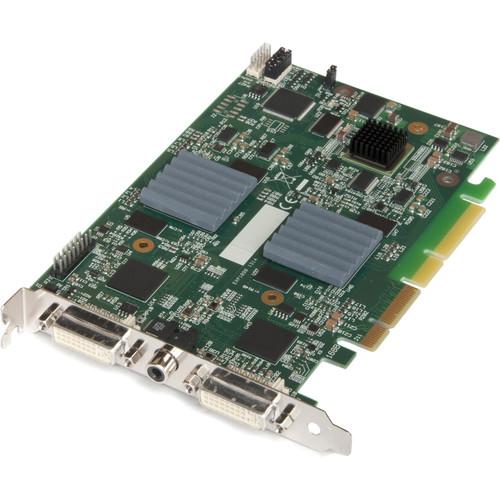 Contents of the user manual for the DATAPATH VisionAV-HD Capture Card
- Product category: Multiviewer Accessories DATAPATH
- Brand: DATAPATH
- Description and content of package
- Technical information and basic settings
- Frequently asked questions – FAQ
- Troubleshooting (does not switch on, does not respond, error message, what do I do if...)
- Authorized service for DATAPATH Multiviewer Accessories
|
User manual for the DATAPATH VisionAV-HD Capture Card contain basic instructions
that need to be followed during installation and operation.
Before starting your appliance, the user manual should be read through carefully.
Follow all the safety instructions and warnings, and be guided by the given recommendations.
User manual is an integral part of any DATAPATH product,
and if it is sold or transferred, they should be handed over jointly with the product.
Following the instructions for use is an essential prerequisite for protecting
health and property during use, as well as recognition of liability on the part of the manufacturer
for possible defects should you make a warranty claim. Download an official DATAPATH user manual in which you will find instructions on how to install, use, maintain and service your product.
And do not forget – unsuitable use of a DATAPATH product will considerably shorten its lifespan!
|
Product description The VisionAV-HD Capture Card from DATAPATH is a four lane PCI Express capture card with three video capture inputs - two channels of HD DVI video and an extra composite video input all operating simultaneously and independently; with full analog and digital audio support. The VisionAV-HD also adds multiple channels of audio capture, which can be synchronized in software using time stamping with all video capture channels.
This half-length full height card features a full mechanical sixteen lane connector with notches which will enable it to fit 4, 8 and 16 lane motherboard connectors. The VisionAV-HD also adds embedded audio capture from the HDMI signal, which can be synchronized with the respective video channel. The video capture card provides balanced and unbalanced analog audio capture through an optional AM2 audio module. This provides a single flexible card solution for areas such as medical, lecture capture, web casting and video conferencing. - Four lane PCIe lane bus, with net 1.6 GB/s total capture bandwidth
- Triple channel PCI Express capture card
- Two DVI-I capture channels, featuring HDMI/ DVI/ TGB/ YPbPr video capture, HDMI embedded Audio Capture and streaming, and low input to output capture latency
- One SD/ Composite capture channel, featuring PAL, NTSC, SECAM up to 720 x 576 @ 16-bit color
- Direct DMA to graphics memory of third party graphics cards
- All standard features of the Vision range of video capture cards
- Driver support included within the Datapath unified Windows and Linux drivers
In the Box DATAPATH VisionAV-HD Capture Card (Half Length Full-Height PCI Express) Limited 3-Year Warranty Table of Contents
|
Upload User Manual
Have you got an user manual for the DATAPATH VisionAV-HD Capture Card in electronic form? Please send it to us and help us expand our library of instruction manuals.
Thank you, too, on behalf of other users.
To upload the product manual, we first need to check and make sure you are not a robot. After that, your "Submit Link" or "Upload File" will appear.
Technical parametersDATAPATH VISIONAV-HD Specs | Card Format | PCI Express x4 half size plug-in card | | Connectors | 2 x DVI-I, video input
1 x RCA female, video input | | Capture | HDMI:
Supports HDMI 1.3 to 225 MHz (including deep color modes)
HDMI audio can be selected as source for audio streaming
Incorporates TMDS equalizer to support up to 65.6' (20 m) cables
DVI:
Supports DVI 1.0 RGB 24-bit capture to 165 MHz
Incorporates TMDS equalizer to support up to 65.6' (20 m) cables
VGA/ YPbPr:
Triple ADCs sampling up to 170 Mp/s, full 4:4:4 sampling, 8-bits per color
5-wire, 4-wire or sync-on-green signal format
Composite Video:
CCIR601 sampling, PAL, NTSC, SECAM formats automatically detected
Audio:
Stereo Line-In / Stereo balanced inputs with programmable gain (+/-12 dB)
16-bit sampling at 44.1, 48, 96 kHz
Analogue stereo line-out for direct pass-through of selected input at up to 64 kHz sampling, sourced from Analog input or HDMI channel | | Video Capture | Memory:
256 MB high bandwidth frame buffer supports triple buffering of HD and SD video
Local storage of complex scatter-gather tables for DMA engine (eliminates read overhead) | | Video Processing | Polyphase FIR scaling engine (7 x 5) for hardware downscaling and upscaling
Color space conversion allows captured data to be transferred in any format: RGB: 16-bit (5-5-5, 5-6-5), 24-bit (8-8-8) or 32-bit (8-8-8 alpha) YUV: 16-bit (4:2:2) Mono: 8-bit | | Direct Memory Access | Direct DMA to physical or virtual memory buffers with full scatter-gather support
DMA bandwidth: up to 800 MB/s
16 independent DMA streams: Any mix of HD and SD sources, color space, cropping and scaling parameters | | Operating System Support | Windows XP, Windows Server 2003, Windows Vista, Windows Server 2008, Windows Server 2012, Windows 7, Windows 8 and Linux support | | Power Requirements | Max current at 12 V - 1 A
Max current at 3.3 V - 1 A | | Thermal Dissipation | 15.5 W | | Temperature | Operating: 32 to 96°F (0 to 35°C)
Storage: -4 to 158°F (-20 to 70°C) | | Relative Humidity | 5 - 90%, non-condensing | | Dimensions | 4.3 x 6.7" (11.0 x 17.0 cm) | | | | Package Weight | 0.9 lb | | Box Dimensions (LxWxH) | 12.6 x 6.4 x 3.4" |
Rating100% users recommend this product to others. And what about you?

This product has already been rated by 75 owners. Add your rating and experience with the product.
Discussion
 Ask our technicians if you have a problem with your settings,
or if anything is unclear in the user manual you have downloaded.
You can make use of our moderated discussion.
The discussion is public and helps other users of our website who may be encountering similar problems.
Ask our technicians if you have a problem with your settings,
or if anything is unclear in the user manual you have downloaded.
You can make use of our moderated discussion.
The discussion is public and helps other users of our website who may be encountering similar problems.
The discussion is empty - enter the first post
Post a new topic / query / comment:
|
|
|
| Request for user manual |
You can’t find the operation manual you are looking for? Let us know and we will try to add the missing manual:
I’m looking for a manual / Request for manual
Current requests for instruction manuals:
Call Of Duty World War Two For Xbox...
controller stratus XL...
stratus XL...
smart whatch serie S11 42mm...
Allen & Heath SQ-6 manual...
|
| Discussion |
Latest contributions to the discussion:
AEW R 4100
Name: MAURICIO ANGARITA
Audio-Technica AEW-R4100 UHF Diversity Receiver for
AEW R 4100 has the mute function blocked and does not allow audio to pass. I tried several times to turn off the mute from the transmitter but it does nothing, the mute stays on. Solution?
Thank you...
Instructions for assembling the 2015 Forecast Image Master Consoles GC3-A
Name: mike elam
Forecast Consoles GC3-A ImageMaster Editing Console
Looking for instructions for assembling this console. ...
EMPTY TONER ERROR MESSAGE AFTER REPLACING TONER
Name: LINDA BAD YELLOW EYES
Brother TN223BK Standard-Yield Toner
I HAD TO CHANGE OUT ALL THREE TONERS DUE TO LEAKS IN THE YELLOW AND CYAN. AFTER I REPLACED THEM, THE MACHINE KEEPS GIVING ME AN EMPTY TONER ERROR MESSAGE. HELP!!...
PS480D 20/24 pin Switching 480W Power Supply
Name: swkargo
Logisys 480W Power Supply
This item states in can run -5vdc .It is NOT listed on the board or I beleive is r4 is missing the resitior. Any body have thid issue. Shawn
...
Help needed
Name: Ann Carter
SanDisk 1TB Extreme Portable USB 3.1
When I click the link to download the user manual for my Sandisk Extreme external hard drive, it gives me the manual for the LG Cricket. Can you please change the link so I can download the Sandisk manual and begin using this drive? Thank you....
|
|