|
User Manual for Electro-Harmonix Oceans 11 Reverb Pedal for Electric Guitar Click to enlarge the picture
 Contents of the user manual for the Electro-Harmonix Oceans 11 Reverb Pedal for
- Product category: Effects Pedals Electro-Harmonix
- Brand: Electro-Harmonix
- Description and content of package
- Technical information and basic settings
- Frequently asked questions – FAQ
- Troubleshooting (does not switch on, does not respond, error message, what do I do if...)
- Authorized service for Electro-Harmonix Effects Pedals
 |
User manual for the Electro-Harmonix Oceans 11 Reverb Pedal for contain basic instructions
that need to be followed during installation and operation.
Before starting your appliance, the user manual should be read through carefully.
Follow all the safety instructions and warnings, and be guided by the given recommendations.
User manual is an integral part of any Electro-Harmonix product,
and if it is sold or transferred, they should be handed over jointly with the product.
Following the instructions for use is an essential prerequisite for protecting
health and property during use, as well as recognition of liability on the part of the manufacturer
for possible defects should you make a warranty claim. Download an official Electro-Harmonix user manual in which you will find instructions on how to install, use, maintain and service your product.
And do not forget – unsuitable use of a Electro-Harmonix product will considerably shorten its lifespan!
|
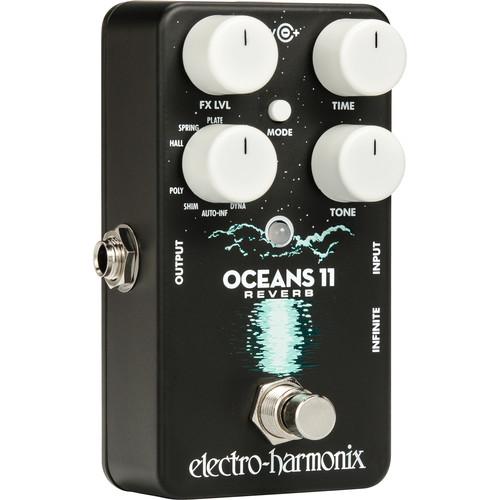
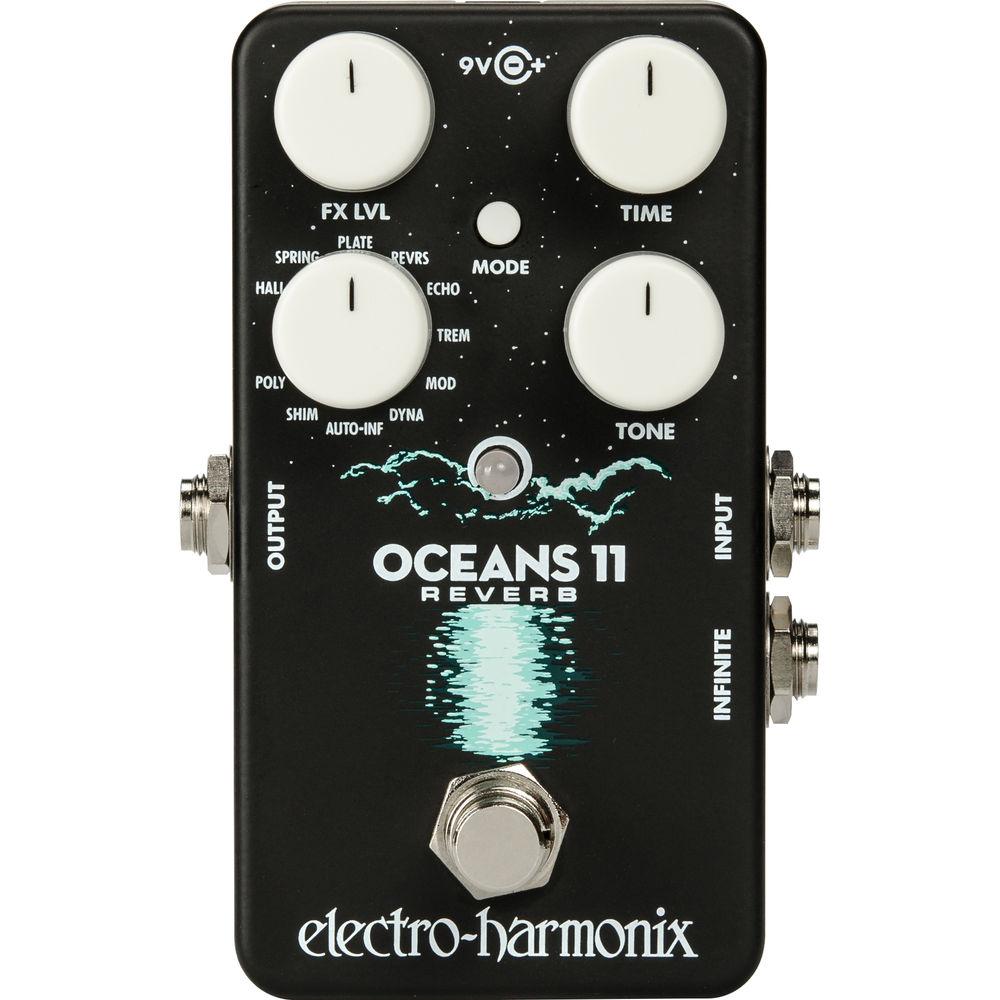
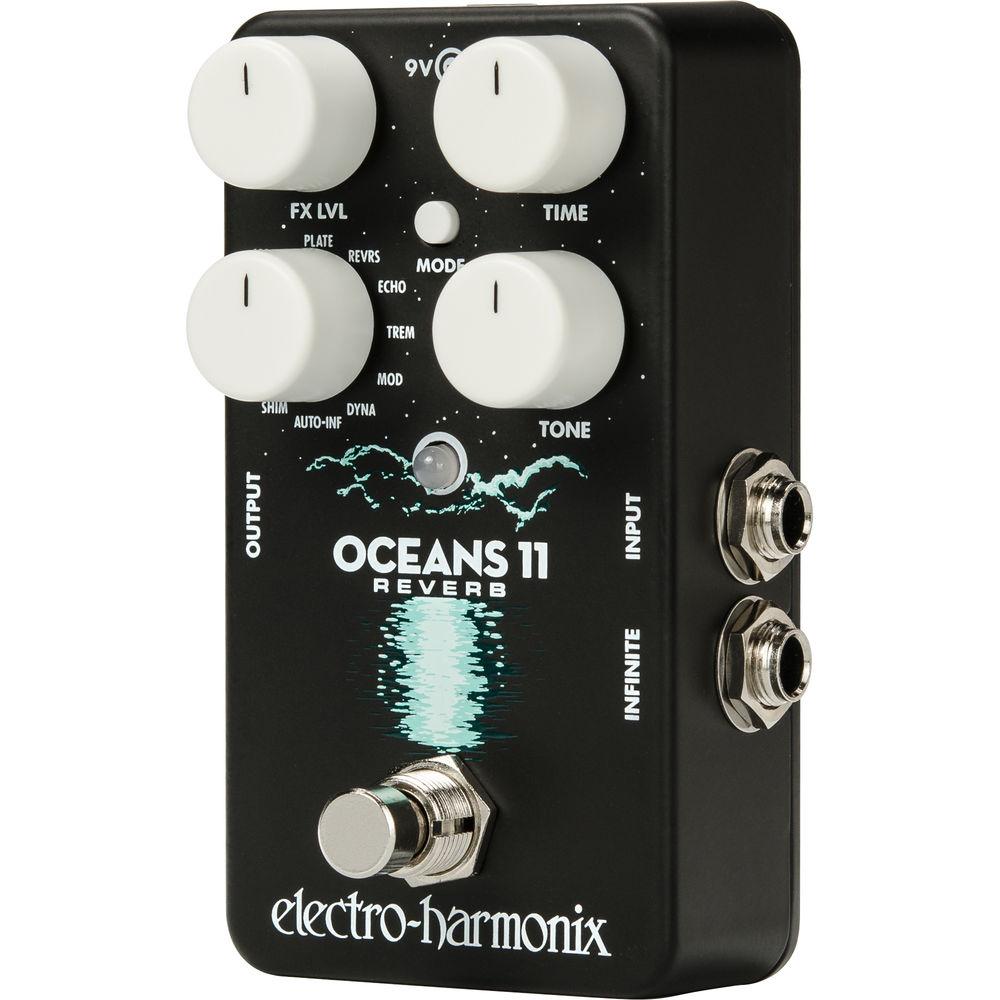
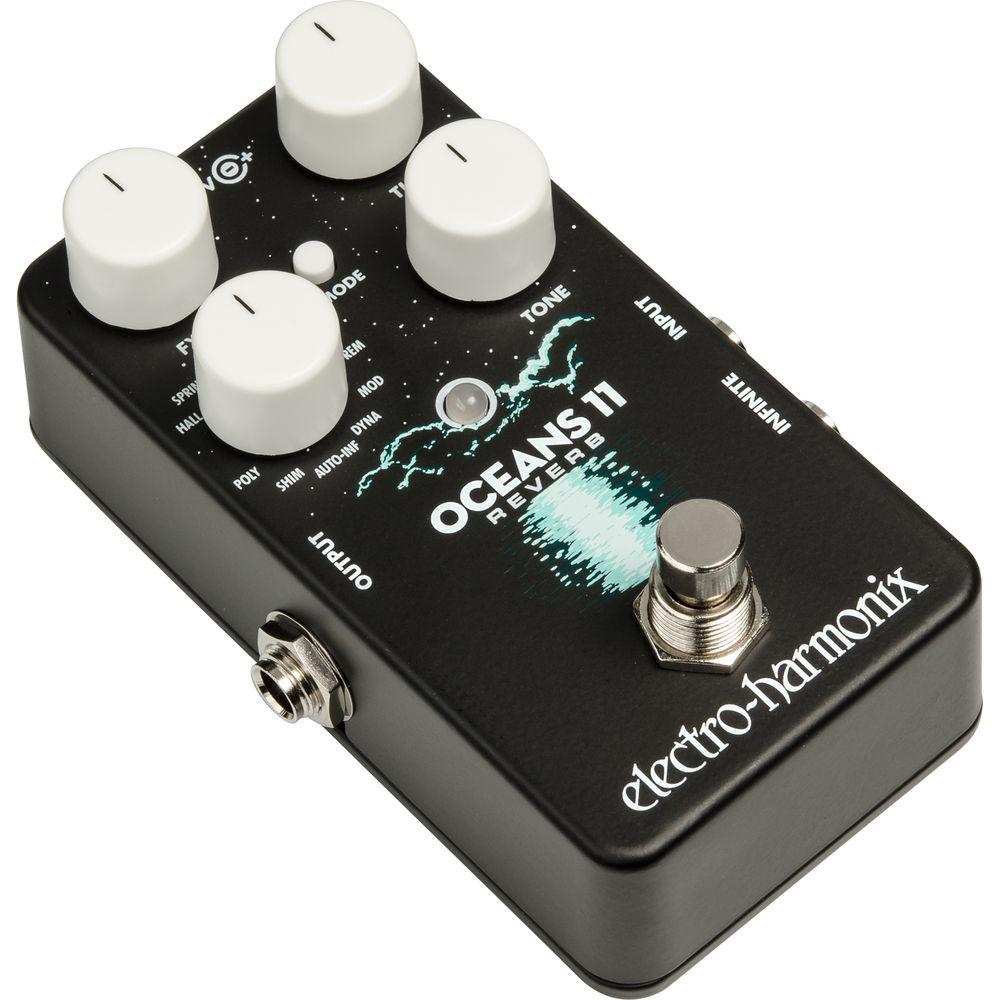
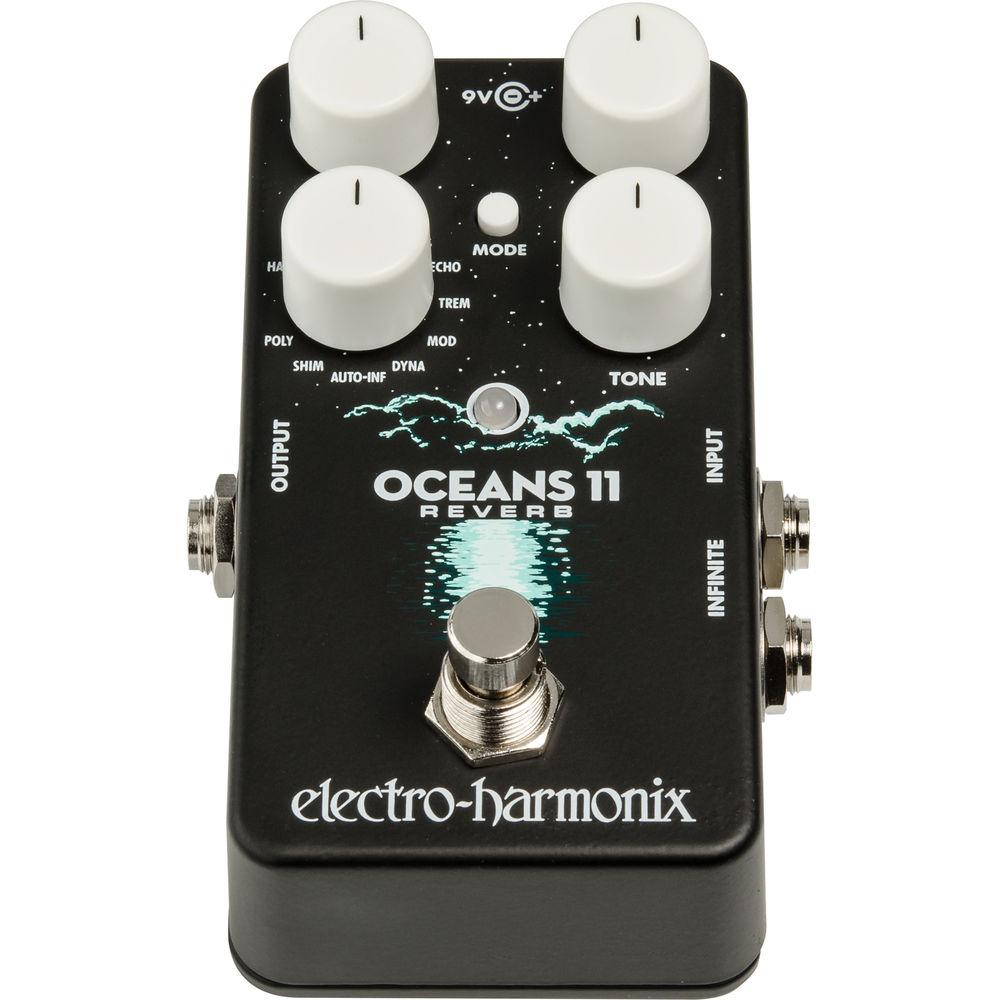
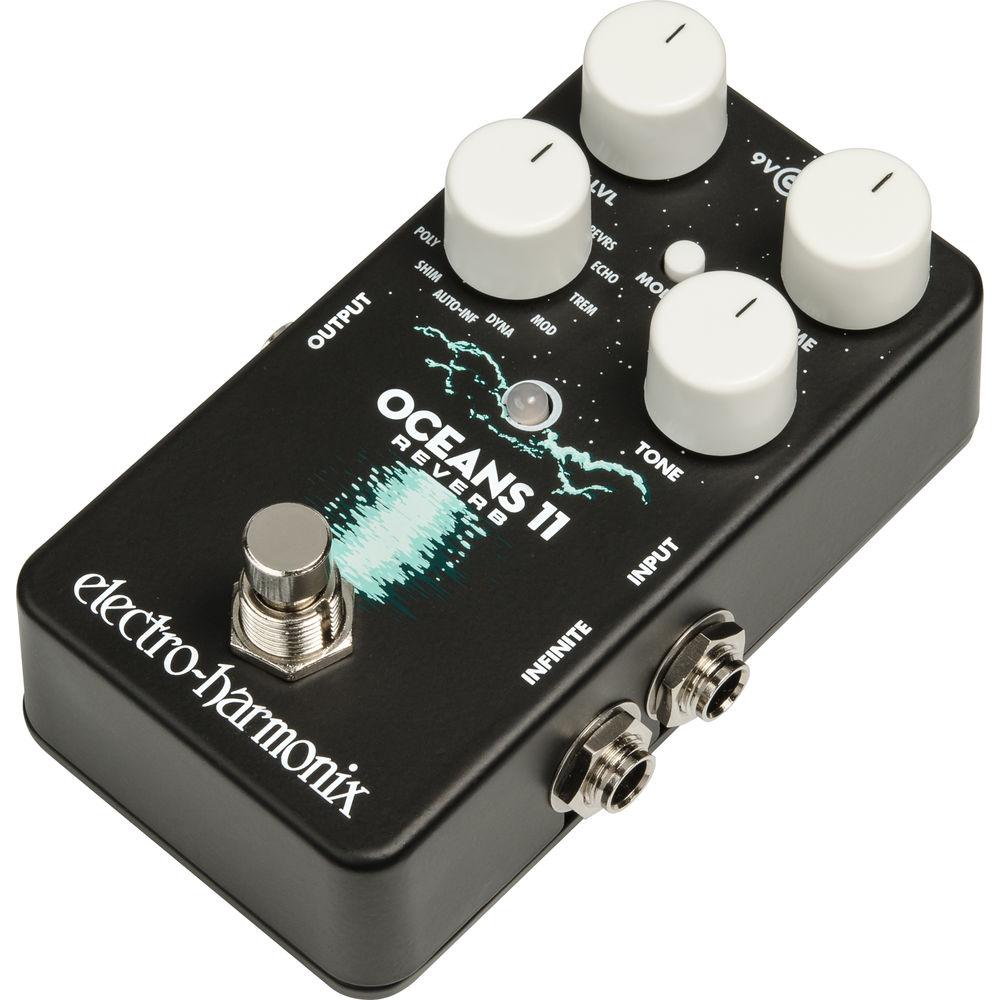
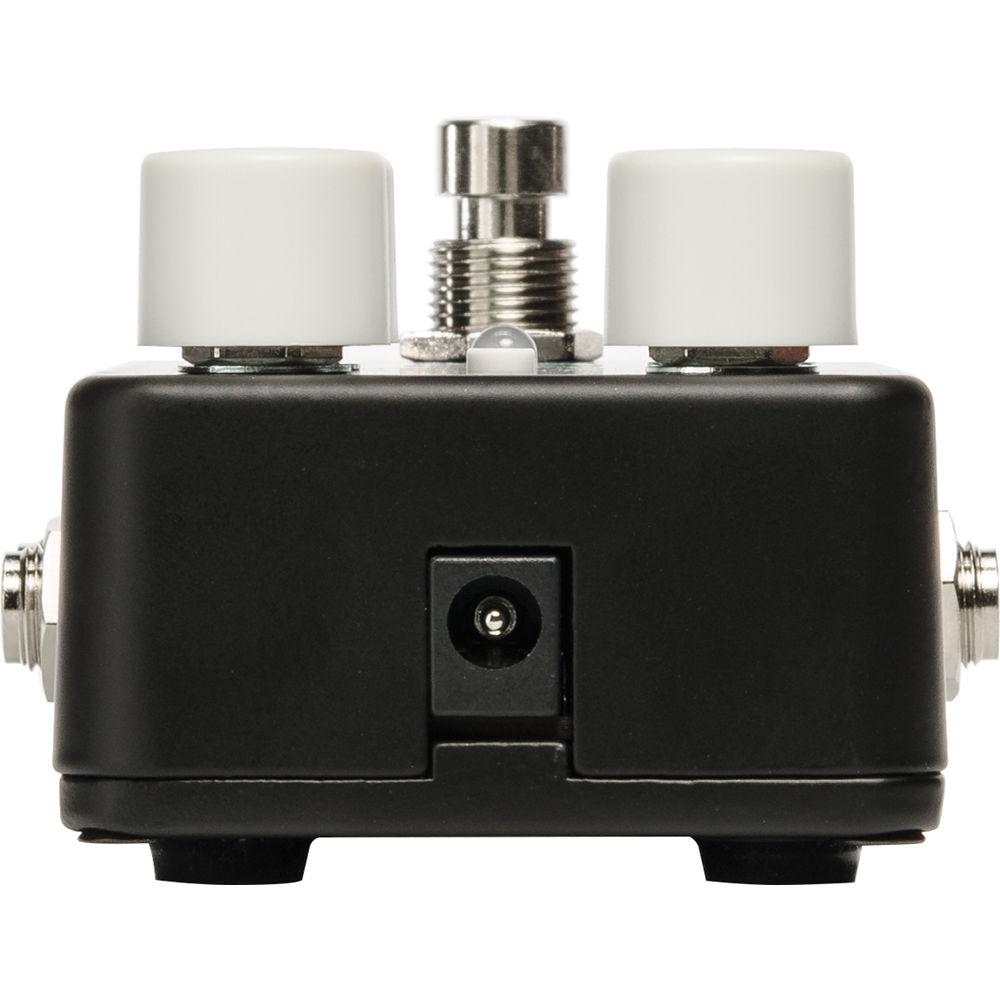
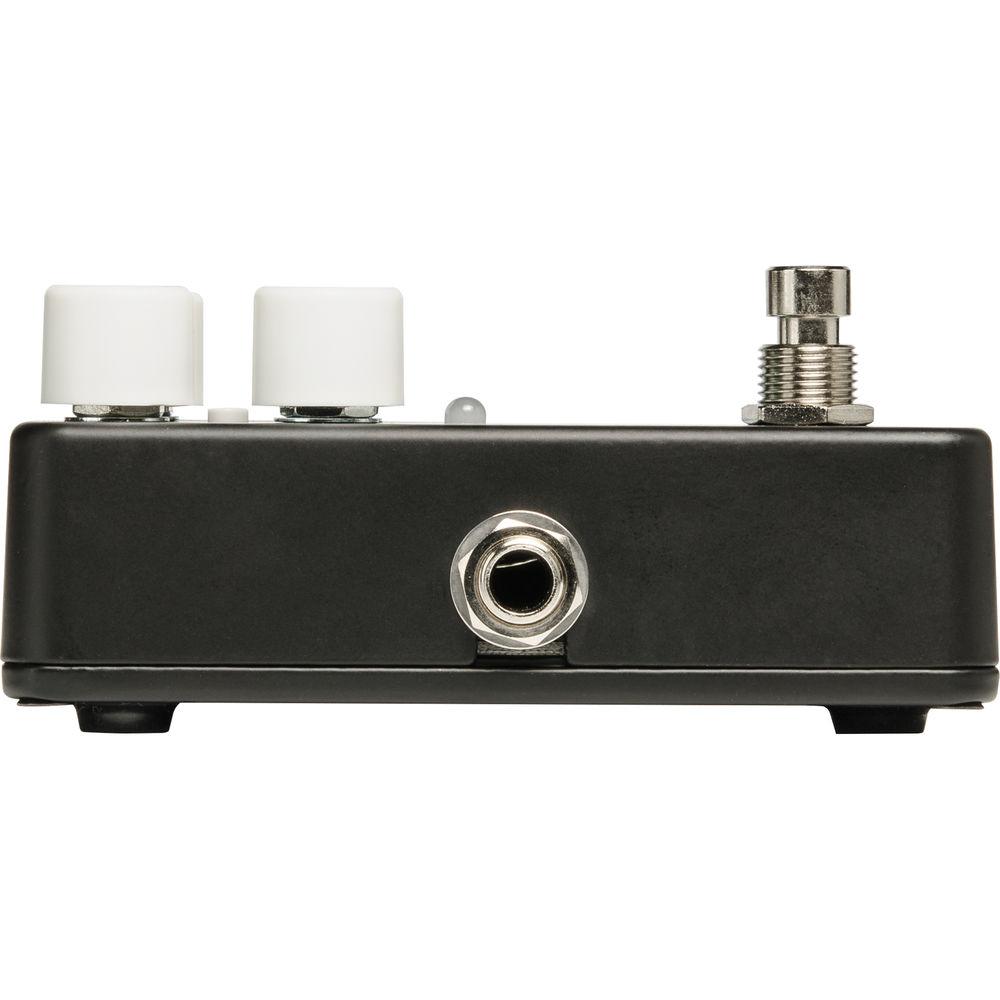
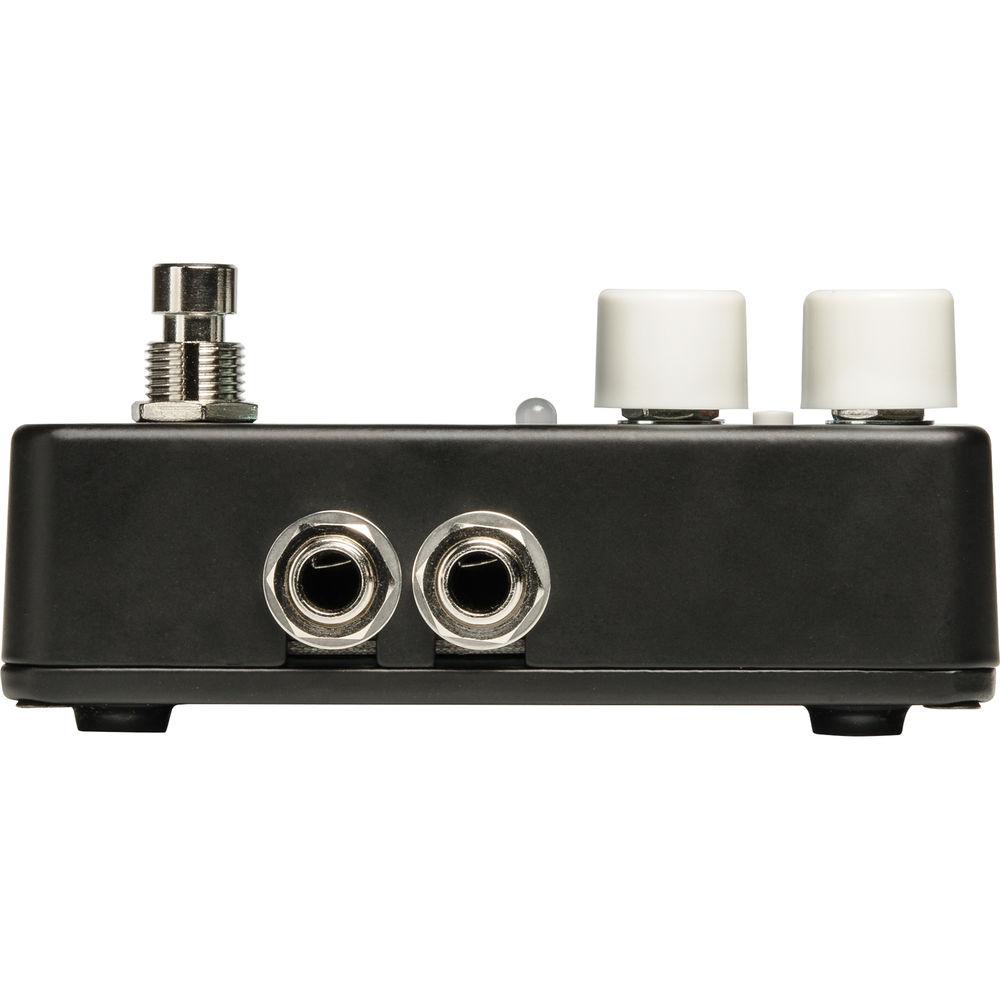
Product description The Electro-Harmonix Oceans 11 is not a movie, but a reverb pedal for electric guitar players. It sports eleven different effects for adding reverberant—and sometimes modulated—sound to your signal.Some of these effects include Hall, Spring, Plate, Reverse, and Echo. Some of them are more esoteric, like Shimmer, which combines pitch-shifting and reverb for an angelic sound, or Dyna, which introduces swell, gate, and duck to the signal. All of these effects can be found on a rotary control. Other controls include a Tone knob, an Effects Level knob, and a Time knob. A Mode button is on hand to give you access to alternate modes in each algorithm.Hidden parameters are accessible through the pedal’s secondary knob mode, which gives some of the knobs ancillary control functions. To access this mode, hold the Mode button in the center of the pedal for one second, and, after the LED blinks in a one-and-off pattern, the pedal will give you access to a new host of functions with the same four knobs. A secondary knob's functionality varies from algorithm to algorithm.The Oceans 11 gives you an instrument input jack, an instrument output jack, and a 1/4" infinite jack, which allows momentary footswitches (separately available) to instantiate a reverb wash that will continue as long as you press on the switch. The pedal can be set to cease your effect immediately upon pressing the bypass footswitch, or to let the reverb die down naturally as you continue on your dry way. This pedal requires a 9V power supply, so it’s a good thing that Electro-Harmonix includes one with your purchase. - Controls
- Effects Level Knob: This knob controls the output volume of the reverb effect. When this knob is at the minimum position, the output is only your dry signal. As the knob is turned up, the reverb output increases in volume. As the knob is turned past 2 o’clock, the dry signal decreases in volume. When the knob is at the maximum position, only the effect is output.Time Knob: This knob primarily controls the decay time of the OCEANS 11 reverb. As this knob is turned clockwise, the reverb time gets longer and longer, reaching infinite when the knob is as far as it will go.Tone Knob: This knob primarily controls the tone or EQ of the reverb signal. As this knob is turned clockwise, the sound of the reverb gets brighter. As you turn Tone counter-clockwise, the sound of the reverb gets darker.Reverb Type Knob: This is an 11-position rotary switch that selects which of the Ocean’s 11's reverb types is active.Mode Button: This button cycles through the available modes of the active reverb type. Each reverb type has a certain number of modes, which modify the behavior of the active reverb type.Footswitch: Press the footswitch to toggle the pedal between buffered bypass and effect modes. When the pedal is in effect mode, the LED will be lit. In most reverb modes, the footswitch can also engage infinitely by pressing and holding it down. Moreover, the footswitch can be used for tap-tempo in Echo reverb.
- Algorithms
- Hall: A warm and versatile reverb algorithm modeled after a spacious performance hall.Spring: This captures the iconic drip of a vintage 1962 Fender 6G15 reverb unit. Time here behaves like dwell on the Fender unit, so infinite reverberation is unavailable.Plate: An emulation of a smooth, bright metal plate reverb commonly found in high-end recording studios during the 1960’s and 70’s.Reverse: This is a rendition of the reverse reverb trick commonly performed in studios. Time, here, controls the length of time between playing a note and hearing its reverse reverb fade in.Echo: A simple digital delay which feeds into a plate reverb. Both Time and the footswitch can control the time between echoes, and Tone controls the feedback of the echoes.Tremolo: A classic, periodic volume envelope applied to both the dry and wet mix of a hall reverb. Time controls the LFO rate, and Tone controls the LFO depth.Mod: A lush combo of various modulations for creamy rich reverb tails. Time and Tone behave differently in each mode.Dyna: Aa dynamic trio of experimental reverb algorithms: swell, gate, and duck. Time behaves differently depending on the mode.Auto-Inf: An inventive reverb that listens to your playing and crossfades to a new reverb wash upon detection of newly-struck notes and chords. This works best with long decay times.Shimmer: A rich octave-shifted wash of harmony in a reverberant cloud. Tone controls the frequency content of both the reverb tail and octave-shifts.Poly: Two configurable bidirectional pitch-shifts that add dimensionality to the reverb tail.
- Infinite Reverb Switch
- In most reverb types offered on this pedal, infinite reverb is accessible by holding down either the bypass footswitch, or an external footswitch connected to the Infinite jack. This makes the active reverb play in the background indefinitely while granting access to a fresh, independently-controllable reverb of the same type.
- Tails Switch
- The pedal allows you to choose whether reverb continues to play or stop immediately after the pedal is switched to bypass. To control this, remove the Oceans 11's bottom cover and locate the small slide switch on the bottom of the board labeled Tails. When Tails is set to on, the reverb will continue to play after the pedal is switched to bypass, with the decay time set by the Time knob. Anything you play after entering bypass will not reverberate. If the pedal is set for infinite decay time (i.e., if Time is set to maximum) the reverb will continue until you turn Time down or switch to a different mode.
- Mode Button Functionality
- Each reverb type on the Oceans 11 has up to three unique modes of operation. Pressing the Mode button cycles through these available modes. The LED color shows the current mode. If the LED does not change color when pressing this button, the active reverb type has only one mode. When you switch reverb types, the pedal will recall the last mode you were using in that reverb type.
- Tap Tempo
- In Echo mode, the quarter-note echo delay can be set with tap tempo. You can use either the built-in footswitch or an external tap tempo switch connected to the Infinite jack. Plugging in an external footswitch, however, always disables the internal footswitch's tap tempo functionality. With either footswitch, you can achieve different rhythms using the Mode button. Tap twice at your desired quarter-note tempo to lock in your tap time. This effect can be disabled.
- Kicking the Spring Tank
- In Spring reverb, if tails is on, quickly double tap the internal footswitch to kick the emulated spring tank. If an external footswitch is connected to the INFINITE jack, then you must use that one instead of the internal one. This will send a loud bouncy jolt through the Oceans 11, as it would a real spring reverb unit.
UPC: 683274012100 In the Box Electro-Harmonix Oceans 11 Reverb Pedal for Electric Guitar Power Supply Limited 1-Year Warranty Table of Contents
|
Upload User Manual
Have you got an user manual for the Electro-Harmonix Oceans 11 Reverb Pedal for Electric Guitar in electronic form? Please send it to us and help us expand our library of instruction manuals.
Thank you, too, on behalf of other users.
To upload the product manual, we first need to check and make sure you are not a robot. After that, your "Submit Link" or "Upload File" will appear.
Download User ManualThe user manual for the Electro-Harmonix Oceans 11 Reverb Pedal for Electric Guitar can be downloaded in PDF format at the link stated below.
Technical parametersElectro-Harmonix Oceans 11 Specs | I/O | 1 x 1/4" instrument input
1 x 1/4" instrument output
1 x 1/4" momentary footswitch input | | Controls | 1 x FX Level knob
1 x Time knob
1 x Tone knob
1 x Reverb Type knob
1 x Mode button
1 x Trails switch (internal)
1 x Bypass/engage footswitch | | Power Supply | 1 x EHX 9.6 DC 200 mA (included) | | Dimensions (W x L x H) | 2.8 x 4.5 x 2.1" / 70.0 x 115.0 x 54.0 mm | | Weight | Not specified by manufacturer | | | | Package Weight | 1.435 lb | | Box Dimensions (LxWxH) | 6.35 x 5.65 x 3.15" |
Rating60% users recommend this product to others. And what about you?

This product has already been rated by 39 owners. Add your rating and experience with the product.
Discussion
 Ask our technicians if you have a problem with your settings,
or if anything is unclear in the user manual you have downloaded.
You can make use of our moderated discussion.
The discussion is public and helps other users of our website who may be encountering similar problems.
Ask our technicians if you have a problem with your settings,
or if anything is unclear in the user manual you have downloaded.
You can make use of our moderated discussion.
The discussion is public and helps other users of our website who may be encountering similar problems.
The discussion is empty - enter the first post
Post a new topic / query / comment:
|
|
|
| Request for user manual |
You can’t find the operation manual you are looking for? Let us know and we will try to add the missing manual:
I’m looking for a manual / Request for manual
Current requests for instruction manuals:
Call Of Duty World War Two For Xbox...
controller stratus XL...
stratus XL...
smart whatch serie S11 42mm...
Allen & Heath SQ-6 manual...
|
| Discussion |
Latest contributions to the discussion:
AEW R 4100
Name: MAURICIO ANGARITA
Audio-Technica AEW-R4100 UHF Diversity Receiver for
AEW R 4100 has the mute function blocked and does not allow audio to pass. I tried several times to turn off the mute from the transmitter but it does nothing, the mute stays on. Solution?
Thank you...
Instructions for assembling the 2015 Forecast Image Master Consoles GC3-A
Name: mike elam
Forecast Consoles GC3-A ImageMaster Editing Console
Looking for instructions for assembling this console. ...
EMPTY TONER ERROR MESSAGE AFTER REPLACING TONER
Name: LINDA BAD YELLOW EYES
Brother TN223BK Standard-Yield Toner
I HAD TO CHANGE OUT ALL THREE TONERS DUE TO LEAKS IN THE YELLOW AND CYAN. AFTER I REPLACED THEM, THE MACHINE KEEPS GIVING ME AN EMPTY TONER ERROR MESSAGE. HELP!!...
PS480D 20/24 pin Switching 480W Power Supply
Name: swkargo
Logisys 480W Power Supply
This item states in can run -5vdc .It is NOT listed on the board or I beleive is r4 is missing the resitior. Any body have thid issue. Shawn
...
Help needed
Name: Ann Carter
SanDisk 1TB Extreme Portable USB 3.1
When I click the link to download the user manual for my Sandisk Extreme external hard drive, it gives me the manual for the LG Cricket. Can you please change the link so I can download the Sandisk manual and begin using this drive? Thank you....
|
|