|
User Manual for eMedia Music Music Theory Tutor Volume 1 Click to enlarge the picture
 Contents of the user manual for the eMedia Music Music Theory Tutor Volume
- Product category: Instructional & Tutorial eMedia Music
- Brand: eMedia Music
- Description and content of package
- Technical information and basic settings
- Frequently asked questions – FAQ
- Troubleshooting (does not switch on, does not respond, error message, what do I do if...)
- Authorized service for eMedia Music Instructional & Tutorial
 |
User manual for the eMedia Music Music Theory Tutor Volume contain basic instructions
that need to be followed during installation and operation.
Before starting your appliance, the user manual should be read through carefully.
Follow all the safety instructions and warnings, and be guided by the given recommendations.
User manual is an integral part of any eMedia Music product,
and if it is sold or transferred, they should be handed over jointly with the product.
Following the instructions for use is an essential prerequisite for protecting
health and property during use, as well as recognition of liability on the part of the manufacturer
for possible defects should you make a warranty claim. Download an official eMedia Music user manual in which you will find instructions on how to install, use, maintain and service your product.
And do not forget – unsuitable use of a eMedia Music product will considerably shorten its lifespan!
|
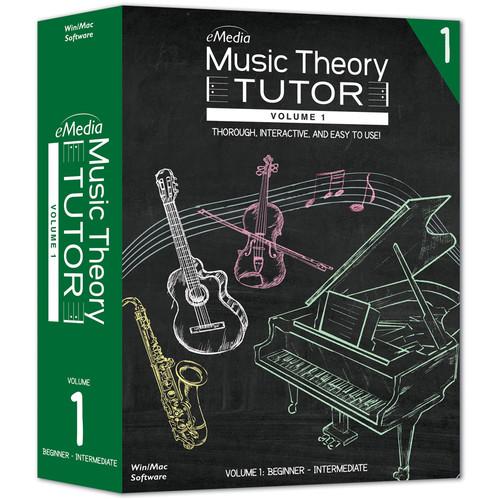
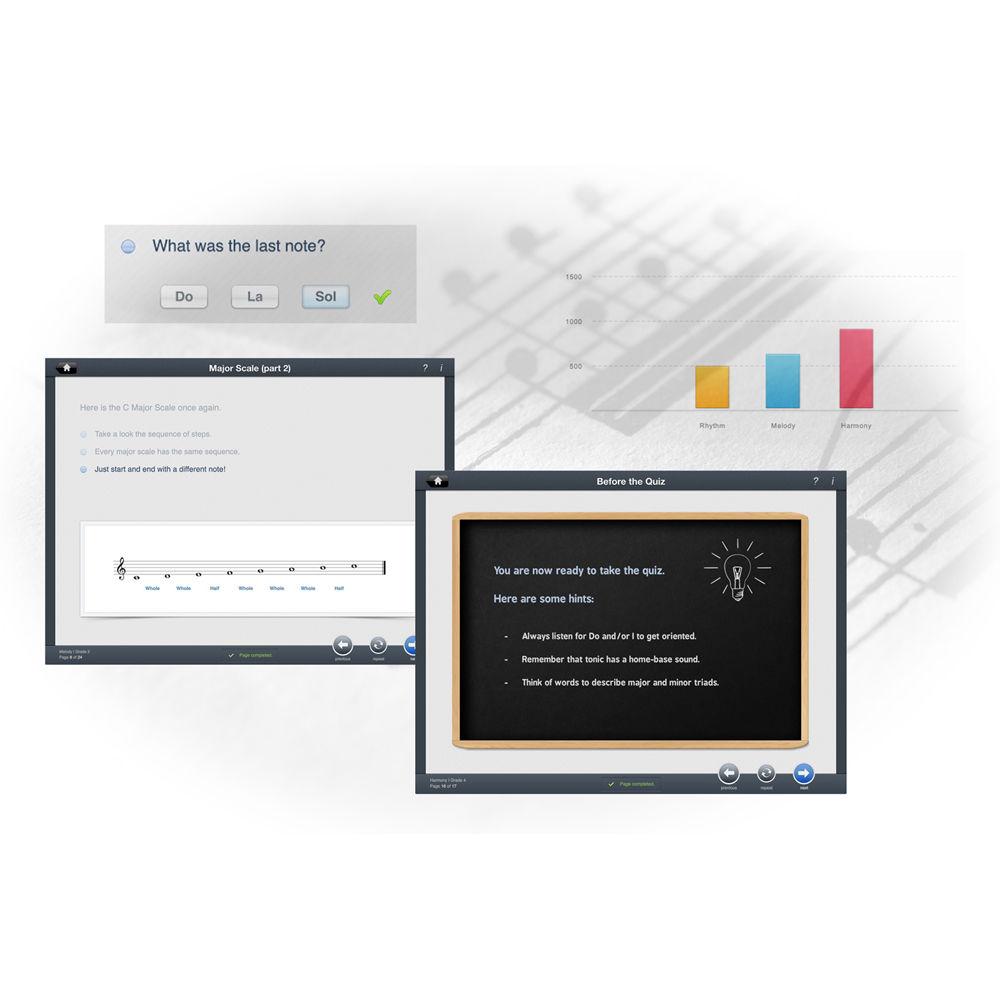
Product description An engaging approach to music theory for beginners, this downloadable version of eMedia Music's Music Theory Tutor Volume 1 for Mac features over 230 interesting and interactive lessons. Images, audio, and interactive tests are incorporated into the curriculum along with practical theory. The Intelligent Practice mode offers optimized practice sessions based on your responses and skill level to help you learn music theory elements, such as rhythm, melody, and harmony.
Music Theory Tutor shows you when you are playing or singing with the correct pitch and lets you see your progress. Many of the lessons allow you to respond by humming, singing, or playing your instrument into your computer's microphone. Enjoy the ability to tap rhythms and sing back melodies, in addition to guessing intervals and much more. Gain confidence as you pass each music theory quiz at the end of a subject, and ace the exams at the end of every grade-level completion.
In this program, you'll learn how to read music and develop an understanding of basic chord theory, scale theory, and the building blocks of music. Music Theory Tutor will give you the ability to hear melodies, scales, intervals, chords, and rhythms in your head – so you can compose without an instrument and learn songs more quickly than ever before. - Teaches music theory with a step-by-step curriculum designed by Dr. Gregory Simon, who has a Ph.D. in music composition from University of Michigan and has taught at University of Colorado
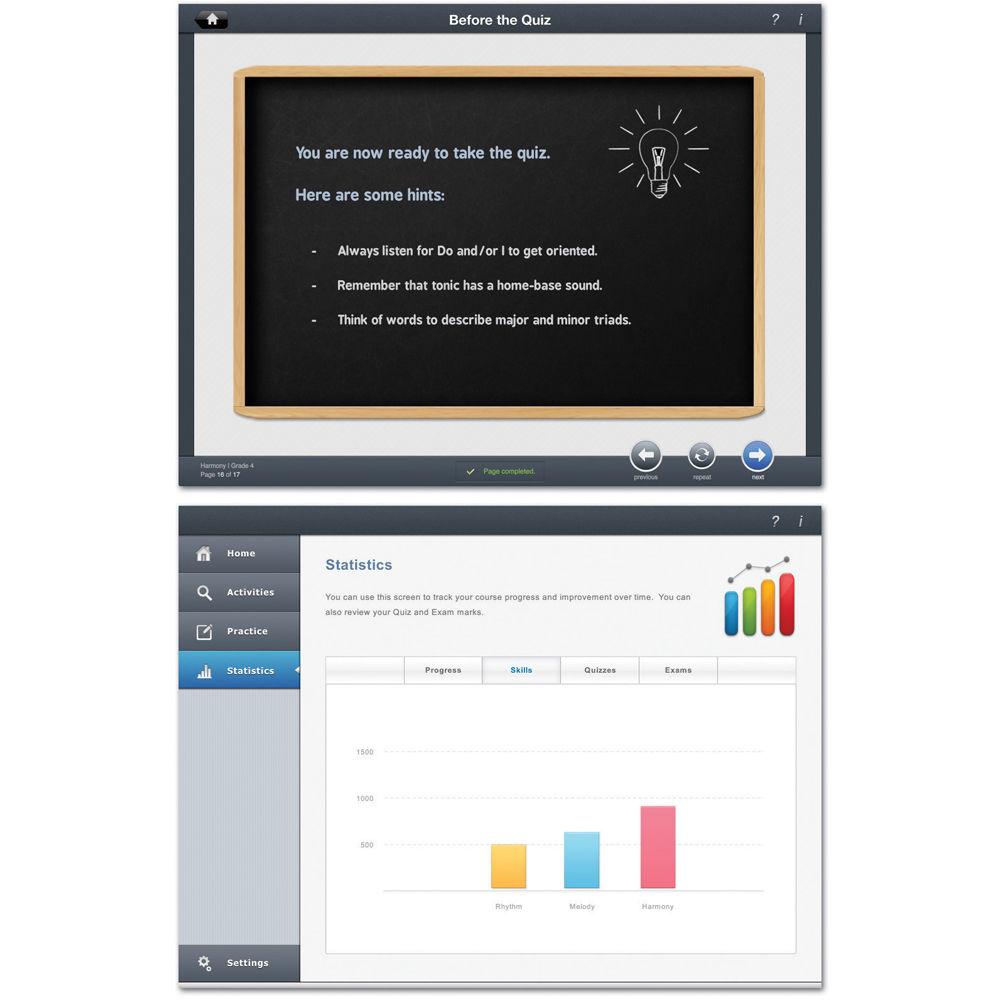
- Intelligent Practice tracks your progress as you learn music theory, and automatically selects questions to improve weak spots – just as a real instructor would do. If you want to work on something specific, use Custom Practice and select the desired item
- Combines music theory lessons and basic ear training into a single software solution
- Lets you view music theory quiz scores and other statistics to measure your progress
- Covers rhythm fundamentals including tempo, counting beats, measures, and values for notes and rests
- Use sight-tapping to practice reading rhythms and Rhythm Imitation studies to help you recognize rhythmic figures
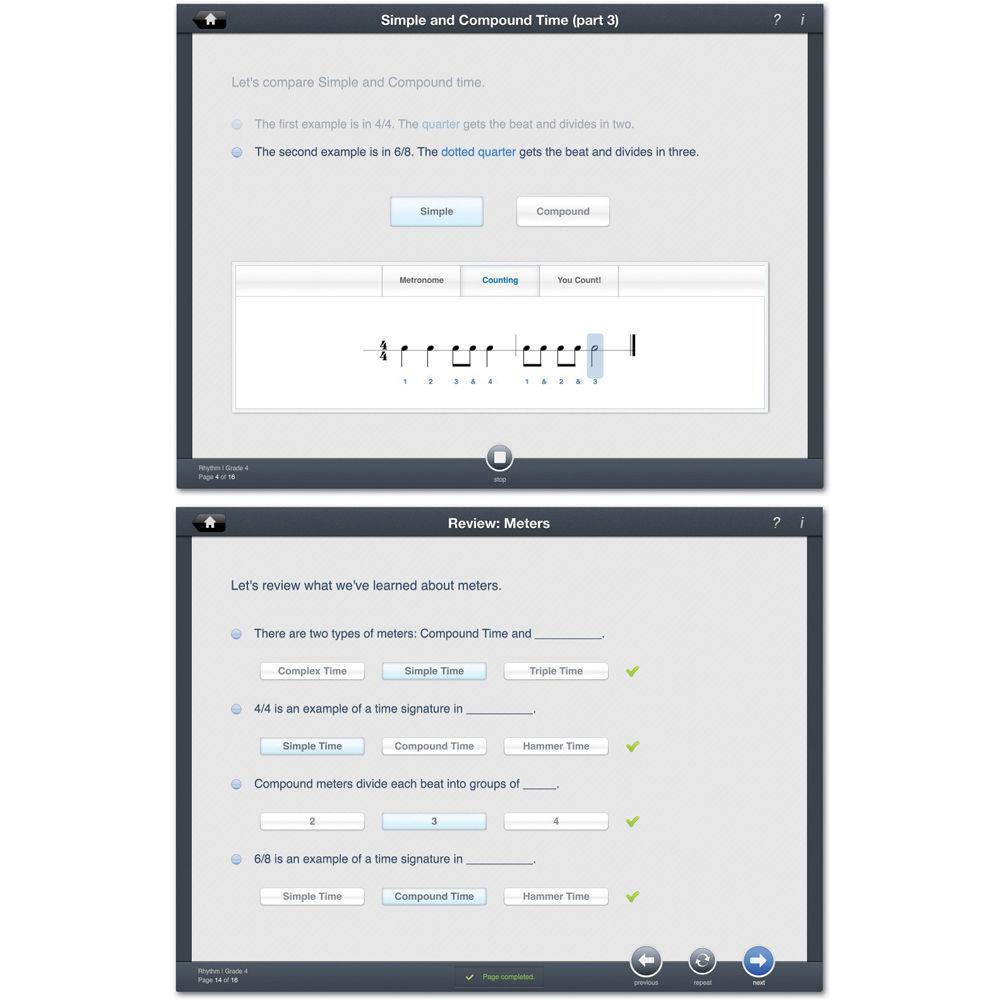
- Teaches recognition of simple and compound time signatures, including 4/4, 3/4, 9/8, and cut time
- Enables you to read music, including clefs, note pitches, names, and dotted and beamed note rhythmic values
- Provides ear-training exercises to help you recognize notes, note direction / motion, intervals, and scales, in addition to major, minor, and diminished chords. These will help you to compose (with or without an instrument), improvise, and learn songs by ear more quickly
- Solfege and sight-singing skill work teaches you to hear music in your head – so you'll know how a composition sounds simply by seeing the sheet music
- Lessons covering interval and chord recognition help you develop a great sense of relative pitch to identify melodies, scales, chords, and progressions
- Offers lessons on major and minor scale construction and intervals, including perfect fourths, fifths, tritones, etc.
- Covers roles of both melodies and harmonies, in addition to unstable notes and note resolution
- Includes chord theory lessons on the following:
- Creating major scale triads (major, minor, and diminished chords)
- Chord progression theory based on major scale
- Chord functions within progressions (tonic, dominant, subdominant, etc.)
- Roman numeral system (I, IV, V, etc.)
- Satisfies Canadian school requirements for music in grades 1-5
Content Summary - Grade 1
-
- Rhythm
- Introduction
- Beat
- Beat Counting
- Tempos
- Exercise: Beat Tapping
- Bars
- Note Duration
- Exercise: Note Tapping
- Time Signatures
- Time Signatures (part 2)
- Time Signatures (part 3)
- Time Signatures (part 4)
- Exercise: Meter Recognition
- Eighth Notes
- Eighth Notes (part 2)
- Exercise: Note Tapping 2
- Exercise: Rhythm Sight Tapping
- Review: Time Signatures and Bars
- Before the Quiz
- Quiz
- Melody
- Introduction
- Getting Started
- Pitch
- Exercise: Pitch Singing
- Exercise: Pitch Comparison
- The Staff and Ledger Lines
- Treble Clef
- Direction
- Exercise: Motion Recognition
- Steps and Skips
- Steps and Skips (part 2)
- Exercise: Motion Recognition 2
- Intervals
- Intervals (part 2)
- Intervals (part 3)
- Exercise: Interval Singing
- Review: Pitch and Direction
- Before the Quiz
- Quiz
- Grade 2
-
- Rhythm
- Introduction
- Tempo Markings
- Rests
- Rests (part 2)
- Rests (part 3)
- Rests (part 4)
- Exercise: Rhythm Sight Tapping
- 3/4 Time Signature
- 16th Notes
- Exercise: Note Tapping
- Dotted Notes
- Dotted Notes (part 2)
- Ties
- Ties (part 2)
- Exercise: Rhythm Sight Tapping 2
- Review: Rests and Dotted Rhythms
- Before the Quiz
- Quiz
- Melody
- Introduction
- Half Steps and Whole Steps
- Half Steps and Whole Steps (part 2)
- Exercise: Motion Recognition
- Octave Skip
- Exercise: Motion Recognition 2
- Major Scale
- Major Scale (part 2)
- Using Solfege
- Using Solfege (part 2)
- Using Solfege (part 3)
- Using Solfege (part 4)
- Exercise: Scale Singing
- Intervals - Fourth
- Intervals - Fifth
- Exercise: Interval Singing
- Exercise: Interval Recognition
- Bass Clef
- Grand Staff + Middle C
- Melody Workshop
- Exercise: Melody Imitation
- Review: Solfege
- Before the Quiz
- Quiz
- Grade 3
-
- Rhythm
- Introduction
- Dotted Eighth Notes
- Dotted Eighth Notes (part 2)
- Exercise: Rhythm Sight Tapping
- Pickup Notes
- Exercise: Rhythm Sight Tapping 2
- 4/8 Time Signature
- 4/8 Time Signature (part 2)
- Cut Time
- Cut Time (part 2)
- Exercise: Rhythm Sight Tapping 3
- Rhythm Workshop
- Rhythm Workshop (part 2)
- Review: 4/8 and Cut Time
- Before the Quiz
- Quiz
- Melody
- Introduction
- Review: Major Scale
- Exercise: Scale Singing
- Note Stability
- Stable Notes
- Exercise: Sight Singing
- Unstable Notes
- Resolution
- Exercise: Sight Singing 2
- Intervals - Sixth
- Intervals - Seventh
- Intervals - Major and Minor
- Intervals - Major and Minor (part 2)
- Exercise: Interval Recognition
- C Clef
- C Clef (part 2)
- Melody Workshop
- Exercise: Melody Imitation
- Review: Stability and Resolution
- Before the Quiz
- Quiz
- Harmony
- Introduction
- Melody vs Harmony
- Chords
- Major Triads
- Building a Major Triad
- Building a Major Triad (part 2)
- Minor Triads
- Arpeggios
- Exercise: Arpeggio Singing
- Major vs Minor Triads
- Exercise: Chord Recognition
- Review: Triads
- Before the Quiz
- Quiz
- Grade 4
-
Rhythm- Introduction
- Simple and Compound Time
- Simple and Compound Time (part 2)
- Simple and Compound Time (part 3)
- Exercise: Meter Recognition
- Exercise: Rhythm Sight Tapping
- Ties Revisited
- Rhythm Workshop
- 32nd Notes
- 32nd Notes (part 2)
- Small Rests
- Exercise: Rhythm Sight Tapping 2
- Exercise: Rhythm Imitation
- Review: Meters
- Before the Quiz
- Quiz
Melody- Introduction
- Stability and Resolution Revisited
- Exercise: Sight Singing
- Melodic Patterns
- Exercise: Sight Singing 2
- Intervals - Minor Sixth
- Perfect Intervals
- Intervals - Tritone
- Exercise: Interval Recognition
- Exercise: Interval Singing
- Major Scale in Broken Thirds
- Exercise: Scale Singing
- Dynamics
- Dynamics (part 2)
- Melody Workshop
- Exercise: Melody Imitation
- Review: Stable and Unstable Notes
- Before the Quiz
- Quiz
Harmony- Introduction
- Triads Revisited
- Triads in the Major Scale
- Triads in the Major Scale (part 2)
- Exercise: Chord Recognition
- Keys
- Key Signatures
- Chord Progressions and Function
- Roman Numerals
- Chord Function - Tonic
- Chord Function - Dominant
- Exercise: Chord Function Recognition
- Chord Progression: V - I
- Exercise: Chord Progressions
- Review: Chord Functions
- Before the Quiz
- Quiz
- Grade 5
-
- Rhythm
- Introduction
- Beaming in Compound Time
- Counting 16ths in Compound Time
- Siciliano
- Exercise: Rhythm Sight Tapping
- 9/8 Time Signature
- Exercise: Rhythm Sight Tapping 2
- Rhythm Workshop
- Rhythm Workshop (part 2)
- Rhythm Workshop (part 3)
- Exercise: Rhythm Imitation
- Review: Time Signatures
- Before the Quiz
- Quiz
- Melody
- Introduction
- Creating Scales
- Major Scale vs Minor Scale
- Major Scale vs Minor Scale (part 2)
- Exercise: Scale Recognition
- Major Scale vs Minor Scale (part 3)
- Major Scale vs Minor Scale (part 4)
- Exercise: Sight Singing
- Diatonic and Chromatic
- Intervals - Major and Minor Seventh
- Intervals - Octave
- Exercise: Interval Singing
- Exercise: Interval Recognition
- Articulation
- Melody Workshop
- Exercise: Melody Imitation
- Review: Minor Scales
- Before the Quiz
- Quiz
- Harmony
- Introduction
- Review: Chord Functions
- Chord Function - Subdominant
- Four Part Texture
- Cadences
- Authentic Cadence
- Plagal Cadence
- Exercise: Cadence Recognition
- Diminished Triads
- Exercise: Chord Recognition
- Chord Progression: IV - V
- Exercise: Chord Progressions
- Review: Cadences and Functions
- Before the Quiz
- Quiz
Table of Contents
|
Upload User Manual
Have you got an user manual for the eMedia Music Music Theory Tutor Volume 1 in electronic form? Please send it to us and help us expand our library of instruction manuals.
Thank you, too, on behalf of other users.
To upload the product manual, we first need to check and make sure you are not a robot. After that, your "Submit Link" or "Upload File" will appear.
Technical parameterseMedia Music AD02151DLM Specs | Delivery | Electronic download | | System Requirements | Mac OS X 10.6 or later
2.2 GHz CPU
2.0 GB RAM
300 MB of hard drive space |
Rating50% users recommend this product to others. And what about you?

This product has already been rated by 00 owners. Add your rating and experience with the product.
Discussion
 Ask our technicians if you have a problem with your settings,
or if anything is unclear in the user manual you have downloaded.
You can make use of our moderated discussion.
The discussion is public and helps other users of our website who may be encountering similar problems.
Ask our technicians if you have a problem with your settings,
or if anything is unclear in the user manual you have downloaded.
You can make use of our moderated discussion.
The discussion is public and helps other users of our website who may be encountering similar problems.
The discussion is empty - enter the first post
Post a new topic / query / comment:
|
|
|
| Request for user manual |
You can’t find the operation manual you are looking for? Let us know and we will try to add the missing manual:
I’m looking for a manual / Request for manual
Current requests for instruction manuals:
Call Of Duty World War Two For Xbox...
controller stratus XL...
stratus XL...
smart whatch serie S11 42mm...
Allen & Heath SQ-6 manual...
|
| Discussion |
Latest contributions to the discussion:
AEW R 4100
Name: MAURICIO ANGARITA
Audio-Technica AEW-R4100 UHF Diversity Receiver for
AEW R 4100 has the mute function blocked and does not allow audio to pass. I tried several times to turn off the mute from the transmitter but it does nothing, the mute stays on. Solution?
Thank you...
Instructions for assembling the 2015 Forecast Image Master Consoles GC3-A
Name: mike elam
Forecast Consoles GC3-A ImageMaster Editing Console
Looking for instructions for assembling this console. ...
EMPTY TONER ERROR MESSAGE AFTER REPLACING TONER
Name: LINDA BAD YELLOW EYES
Brother TN223BK Standard-Yield Toner
I HAD TO CHANGE OUT ALL THREE TONERS DUE TO LEAKS IN THE YELLOW AND CYAN. AFTER I REPLACED THEM, THE MACHINE KEEPS GIVING ME AN EMPTY TONER ERROR MESSAGE. HELP!!...
PS480D 20/24 pin Switching 480W Power Supply
Name: swkargo
Logisys 480W Power Supply
This item states in can run -5vdc .It is NOT listed on the board or I beleive is r4 is missing the resitior. Any body have thid issue. Shawn
...
Help needed
Name: Ann Carter
SanDisk 1TB Extreme Portable USB 3.1
When I click the link to download the user manual for my Sandisk Extreme external hard drive, it gives me the manual for the LG Cricket. Can you please change the link so I can download the Sandisk manual and begin using this drive? Thank you....
|
|