|
User Manual for Lectrosonics SPNTWB - Stand-Alone Interface for Telepresence and Audio Conference Systems Click to enlarge the picture
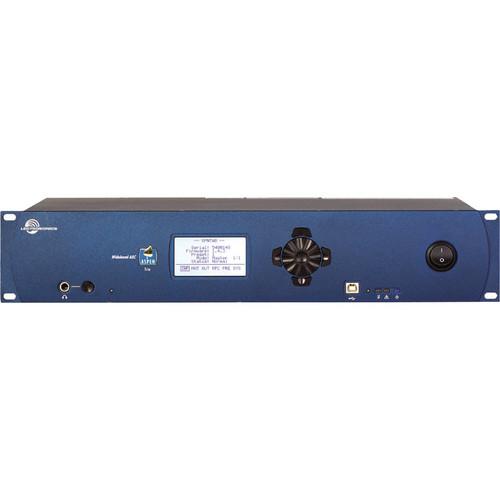 Contents of the user manual for the Lectrosonics SPNTWB - Stand-Alone Interface for
- Product category: Audio Conferencing Lectrosonics
- Brand: Lectrosonics
- Description and content of package
- Technical information and basic settings
- Frequently asked questions – FAQ
- Troubleshooting (does not switch on, does not respond, error message, what do I do if...)
- Authorized service for Lectrosonics Audio Conferencing
|
User manual for the Lectrosonics SPNTWB - Stand-Alone Interface for contain basic instructions
that need to be followed during installation and operation.
Before starting your appliance, the user manual should be read through carefully.
Follow all the safety instructions and warnings, and be guided by the given recommendations.
User manual is an integral part of any Lectrosonics product,
and if it is sold or transferred, they should be handed over jointly with the product.
Following the instructions for use is an essential prerequisite for protecting
health and property during use, as well as recognition of liability on the part of the manufacturer
for possible defects should you make a warranty claim. Download an official Lectrosonics user manual in which you will find instructions on how to install, use, maintain and service your product.
And do not forget – unsuitable use of a Lectrosonics product will considerably shorten its lifespan!
|
Product description The SPNTWB from Lectrosonics combines the boards from the company's SPN812 and the SPNCWB into a 2U rack-mount chassis to provide a complete, stand-alone component for telepresence and audio conference systems. The unit can be used with additional ASPEN processors to add additional inputs and outputs. Setup and adjustments can be made using the control panel software or the front panel LCD interface. Inputs and outputs appearing on the LCD have been consolidated into logical groups to simplify navigation.
The far end audio signals in a conference participate in the same manner as local microphones connected to the processor. Three sites connected via two codecs and a telephone line can be bridged into a single conference as seamlessly as local microphones.
The ASPEN AEC (Acoustic Echo Canceller) provides advanced algorithms developed to address the need for a single acoustic echo canceller that could handle the challenges of multi-site bridging and an unlimited number of microphones. The AEC converges very quickly, and then continues to increase the cancellation depth at every opportunity as a conference continues. Cancellation depth will increase even with brief signal peaks from the far end, and convergence will never be lost with any type of signal or in double talk situations.
The AEC in combination with the patented gain proportional mixing algorithm provides excellent audio quality without echo heard at the far ends. Signals from the far ends of the conference are routed to the local sound system and also to a final mix that is used as a reference signal by the AEC. Audio from the local microphones (which includes far end audio from the local loudspeakers) is routed to the AEC via a second final mix for cancellation of the far end signals. After processing, the output of the AEC is routed back to the far ends through the matrix.
The proprietary noise reduction filter used in ASPEN processors is a third octave dynamic processor which is very effective when applied to the far end Codec and telephone line signals when poor connections occur. An Ethernet port is provided for setup and control via standard network connections, and an RS-232 port is provided for use with remote control systems. The design allows simultaneous, multi-point third party control.
A two channel power amplifier is included for loudspeakers in the local sound system. The power amplifier is driven by final mix outputs from the matrix and has a full set of signal processing, including parametric EQ, compressor and limiter. Class-D amplification is implemented with a late generation component that provides exceptional efficiency, low heat, excellent audio performance, and cannot be damaged by wiring errors. - Quad-reference wideband acoustic echo canceller supporting three-way bridging
- Two maximum speed grade, 4th generation SHARC processors
- TCP/IP Ethernet addressable
- Fully integrated with ASPEN digital matrix
- Adaptive proportional gain automatic mixing at the matrix cross points
- Third octave noise filter on each channel
- Sigma-Delta class-D audio power amplifiers
- Built-in 8 input/12 output ASPEN mixer with full signal processing on all inputs and outputs
In the Box Lectrosonics SPNTWB - Stand-Alone Interface for Telepresence and Audio Conference Systems AC Power Cable Three (3) Year Limited Warranty Table of Contents
|
Upload User Manual
Have you got an user manual for the Lectrosonics SPNTWB - Stand-Alone Interface for Telepresence and Audio Conference Systems in electronic form? Please send it to us and help us expand our library of instruction manuals.
Thank you, too, on behalf of other users.
To upload the product manual, we first need to check and make sure you are not a robot. After that, your "Submit Link" or "Upload File" will appear.
Technical parametersLectrosonics SPNTWB Specs | Audio Input | Microphone/Line Inputs:
Digitally programmable-gain microphone to line level differential inputs
Either side can be grounded or left floating
Cable shield shall be connected to ground
4 x 5-pin Phoenix
Maximum Input Level:
20 dBu
Gain:
0 dB to 56 dB, programmable in 8 dB steps (the analog gain is automatically selected by selecting the input gain)
Input Impedance:
8 kΩ differential mode, 2 kΩ common mode
Phantom Power:
48V
Dynamic Range:
102 dB
EIN:
-127 dBu (20Hz to 20kHz, unweighted)
THD + N:
0.01% | | Audio Output | Line Outputs:
All outputs are floating transformerless differential outputs
Either side can be grounded or left floating
Cable shield shall be connected to ground
6 x 5-pin Phoenix
Nominal Level:
0 dBu, Channels 1 to 8
0, -20, -40 dBu, Channels 9 to 12
Headroom:
20 dB
Output Impedance:
< 50Ω, all outputs at all attenuator settings
Dynamic Range:
105 dB
THD + N:
0.01%
Filters:
All filters, including the noise reduction filter (NRF) have zero processing delay
Noise Reduction Filters:
Adjustable 6 to 35 dB on every input
Tone Control Stages:
4 per input channel
Parametric EQ Stages:
8 per output channel
ADFE:
8 per input channel (configurable as Static or Dynamic) | | Other Connectors | 1 x 1/4" TRS Headphone (front panel)
1 x USB Type B (front panel)
2 x RJ-11 Telephone Set/Line
2 x RJ-45 Remote Control
2 x RJ-45 ASPEN Port
2 x DB-25 Programmable Logic
1 x RJ-45 Ethernet
1 x DB-9 RS-232
1 x 5-pin Phoenix Power Amp Output | | Filter Type | Low Pass:
Butterworth; 6, 12, 18, 24 dB/octave
Bessel; 6, 12, 18, 24 dB/octave
Linkwitz-Riley; 12, 24 dB/octave
Additional Parameters:
Frequency (Hz)
High Pass:
Butterworth; 6, 12, 18, 24 dB/octave
Bessel; 6, 12, 18, 24 dB/octave
Linkwitz-Riley; 12, 24 dB/octave
Additional Parameters:
Frequency (Hz)
Low Shelving:
Butterworth; 6, 12, 18, 24 dB/octave
Bessel; 6, 12, 18, 24 dB/octave
Additional Parameters:
Frequency (Hz)
Boost/cut (dB)
High Shelving:
Butterworth; 6, 12, 18, 24 dB/octave
Bessel; 6, 12, 18, 24 dB/octave
Additional Parameters:
Frequency (Hz)
Boost/cut (dB)
Peaking EQ Parametric:
Frequency (Hz)
Bandwidth (octave)
Boost/cut (dB) | | Internal Signal Generator | White Noise:
Level (dBu)
Pink Noise:
Level (dBu))
Tone (Sine Wave):
Level (dBu)
Frequency (Hz)
Swept Sine:
Single Sweep
Continuous Sweep
Sweep Waveform:
Sawtooth (up or down)
Triangle
Sweep Rate:
Linear
Logarithmic
Sweep Parameters:
Start Frequency (Hz)
Stop Frequency (Hz)
Level (dBu)
Sweep Time (sec) | | Latency | Single-Board: 64 audio samples = 1.333 ms
System: 1.333 ms (Master) + 0.125 ms for each slave board
Example: 2.958 ms for 192 inputs with 48 outputs (system with 2-SPN1624 and 5-SPN32i processors) | | Echo Cancellation | Acoustic Echo Canceller: Centralized, bridgeable for telepresence AEC Tail Time: 128 ms - will never diverge, regardless of signal type (i.e. sine wave)
Line Echo Tail Time: 48 ms
AEC Bandwidth: 10 kHz
Telephone Hybrid Return Loss: 26 dB + line echo canceller = 45 dB | | Audio Inputs (Codec) | Gain: -20 dB to +20 dB, programmable in 1 dB steps
Input Impedance: 15kΩ (differential); 375kΩ (common)
Connector: 1 x 5-pin Phoenix | | Audio Outputs (Codec) | Floating balanced
Nominal Level: 0 dBu
Output Impedance: 50Ω | | Performance | Input Dynamic Range (Codec): 102 dB (unweighted 20 Hz to 20 kHz)
Output Dynamic Range (Codec): 105 dB (unweighted 20 Hz to 20 kHz)
Audio Performance (Codec): THD + noise: 0.01% | | Proprietary Network | Physical level: LVDS (Low Voltage DIfferential Signal) high speed
Cable Type: CAT-6
Transmission Speed: 1 Gbps | | Control Input | Number of Inputs: 30
Analog Voltage Range: 0 to 5V
Logic Input: TTL, LVTTL, CMOS, LVCMOS | | Control Output | Number of Logic Outputs: 16
Logic Control: Active low
Max Sink Current: 100 mA
Max Supply Voltage: 40V
Supply Voltage for Control I/O: 5V
Max Current: 750 mA | | Remote Control | Codec 1: Lectrosonics RCWTH4, RJ-45 jack
Telephone: Lectrosonics RCWTH4, RJ-45 jack | | Power Requirements | 100~240VAC, 50/60 Hz
50W power consumption | | Dimensions (WxDxH) | 19 x 7.25 x 3.5" (483 x 184 x 89 mm) | | Weight | 5.7 lb (2.6 kg) | | | | Package Weight | 4.5 lb | | Box Dimensions (LxWxH) | 25.0 x 15.0 x 7.0" |
Rating70% users recommend this product to others. And what about you?

This product has already been rated by 28 owners. Add your rating and experience with the product.
Discussion
 Ask our technicians if you have a problem with your settings,
or if anything is unclear in the user manual you have downloaded.
You can make use of our moderated discussion.
The discussion is public and helps other users of our website who may be encountering similar problems.
Ask our technicians if you have a problem with your settings,
or if anything is unclear in the user manual you have downloaded.
You can make use of our moderated discussion.
The discussion is public and helps other users of our website who may be encountering similar problems.
The discussion is empty - enter the first post
Post a new topic / query / comment:
|
|
|
| Request for user manual |
You can’t find the operation manual you are looking for? Let us know and we will try to add the missing manual:
I’m looking for a manual / Request for manual
Current requests for instruction manuals:
Call Of Duty World War Two For Xbox...
controller stratus XL...
stratus XL...
smart whatch serie S11 42mm...
Allen & Heath SQ-6 manual...
|
| Discussion |
Latest contributions to the discussion:
AEW R 4100
Name: MAURICIO ANGARITA
Audio-Technica AEW-R4100 UHF Diversity Receiver for
AEW R 4100 has the mute function blocked and does not allow audio to pass. I tried several times to turn off the mute from the transmitter but it does nothing, the mute stays on. Solution?
Thank you...
Instructions for assembling the 2015 Forecast Image Master Consoles GC3-A
Name: mike elam
Forecast Consoles GC3-A ImageMaster Editing Console
Looking for instructions for assembling this console. ...
EMPTY TONER ERROR MESSAGE AFTER REPLACING TONER
Name: LINDA BAD YELLOW EYES
Brother TN223BK Standard-Yield Toner
I HAD TO CHANGE OUT ALL THREE TONERS DUE TO LEAKS IN THE YELLOW AND CYAN. AFTER I REPLACED THEM, THE MACHINE KEEPS GIVING ME AN EMPTY TONER ERROR MESSAGE. HELP!!...
PS480D 20/24 pin Switching 480W Power Supply
Name: swkargo
Logisys 480W Power Supply
This item states in can run -5vdc .It is NOT listed on the board or I beleive is r4 is missing the resitior. Any body have thid issue. Shawn
...
Help needed
Name: Ann Carter
SanDisk 1TB Extreme Portable USB 3.1
When I click the link to download the user manual for my Sandisk Extreme external hard drive, it gives me the manual for the LG Cricket. Can you please change the link so I can download the Sandisk manual and begin using this drive? Thank you....
|
|