|
User Manual for Lewitt LCT 340 Small-Diaphragm Condenser Microphone Click to enlarge the picture
 Contents of the user manual for the Lewitt LCT 340 Small-Diaphragm Condenser Microphone
- Product category: Small Diaphragm Condenser Lewitt
- Brand: Lewitt
- Description and content of package
- Technical information and basic settings
- Frequently asked questions – FAQ
- Troubleshooting (does not switch on, does not respond, error message, what do I do if...)
- Authorized service for Lewitt Small Diaphragm Condenser
 |
User manual for the Lewitt LCT 340 Small-Diaphragm Condenser Microphone contain basic instructions
that need to be followed during installation and operation.
Before starting your appliance, the user manual should be read through carefully.
Follow all the safety instructions and warnings, and be guided by the given recommendations.
User manual is an integral part of any Lewitt product,
and if it is sold or transferred, they should be handed over jointly with the product.
Following the instructions for use is an essential prerequisite for protecting
health and property during use, as well as recognition of liability on the part of the manufacturer
for possible defects should you make a warranty claim. Download an official Lewitt user manual in which you will find instructions on how to install, use, maintain and service your product.
And do not forget – unsuitable use of a Lewitt product will considerably shorten its lifespan!
|
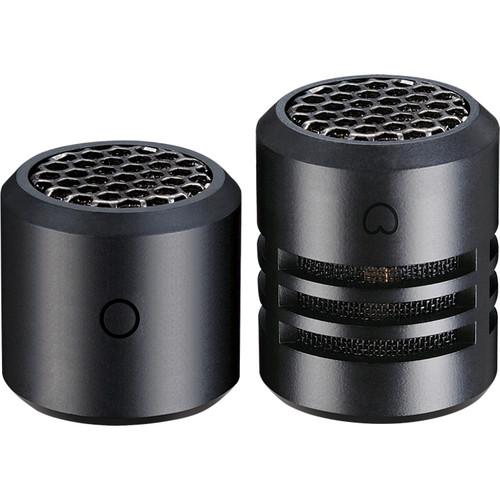
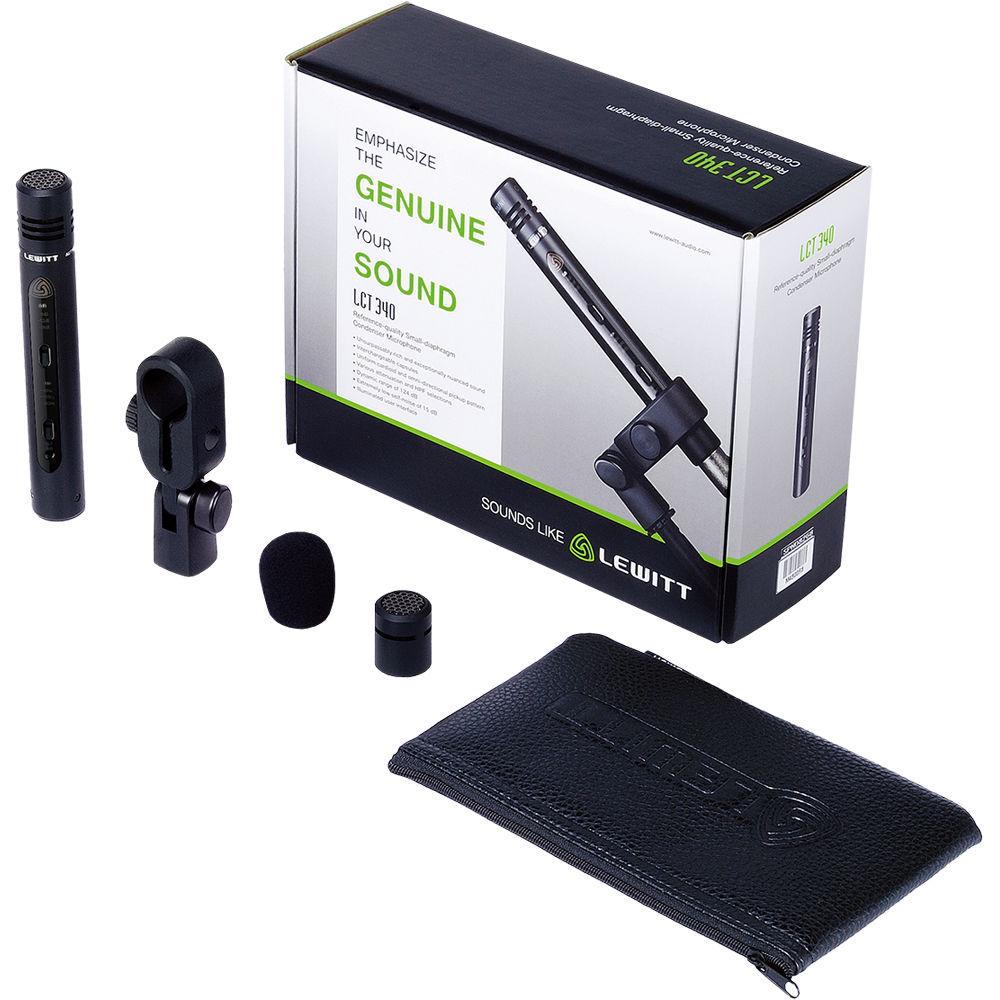
Product description The LCT 340 Small-Diaphragm Condenser Microphone from Lewitt features interchangeable cardioid and omnidirectional capsules for changing polar patterns without switching up microphones. The LCT 340 is ideal for project and professional recording applications, and is an ideal choice for drum capturing, percussion, overheads, amplifier cabinets, group vocals, stereo recordings (requires pair) and more.The microphone features a wide frequency response and dynamic range for pristine detail and clarity. An attenuation (Pad) switch enhances headroom and minimizes noise and distortion, and a 4-position low-frequency roll-off switch (HPF) minimizes low-frequency noise. The LCT 340 is immune to electromagnetic interference (RFI) from WiFi, cell phones, and other electronic devices. - Interchangeable capsules for cardioid and omnidirectional pattern selection
- 0.8" small-diaphragm capsule for precise, characteristic sound
- Dynamic range of 124 dB and extremely low self-noise level of 15 dB
- LED display for quick visual indication
- Immune to electromagnetic interference thanks to transformerless output stage
- Rugged black die-cast body ensures long life
- Hexagonal steel-mesh grille with ruthenium-galvanized finish (black)
- Gold-plated 3-pin XLR output connector
UPC: 847986000026 In the Box Lewitt LCT 340 Small-Diaphragm Condenser Microphone Cardioid Capsule Omnidirectional Capsule DTP 40 MTS Shockmount LCT 40 WS Windscreen DTP 40 LB Artificial Leather Bag Limited 2-Year Warranty Table of Contents
|
Upload User Manual
Have you got an user manual for the Lewitt LCT 340 Small-Diaphragm Condenser Microphone in electronic form? Please send it to us and help us expand our library of instruction manuals.
Thank you, too, on behalf of other users.
To upload the product manual, we first need to check and make sure you are not a robot. After that, your "Submit Link" or "Upload File" will appear.
Technical parametersLewitt 340 Specs | | | Operating Principle | Pressure Gradient | | Diaphragm | 0.80" / 20.32 mm | | Polar Pattern | Cardioid, Omnidirectional | | Pattern Selection | Switched | | Frequency Range | 20 Hz to 20 kHz | | Signal to Noise Ratio | 79 dB A-Weighted | | Equivalent Noise Level | Cardioid: 15 dB A-Weighted
Omnidirectional: 16 dB A-Weighted | | Maximum SPL | 39 dB SPL | | Pad | -6 dB
-12 dB
-18 dB | | THD | 0.5% | | Impedance | 150 Ohms | | Load Impedance | 1000 Ohms | | Sensitivity | Cardioid: 9 mV/Pa
Omnidirectional: 8 mV/Pa | | Low-Cut Filter | 6 dB/Octave @ 300 Hz
6 dB/Octave @ 150 Hz
12 dB/Octave @ 40 Hz | | | | Output Connectors | 1 x 3-Pin XLR | | Operating Current Consumption | 6.6 mA | | Operating Voltage | 48 V ± 4 V | | Length | 6.30" / 160 mm | | Diameter | 0.94" / 24 mm | | Weight | 7.05 oz / 200 g |
Rating60% users recommend this product to others. And what about you?

This product has already been rated by 09 owners. Add your rating and experience with the product.
Discussion
 Ask our technicians if you have a problem with your settings,
or if anything is unclear in the user manual you have downloaded.
You can make use of our moderated discussion.
The discussion is public and helps other users of our website who may be encountering similar problems.
Ask our technicians if you have a problem with your settings,
or if anything is unclear in the user manual you have downloaded.
You can make use of our moderated discussion.
The discussion is public and helps other users of our website who may be encountering similar problems.
The discussion is empty - enter the first post
Post a new topic / query / comment:
|
|
|
| Request for user manual |
You can’t find the operation manual you are looking for? Let us know and we will try to add the missing manual:
I’m looking for a manual / Request for manual
Current requests for instruction manuals:
Call Of Duty World War Two For Xbox...
controller stratus XL...
stratus XL...
smart whatch serie S11 42mm...
Allen & Heath SQ-6 manual...
|
| Discussion |
Latest contributions to the discussion:
AEW R 4100
Name: MAURICIO ANGARITA
Audio-Technica AEW-R4100 UHF Diversity Receiver for
AEW R 4100 has the mute function blocked and does not allow audio to pass. I tried several times to turn off the mute from the transmitter but it does nothing, the mute stays on. Solution?
Thank you...
Instructions for assembling the 2015 Forecast Image Master Consoles GC3-A
Name: mike elam
Forecast Consoles GC3-A ImageMaster Editing Console
Looking for instructions for assembling this console. ...
EMPTY TONER ERROR MESSAGE AFTER REPLACING TONER
Name: LINDA BAD YELLOW EYES
Brother TN223BK Standard-Yield Toner
I HAD TO CHANGE OUT ALL THREE TONERS DUE TO LEAKS IN THE YELLOW AND CYAN. AFTER I REPLACED THEM, THE MACHINE KEEPS GIVING ME AN EMPTY TONER ERROR MESSAGE. HELP!!...
PS480D 20/24 pin Switching 480W Power Supply
Name: swkargo
Logisys 480W Power Supply
This item states in can run -5vdc .It is NOT listed on the board or I beleive is r4 is missing the resitior. Any body have thid issue. Shawn
...
Help needed
Name: Ann Carter
SanDisk 1TB Extreme Portable USB 3.1
When I click the link to download the user manual for my Sandisk Extreme external hard drive, it gives me the manual for the LG Cricket. Can you please change the link so I can download the Sandisk manual and begin using this drive? Thank you....
|
|