|
User Manual for Prism Sound Lyra 2 USB Audio Interface Click to enlarge the picture
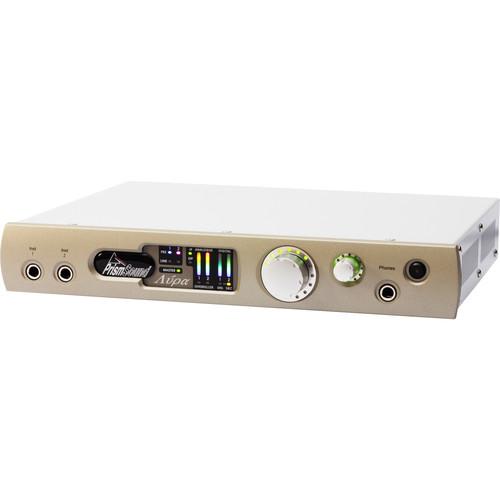 Contents of the user manual for the Prism Sound Lyra 2 USB Audio
- Product category: Audio Interfaces & Systems Prism Sound
- Brand: Prism Sound
- Description and content of package
- Technical information and basic settings
- Frequently asked questions – FAQ
- Troubleshooting (does not switch on, does not respond, error message, what do I do if...)
- Authorized service for Prism Sound Audio Interfaces & Systems
 |
User manual for the Prism Sound Lyra 2 USB Audio contain basic instructions
that need to be followed during installation and operation.
Before starting your appliance, the user manual should be read through carefully.
Follow all the safety instructions and warnings, and be guided by the given recommendations.
User manual is an integral part of any Prism Sound product,
and if it is sold or transferred, they should be handed over jointly with the product.
Following the instructions for use is an essential prerequisite for protecting
health and property during use, as well as recognition of liability on the part of the manufacturer
for possible defects should you make a warranty claim. Download an official Prism Sound user manual in which you will find instructions on how to install, use, maintain and service your product.
And do not forget – unsuitable use of a Prism Sound product will considerably shorten its lifespan!
|
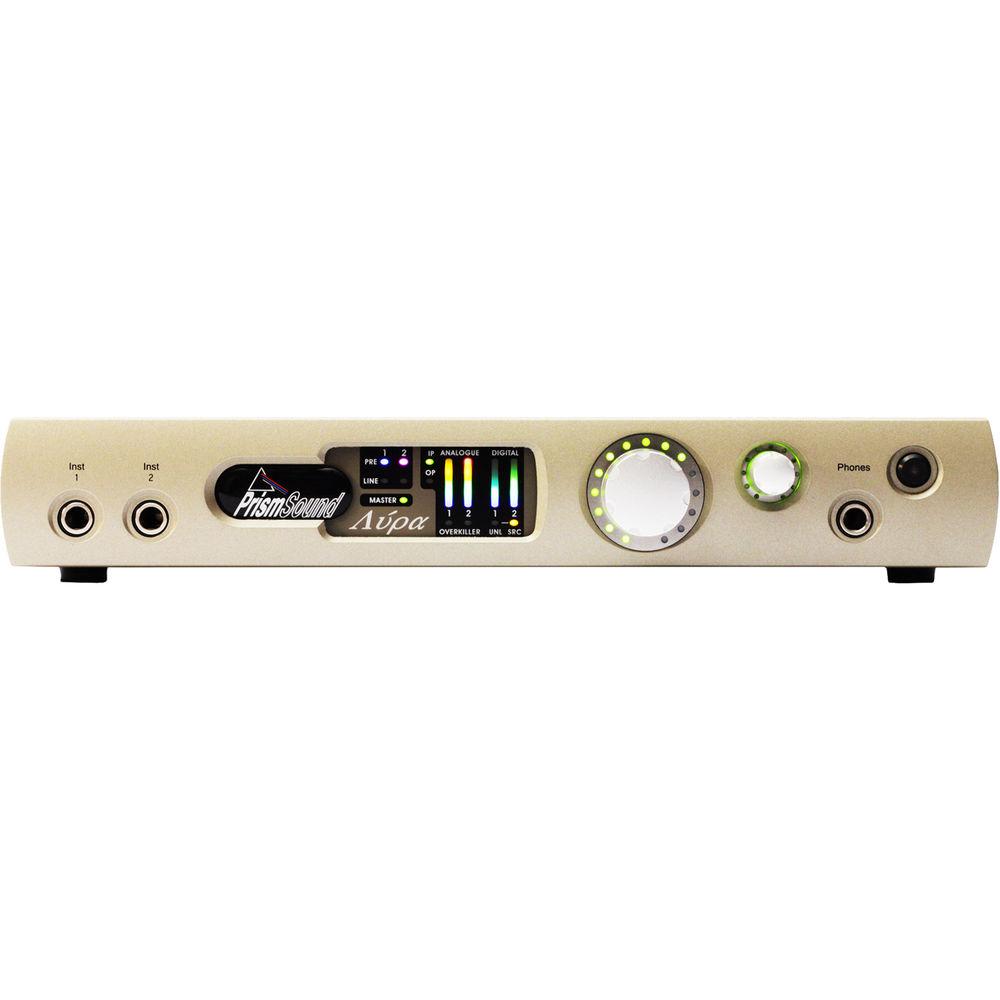
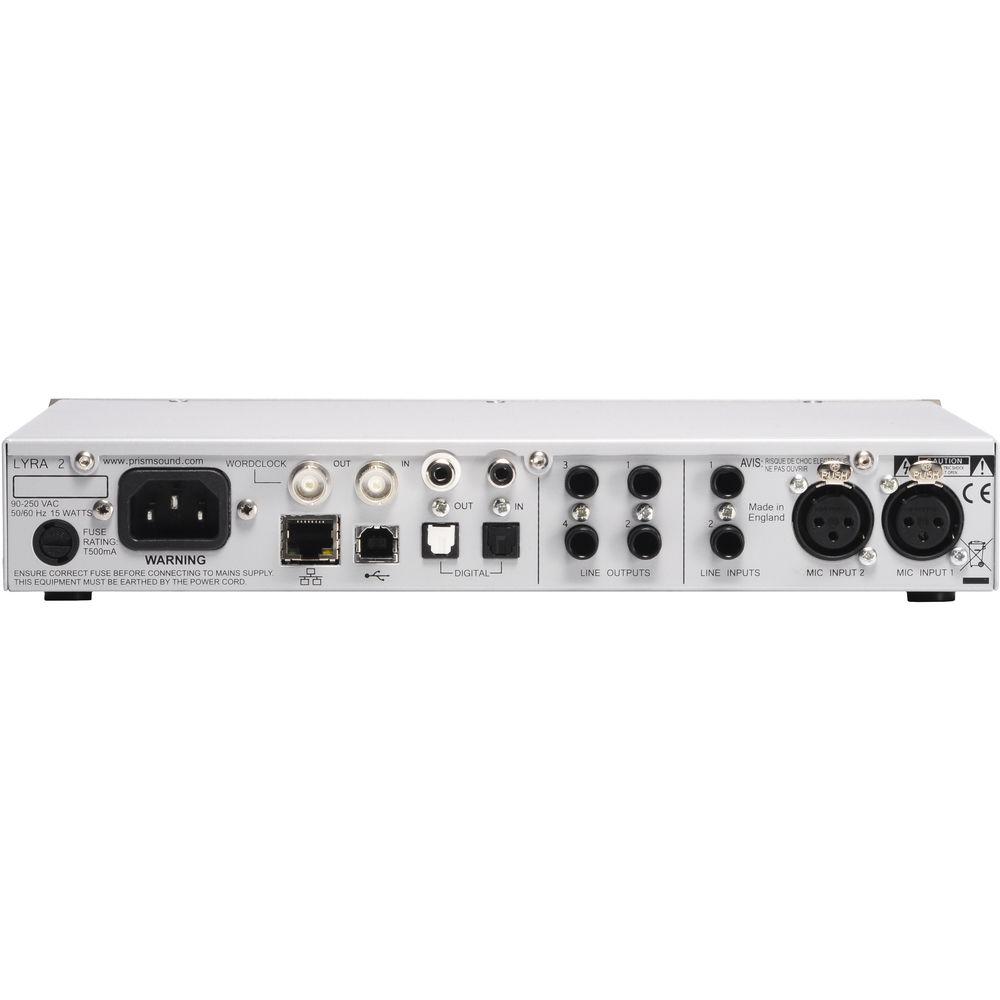
Product description The Prism Sound Lyra 2 is a USB audio interface designed to deliver reliable precision and high-resolution audio I/O for musicians, vocalists, songwriters, and audio engineers in home, project, and mobile studios. Its stable clock allows operation at up to 24-bit / 192 kHz resolution with high jitter rejection. With latency as low as 0.08 ms, it is well suited for recording, overdubbing, and even send-and-return routing.Line, instrument, or microphone sources can be connected via the stereo 1/4" TRS inputs, two 1/4" instrument inputs, and two XLR 3-pin inputs. Phantom power is selectable as are the input pads and built-in limiters. The four 1/4" line outputs are ideal for connecting to speakers and power amps, while the front-panel 1/4" jack offers dedicated level and mix controls for independent headphone monitoring. Additionally, digital connectivity includes RCA coaxial for S/PDIF or AES3, TOSLINK optical for S/PDIF or ADAT, and BNC for word clock. An RJ45 port is present for future AVB integration.The Lyra 2 is compatible with Mac OS X and Windows systems via its class-compliant USB 2.0 connectivity. An IEC power cable, USB cable, and XLR to RCA adapters are included. - Signal Path
- Analog and digital input channels are available as inputs for your audio workstation software through the host computer's audio driver. Similarly, analog and digital outputs, and stereo headphone outputs can be played independently. For low-latency monitoring to headphone or main outputs, each output pair can optionally be driven from the built-in DSP mixer with an individual local mix of any selection of inputs through the controller applet. All analog inputs are electronically balanced with automatic unbalanced operation. Analog outputs are electronically balanced with bootstrapping (level is maintained if one leg is grounded).
- Verifile Technology
- Verifile is a radical new proprietary technology exclusive to Prism Sound, which allows computer audio streams and recorded files to be quickly checked for a wide range of clicks, errors, and dropouts, without any compromise in the audio content or any additional metadata. Verifile is a fragile steganographic process, which embeds derivative data within the dither of the ADC, containing a rolling hash code which allows the audio data to be thoroughly and continuously checked. Recovery of this data from the audio stream or file enables verification that the stream or file contains exactly the audio data that was produced by the ADC at the time of recording. Any incorrect samples, missing or repeated audio segments or any other audio errors in the resulting files can be reliably detected, providing complete confidence that the recorded file is error-free. Processing such as EQ, level changes, additional redithering, or sample-rate conversion done to a Verifile recording will result in a failure to decode the rolling hash code in the dither and hence indicate that the recording is not an original.
- Reliable Quality
- Prism Sound uses precise software calibration techniques in its converters to avoid the unreliability of pots and tweaks. Minimizing noise, interference, and hum was a priority in the design. All the analog circuits have galvanic isolation, while the unit's electronically balanced I/O allows it to handle common mode interference sources and trouble-free connection to unbalanced equipment.
- USB 2.0 Compatibility
- The Lyra 2 is easy to connect to your computer and to your outboard gear. For both Mac and Windows platforms, there is a controller application to configure the unit and control its built-in mixer and various functions. Aside from the monitor and headphone level controls, everything else is operated solely from the Lyra controller application. The controller software opens on-screen as a separate panel alongside your existing editing software. Since the Lyra 2 is UAC2 compliant, it will also work with recent Linux and Android builds, although no control panel is provided.
- Flexible I/O
- Utilizing the same mic amps as Orpheus, the Lyra offers software-controlled gain in 1 dB steps, switchable phantom power, 20 dB pads, and low noise and distortion. The inputs are auto-sensing with software override. Inputs one and two can be microphone, instrument, or line. Analog inputs have individually-selectable Prism Sound Overkiller peak limiters built in—just as on the ADA-8XR and Orpheus—to catch those fast transients. The Overkiller threshold automatically follows the operating line-level selection (+4 dBu or -10 dBV). Overkillers are ideal for percussive sounds, particularly drums, where headroom can be a problem.
The coaxial digital I/O can be switched in the Lyra 2 controller applet between S/PDIF and AES3 formats. This control changes the operating voltage and the channel status format and is complemented by two supplied adapters that provide external XLR connections for AES3 devices. The optical digital I/O ports on Lyra 2 can also be configured as ADAT I/O. Other connections include word clock sync I/O on BNC connectors. - Low-Latency Digital Mixer
- A built-in digital mixer can be configured from the host computer to provide foldback feeds to performers, each with their own stereo mix of workstation playback and any of the inputs. This provides console quality local mixing—each output has its own independent mixer, with channel strips for all inputs and workstation feeds, complete with fader, pan/balance pot, solo and mute buttons, and full metering. Strips can be stereo or mono, and the mixes are dithered with filtered coefficients, just as in a top-end digital mixer. With the Prism Sound DSP mixer, the latency is as low as 0.08 ms at a 192 kHz sampling rate.
- Sample Rate Conversion & Noise Shaping
- Prism Sound's renowned synchronous sample-rate conversion allows outputting to various external devices at other sampling rates. The sample rate converter can be used at the outputs as well as the inputs, so as well as dealing with unsynchronised or wrong-rate digital inputs, Lyra can also generate, say, a live 44.1 kHz output from a 96 kHz session. The digital output is equipped with the four Prism Sound SNS noise-shaping curves, allowing you to reduce to 16-bits for CD at mastering-house quality.
- Stable Clocking
- State-of-the-art clock generation with proprietary hybrid 2-stage DPLL keeps jitter to a minimum. The sample rate can be sourced from the local clock, BNC word clock, or digital input stream.
UPC: 669014270894 In the Box Prism Sound Lyra 2 USB Audio Interface IEC Cable USB Type-A to USB Type-B Cable XLR Female to RCA Male Adapter XLR Male to RCA Male Adapter CD with Software and Manuals Limited 3-Year Warranty Table of Contents
|
Upload User Manual
Have you got an user manual for the Prism Sound Lyra 2 USB Audio Interface in electronic form? Please send it to us and help us expand our library of instruction manuals.
Thank you, too, on behalf of other users.
To upload the product manual, we first need to check and make sure you are not a robot. After that, your "Submit Link" or "Upload File" will appear.
Technical parametersPrism Sound Lyra 2 Specs | System Requirements | Mac OS X 10.5 or later (Intel only)
Host application that supports Core Audio
Windows Vista or later (32- / 64-bit)
Host application that supports ASIO | | Inputs | 2 x XLR 3-pin female mic inputs (balanced)
2 x 1/4" TS instrument inputs (unbalanced)
2 x 1/4" TRS line inputs (balanced or unbalanced)
1 x TOSLINK optical input (supports S/PDIF or ADAT)
1 x coaxial input (supports S/PDIF or AES3) | | Outputs | 4 x 1/4" TRS line outputs (balanced or unbalanced)
1 x 1/4" TRS headphone output (unbalanced)
1 x TOSLINK optical output (supports S/PDIF or ADAT)
1 x coaxial output (supports S/PDIF or AES3) | | Word Clock | 1 x BNC input
1 x BNC output | | USB | 1 x USB Type-B | | Ethernet | 1 x RJ45 (for future AVB expansion) | | Input Sensitivity | Line Inputs: +4 dBu (0 dBFS = +18 dBu) or -10 dBV (0 dBFS = +6 dBu) | | Input Impedance | Line Inputs: 14.5 kOhms
Mic Inputs: 5.5 kOhms
Instrument Inputs: 1 MOhm | | Output Level | Analog Outputs: +4 dBu (0 dBFS = +18 dBu) or -10 dBV (0 dBFS = +6 dBu) | | Output Impedance | Balanced: 100 Ohms
Unbalanced: 50 Ohms | | Balance | Output: >50 dB | | Total Harmonic Distortion (THD) | Line Inputs: -117 dB at -0.1 dBFS (0.00014%)
Mic Inputs at +10 dB Gain: -116 dB at -0.1 dBFS (0.00016%)
Mic Inputs at +40 dB Gain: -110 dB at -0.1 dBFS (0.00032%)
Analog Outputs: -107 dB at -1 dBFS (0.00045%) | | THD + N | Line Inputs: -111 dB at -0.1 dBFS (0.00028%)
Mic Inputs at +10 dB Gain: -108 dB at -0.1 dBFS (0.00040%)
Analog Outputs: -106 dB at -0.1 dBFS (0.00050%)
Sample Rate Converter: < -137 dB at -0.1 dBFS (0.000014%) | | EIN | Mic Inputs at +30 dB Gain: -128.5 dBu (0-Ohm source), -126.3 dBu (150-Ohm source)
Mic Inputs at +40 dB Gain: -130.9 dBu (0-Ohm source), -127.6 dBu (150-Ohm source)
Mic Inputs at +50 dB Gain: -131.2 dBu (0-Ohm source), -127.7 dBu (150-Ohm source)
Mic Inputs at +60 dB Gain: -131.4 dBu (0-Ohm source), -127.8 dBu (150-Ohm source) | | Dynamic Range | Line Inputs: 116 dB (-60 dBFS)
Analog Outputs: 115 dB (-60 dBFS)
Sample Rate Converter: >138 dB (0.000013%, -60 dBFS) | | Gain Range | Mic Inputs: 10 to 65 dB in 1 dB steps (0 dBFS = -56 to -1 dBu)
Instrument Inputs: 10 to 65 dB in 1 dB steps (0 dBFS = -38 to +17 dBu) | | Pad | Mic Inputs: -20 dB (switchable per channel)
Instrument Inputs: -18 dB | | Gain Accuracy | ±0.05 dB | | Attenuation | LF Roll-Off (Line Inputs): -0.05 dB at 8 Hz, -3 dB at <1 Hz
LF Roll-Off (Mic Inputs): -0.05 dB at 20 Hz, -3 dB at 5 Hz
LF Roll-Off (Analog Outputs): -0.05 dB at 8 Hz, -3 dB at <1 Hz
HF Roll-Off (Line/Mic Inputs) at 44.1 kHz: -0.05 dB at 21.1 kHz, -3 dB at 22 kHz
HF Roll-Off (Line/Mic Inputs) at 48 kHz: -0.05 dB at 23 kHz, -3 dB at 23.9 kHz
HF Roll-Off (Line/Mic Inputs) at 96 kHz: -0.05 dB at 32 kHz, -3 dB at 47.9 kHz
HF Roll-Off (Line/Mic Inputs) at 192 kHz: -0.05 dB at 32 kHz, -3 dB at 78 kHz
HF Roll-Off (Analog Outputs) at 44.1 kHz: -0.05 dB at 21.4 kHz, -3 dB at 22 kHz
HF Roll-Off (Analog Outputs) at 48 kHz: -0.05 dB at 23.2 kHz, -3 dB at 23.9 kHz
HF Roll-Off (Analog Outputs) at 96 kHz: -0.05 dB at 32 kHz, -3 dB at 47.8 kHz
HF Roll-Off (Analog Outputs) at 192 kHz: -0.05 dB at 32 kHz, -3 dB at 76 kHz | | CMRR | Line Inputs (20 Hz to 20 kHz): >70 dB
Mic Inputs (50/60 Hz): >110 dB at all gains
Mic Inputs (1 kHz): >100 dB at all gains
Mic Inputs (20 kHz): >90 dB at all gains | | Crosstalk | Line Inputs (1 kHz): < -140 dB
Line Inputs (20 Hz to 20 kHz): < -120 dB
Analog Outputs (1 kHz): < -135 dB
Analog Outputs (20 Hz to 20 kHz): < -120 dB | | Inter-Channel Differential Phase | Line Inputs (10 Hz to 5 kHz): ±0.25°
Line Inputs (5 kHz to 20 kHz): ±1.0°
Line Inputs (20 kHz to 50 kHz): ±2.0°
Analog Outputs (10 Hz to 5 kHz): ±0.4°
Analog Outputs (5 kHz to 20 kHz): ±0.25°
Analog Outputs (20 kHz to 50 kHz): ±0.5° | | Built-in Limiter | Line Inputs: Progressive limiter, auto-aligning, selectable per channel | | Filter | Line Inputs: High-pass filter, -3 dB at 80 Hz, 40 dB/decade (selectable for channels 1-2) | | Phantom Power | +48 VDC, switchable per channel | | Supported Digital Audio Standards | S/PDIF (coaxial or TOSLINK)
ADAT or ADAT S/MUX (TOSLINK)
AES3 (coaxial) | | Sample Rates | S/PDIF or AES3: Up to 192 kHz
ADAT (8-Channel): Up to 48 kHz
ADAT S/MUX (4-Channel): 88.2 kHz or 96 kHz | | Bit Depth | Digital Input: 24-bit
Digital Output: 24-bit or reduction to 16-bit using flat TPDF dither or Prism Sound SNS (Super Noise Shaping) | | AES/EBU | AES3 operation via supplied XLR to RCA adapters and AES3 mode (2 V p-p, 110 Ohms, AES3 channel status) | | Channel Support | Digital Input: Channel status ignored
Digital Output: Full implementation, consumer (S/PDIF) or professional (AES3) | | Sample Rate Converter | Input: Selectable at S/PDIF input (allowing input at any sample rate)
Output: Selectable at S/PDIF output (output sample rate can be referenced to word clock, digital input, or local clock at any sample rate) | | Digital Performance | Input: Bit transparency maintained (allows recording of Dolby or DTS streams)
Output: Bit transparency maintained in 24-bit mode (allows playback of Dolby or DTS streams to external decoder) | | Clock Sources | Local, word clock, S/PDIF, or ADAT | | Clock Accuracy | ±50 ppm | | Jitter Rejection Filter | >60 dB/decade above 100 Hz | | Latency | 0.57 ms at 44.1 kHz
0.52 ms at 48 kHz
0.2 ms at 88.2 kHz
0.18 ms at 96 kHz
0.09 ms at 176.4 kHz
0.08 ms at 192 kHz | | Ambient Operating Temperature | 32 to 95°F / 0 to 35°C | | Relative Humidity | 85% maximum | | Fuse Rating | 0.5 A (T), 0.8" / 20 mm, glass | | Power Consumption | 15 W | | Power Requirement | 90 to 250 VAC, 50 to 60 Hz via IEC 6A connector | | Dimensions (W x D x H) | 11.2 x 9.5 x 2.0" / 285 x 242 x 50 mm (including feet) | | Weight | 4.6 lb / 2.1 kg | | | | Package Weight | 6.75 lb | | Box Dimensions (LxWxH) | 17.5 x 12.25 x 5.5" |
Rating70% users recommend this product to others. And what about you?

This product has already been rated by 08 owners. Add your rating and experience with the product.
Discussion
 Ask our technicians if you have a problem with your settings,
or if anything is unclear in the user manual you have downloaded.
You can make use of our moderated discussion.
The discussion is public and helps other users of our website who may be encountering similar problems.
Ask our technicians if you have a problem with your settings,
or if anything is unclear in the user manual you have downloaded.
You can make use of our moderated discussion.
The discussion is public and helps other users of our website who may be encountering similar problems.
The discussion is empty - enter the first post
Post a new topic / query / comment:
|
|
|
| Request for user manual |
You can’t find the operation manual you are looking for? Let us know and we will try to add the missing manual:
I’m looking for a manual / Request for manual
Current requests for instruction manuals:
Call Of Duty World War Two For Xbox...
controller stratus XL...
stratus XL...
smart whatch serie S11 42mm...
Allen & Heath SQ-6 manual...
|
| Discussion |
Latest contributions to the discussion:
AEW R 4100
Name: MAURICIO ANGARITA
Audio-Technica AEW-R4100 UHF Diversity Receiver for
AEW R 4100 has the mute function blocked and does not allow audio to pass. I tried several times to turn off the mute from the transmitter but it does nothing, the mute stays on. Solution?
Thank you...
Instructions for assembling the 2015 Forecast Image Master Consoles GC3-A
Name: mike elam
Forecast Consoles GC3-A ImageMaster Editing Console
Looking for instructions for assembling this console. ...
EMPTY TONER ERROR MESSAGE AFTER REPLACING TONER
Name: LINDA BAD YELLOW EYES
Brother TN223BK Standard-Yield Toner
I HAD TO CHANGE OUT ALL THREE TONERS DUE TO LEAKS IN THE YELLOW AND CYAN. AFTER I REPLACED THEM, THE MACHINE KEEPS GIVING ME AN EMPTY TONER ERROR MESSAGE. HELP!!...
PS480D 20/24 pin Switching 480W Power Supply
Name: swkargo
Logisys 480W Power Supply
This item states in can run -5vdc .It is NOT listed on the board or I beleive is r4 is missing the resitior. Any body have thid issue. Shawn
...
Help needed
Name: Ann Carter
SanDisk 1TB Extreme Portable USB 3.1
When I click the link to download the user manual for my Sandisk Extreme external hard drive, it gives me the manual for the LG Cricket. Can you please change the link so I can download the Sandisk manual and begin using this drive? Thank you....
|
|