User Manual for Telex MS-2002 Two-Channel Master Station and Power Supply for Wired Intercom Systems Click to enlarge the picture
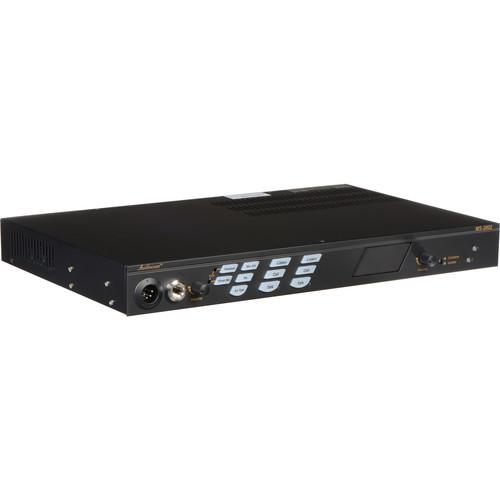 Contents of the user manual for the Telex MS-2002 Two-Channel Master Station and
- Product category: Wired Intercoms Telex
- Brand: Telex
- Description and content of package
- Technical information and basic settings
- Frequently asked questions – FAQ
- Troubleshooting (does not switch on, does not respond, error message, what do I do if...)
- Authorized service for Telex Wired Intercoms
 |
User manual for the Telex MS-2002 Two-Channel Master Station and contain basic instructions
that need to be followed during installation and operation.
Before starting your appliance, the user manual should be read through carefully.
Follow all the safety instructions and warnings, and be guided by the given recommendations.
User manual is an integral part of any Telex product,
and if it is sold or transferred, they should be handed over jointly with the product.
Following the instructions for use is an essential prerequisite for protecting
health and property during use, as well as recognition of liability on the part of the manufacturer
for possible defects should you make a warranty claim. Download an official Telex user manual in which you will find instructions on how to install, use, maintain and service your product.
And do not forget – unsuitable use of a Telex product will considerably shorten its lifespan!
|
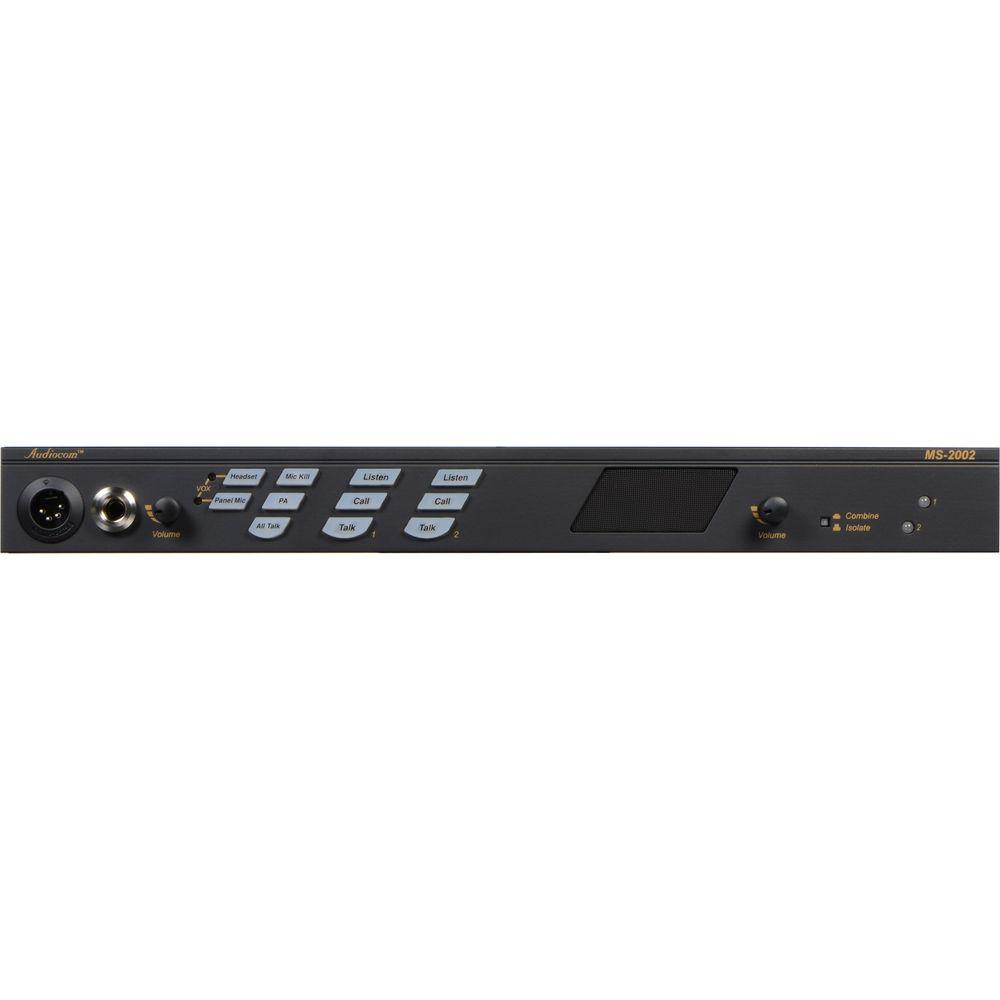
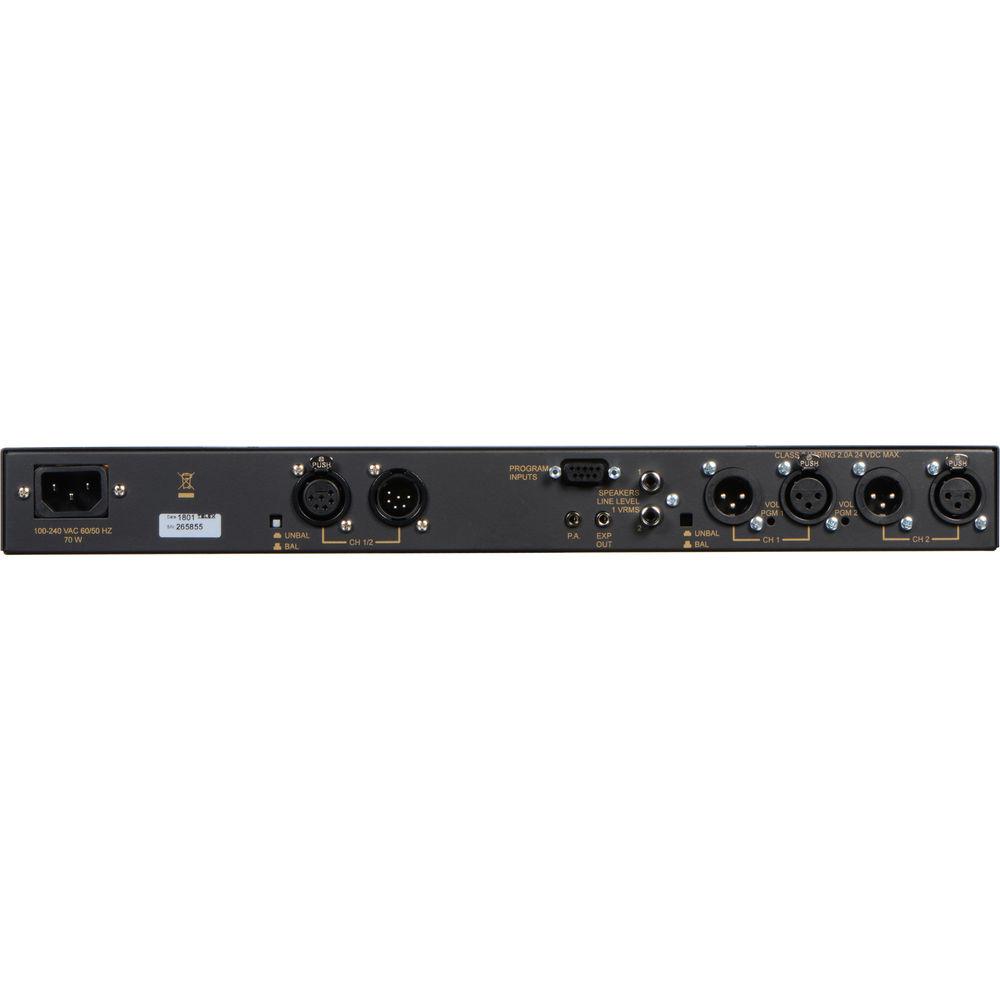
Product description The Telex MS-2002 is a two-channel master station and system power supply offering easy interfacing of wired intercom stations and headsets in a 1 RU rack-mountable enclosure. With both 1- and 2-channel connectors, you can incorporate both types of stations without needing a breakout box. Separate jacks—each with its own adjustable voice activation level—are provided to accommodate headsets equipped with dynamic or electret microphones. Monitor through your headset, the built-in speaker, or via powered loudspeakers connected to the rear-panel RCA speaker jacks. The MS-2002's balanced/unbalanced selector switches ensure compatibility with Audiocom and ClearCom systems. Talk to all stations, or utilize the per-channel talk, call, and listen keys for channel-specific communication. The Mic Kill key enables efficient channel clearing at the push of a button. The MS-2002 is easily augmented via EMS-4001 four-channel expansion stations (available separately). - 2-channel main station and system power supply in single unit with 1- and 2-channel connectors (no breakout box required)
- Connect a headset (available separately) to the front panel, or monitor through the built-in speaker; volume is independently adjustable for the headphone output and built-in speaker
- Separate controls adjust the voice activation level for the headset microphone and panel microphone inputs
- PA output with dedicated selector key for intercom announcements over PA system
- Backlit keys for improved visibility in low-lighting environments
- Flashing red light with switchable beep tone indicates incoming calls
- Mic Kill key turns off all microphones on channel to quickly clear the channel
- IAR (Instantaneous Auto Reset) technology dynamically monitors line fault conditions and then automatically brings individual power supply channels up when the fault is removed
- Separate line-level audio source connection for monitoring or intercom channel routing with assignable channel interrupt when operator is speaking
- Stereo monitoring available with RCA connectors to powered speakers for independent left/right listening to both channels
- Communicate with two intercom channels, or add up to four EMS-4001 four-channel expansion stations (available separately) for a total of 18 channels
- Supplies 24 VDC (2A) total power
UPC: 800549427500 In the Box Telex MS-2002 Two-Channel Master Station and Power Supply for Wired Intercom Systems Faceplate Set 2 x Rackmount Brackets Power Cable Limited 3-Year Warranty Table of Contents
|
Upload User Manual
Have you got an user manual for the Telex MS-2002 Two-Channel Master Station and Power Supply for Wired Intercom Systems in electronic form? Please send it to us and help us expand our library of instruction manuals.
Thank you, too, on behalf of other users.
To upload the product manual, we first need to check and make sure you are not a robot. After that, your "Submit Link" or "Upload File" will appear.
Technical parametersTelex F.01U.118.755 Specs | Headset Connectors | 1 x 4-Pin XLR Male for Dynamic Headset
1 x 1/4" TRS Stereo for Electret Headset | | I/O Connectors | 2 x 3-Pin XLR Female for 1-Channel Intercom Stations
2 x 3-Pin XLR Male for 1-Channel Intercom Stations
1 x 6-Pin XLR Female for 2-Channel Intercom Stations
1 x 6-Pin XLR Male for 2-Channel Intercom Stations
1 x DE-9 Female Program Input
2 x RCA Coaxial Speaker Outputs
1 x 1/8" / 3.5 mm TRS PA Output
1 x 0.1" / 2 mm TRS Expansion I/O | | Input Level | Program Input: 2.3 Vrms Maximum, 1 Vrms Nominal
Panel Microphone Input: -25 dBu Maximum, -42 dBu Nominal | | Output Level | Program Out (to Intercom Channel): 2.3 Vrms Maximum, 1 Vrms Nominal
Intercom Channels (Balanced Mode): 1 Vrms Nominal
Intercom Channels (Unbalanced Mode): 1 Vrms ±10%
PA Output: 235 mVrms Nominal
Speaker Output: 0 dB Nominal (1 Vrms)
Headphone Amplifier: 250 mW ±10% into 150 Ohms, 65 mW ±10% into 600 Ohms | | Impedance | Dynamic Headset (Microphone): 50 to 200 Ohms
Dynamic Headset (Headphones): 150 to 600 Ohms
Program Input: 75 kOhms
Intercom (Balanced): 300 Ohms
Intercom (Unbalanced): 150 Ohms
Intercom (Bridging): > 10 kOhms
Speaker Output: 1 kOhm Nominal | | Frequency Response | Headphone Amplifier: 200 Hz to 8 kHz (+1 dB / -3 dB)
Speaker Output: 200 Hz to 8 kHz (+1 dB / -3 dB) | | THD + N | Headphone Amplifier: < 0.2% at 200 mW | | Common Mode Rejection | > 50 dB | | Voltage Gain | Program Input: 25 dB (±3 dB)
Headphone Amplifier: 30 dB (±3 dB) | | Voltage Output | 12 to 30 VDC (24 VDC Nominal), 65 to 150 mA (1 A per Channel Maximum) | | Call Signaling | Send (Balanced): 20 kHz (±100 Hz), 0.5 Vrms (±10%)
Receive (Balanced): 20 kHz (±800 Hz), 100 mVrms
Send (Unbalanced): 11 VDC (±3 VDC)
Receive (Unbalanced): 4 VDC Minimum | | Control Frequency | Mic Kill (Send): 24 kHz (
Rating80% users recommend this product to others. And what about you?

This product has already been rated by 25 owners. Add your rating and experience with the product.
Discussion
 Ask our technicians if you have a problem with your settings,
or if anything is unclear in the user manual you have downloaded.
You can make use of our moderated discussion.
The discussion is public and helps other users of our website who may be encountering similar problems.
Ask our technicians if you have a problem with your settings,
or if anything is unclear in the user manual you have downloaded.
You can make use of our moderated discussion.
The discussion is public and helps other users of our website who may be encountering similar problems.
The discussion is empty - enter the first post
Post a new topic / query / comment:
|
|
|
| Request for user manual |
You can’t find the operation manual you are looking for? Let us know and we will try to add the missing manual:
I’m looking for a manual / Request for manual
Current requests for instruction manuals:
Call Of Duty World War Two For Xbox...
controller stratus XL...
stratus XL...
smart whatch serie S11 42mm...
Allen & Heath SQ-6 manual...
|
| Discussion |
Latest contributions to the discussion:
AEW R 4100
Name: MAURICIO ANGARITA
Audio-Technica AEW-R4100 UHF Diversity Receiver for
AEW R 4100 has the mute function blocked and does not allow audio to pass. I tried several times to turn off the mute from the transmitter but it does nothing, the mute stays on. Solution?
Thank you...
Instructions for assembling the 2015 Forecast Image Master Consoles GC3-A
Name: mike elam
Forecast Consoles GC3-A ImageMaster Editing Console
Looking for instructions for assembling this console. ...
EMPTY TONER ERROR MESSAGE AFTER REPLACING TONER
Name: LINDA BAD YELLOW EYES
Brother TN223BK Standard-Yield Toner
I HAD TO CHANGE OUT ALL THREE TONERS DUE TO LEAKS IN THE YELLOW AND CYAN. AFTER I REPLACED THEM, THE MACHINE KEEPS GIVING ME AN EMPTY TONER ERROR MESSAGE. HELP!!...
PS480D 20/24 pin Switching 480W Power Supply
Name: swkargo
Logisys 480W Power Supply
This item states in can run -5vdc .It is NOT listed on the board or I beleive is r4 is missing the resitior. Any body have thid issue. Shawn
...
Help needed
Name: Ann Carter
SanDisk 1TB Extreme Portable USB 3.1
When I click the link to download the user manual for my Sandisk Extreme external hard drive, it gives me the manual for the LG Cricket. Can you please change the link so I can download the Sandisk manual and begin using this drive? Thank you....
|
|