User Manual for Vienna Symphonic Library Historic Winds 1 - Vienna Instrument Click to enlarge the picture
 Contents of the user manual for the Vienna Symphonic Library Historic Winds 1
- Product category: Virtual Instruments Vienna Symphonic Library
- Brand: Vienna Symphonic Library
- Description and content of package
- Technical information and basic settings
- Frequently asked questions – FAQ
- Troubleshooting (does not switch on, does not respond, error message, what do I do if...)
- Authorized service for Vienna Symphonic Library Virtual Instruments
|
User manual for the Vienna Symphonic Library Historic Winds 1 contain basic instructions
that need to be followed during installation and operation.
Before starting your appliance, the user manual should be read through carefully.
Follow all the safety instructions and warnings, and be guided by the given recommendations.
User manual is an integral part of any Vienna Symphonic Library product,
and if it is sold or transferred, they should be handed over jointly with the product.
Following the instructions for use is an essential prerequisite for protecting
health and property during use, as well as recognition of liability on the part of the manufacturer
for possible defects should you make a warranty claim. Download an official Vienna Symphonic Library user manual in which you will find instructions on how to install, use, maintain and service your product.
And do not forget – unsuitable use of a Vienna Symphonic Library product will considerably shorten its lifespan!
|
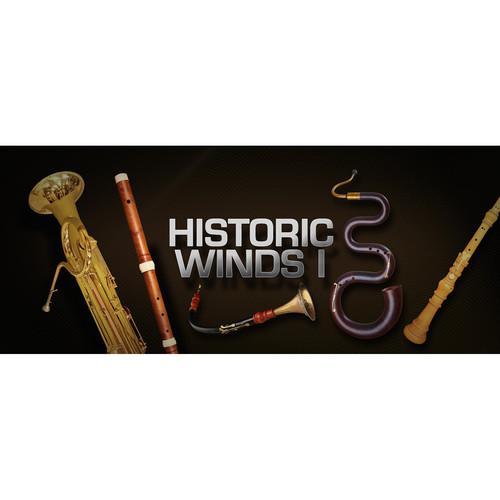
Product description Historic Winds 1 from the Vienna Symphonic Library is a sample-based virtual instrument featuring authentic performances on five rare instruments from the Renaissance and Baroque periods - transverse flute, Baroque oboe, oboe da caccia, ophicleide, and serpent. Instruments - Transverse Flute
- Reed-less woodwind instrument
Appeared in the 12th century in Central Europe and experienced its golden era in the Baroque period as a predecessor of the modern concert flute
Single valve and a key range of about 2 1/2 octaves
Made of ebony, granadilla wood, boxwood, or olive wood, for a warm and soft sound - Baroque Oboe
- Double-reed woodwind instrument that appeared in the mid-17th century
Also called "hautbois," a name derived from the compound French word haut ("high," "loud") and bois ("wood," "woodwind")
Covers the soprano range from C1 to D3
As opposed to the modern oboe, the Baroque oboe has only three keys
To produce higher pitches, the player has to "overblow" to reach the next harmonic - Oboe da Caccia
- Covers the alto register of the Baroque oboe
A transposed instrument in F, sounds a 5th lower than the oboe
Bach wrote parts for the oboe da caccia in his cantatas, passions, and especially in his Christmas Oratorio
The successor to the instrument is the French horn - Ophicleide
- Conical-bore brass instrument belonging to the bugle family and similar to the tuba
Invented in 1817 by French instrument maker Jean Hilaire Asté to replace the serpent, considered to be outdated in the Romantic orchestra
Ophicleide is derived from the Greek word ophis ("serpent") and kleis ("keys")
Cupped mouthpiece is similar to modern trombone and euphonium mouthpieces - Serpent
- Easily recognized by its appearance
Developed in France in the 16th century
Covers the bass register of the zink (cornett/cornetto) family of instruments
Usually made of wood covered in leather
Six finger holes rather than valves
Round, brass-type mouthpiece is similar to that of a trombone or tuba Articulations - Transverse Flute
- Staccato
Portato short and long
Sustained
Legato and trill performances
Fortepiano, sforzato, sforzatissimo
Crescendo and diminuendo 2, 3, 4 seconds
Crescendo-diminuendo 2, 4, 6 seconds
Repetition performances legato, portato, staccato
Fast repetitions 140 to 180, and 200 BPM - Baroque Oboe
- Staccato
Portato short and long
Sustained
Legato and trill performances
Fortepiano, sforzato, sforzatissimo
Crescendo and diminuendo 2, 3, 4 seconds
Crescendo-diminuendo 2, 4, 6 seconds
Repetition performances legato, portato, staccato
Fast repetitions 140 to 180, and 200 BPM - Oboe da Caccia
- Staccato
Portato short and long
Sustained
Legato and trill performances
Fortepiano, sforzato, sforzatissimo
Crescendo and diminuendo 2, 3, 4 seconds
Crescendo-diminuendo 2, 4, 6 seconds
Repetition performances legato, portato, staccato
Fast repetitions 140 to 180, and 200 BPM - Ophicleide
- Staccato
Portato short and long
Sustained
Legato and trill performances
Sforzato
Crescendo and diminuendo 2, 3, 4 seconds
Repetition performances legato, portato, staccato; normal and crescendo - Serpent
- Staccato
Portato short and long
Legato and trill performances
Fortepiano, sforzato, sforzatissimo
Crescendo and diminuendo 2, 3, 4 seconds
Crescendo-diminuendo 2, 4, 6 seconds
Repetition performances legato, portato, staccato
Fast repetitions 140-180, and 200 BPM Table of Contents
|
Upload User Manual
Have you got an user manual for the Vienna Symphonic Library Historic Winds 1 - Vienna Instrument in electronic form? Please send it to us and help us expand our library of instruction manuals.
Thank you, too, on behalf of other users.
To upload the product manual, we first need to check and make sure you are not a robot. After that, your "Submit Link" or "Upload File" will appear.
Technical parametersVienna Symphonic Library VSLV34 Specs | Mac System Requirements | Intel Core 2 Duo processor (i5, i7, or Xeon recommended)
OS X 10.8 or later (10.9 or later recommended)
2 GB RAM (4 GB recommended)
ViennaKey (USB Protection Device) or other USB eLicenser (e.g., from Steinberg or Arturia)
6.6 GB free hard drive space (SSD or fast separate hard drive, 7200 rpm or faster recommended)
88-key master keyboard highly recommended | | Windows System Requirements | Intel Core 2 Duo or AMD Athlon 64 X2 (i5, i7, or Xeon recommended)
Windows 7, 8, 10, latest SP, 32-/64-bit (64-bit recommended)
2 GB RAM (4 GB recommended)
ViennaKey (USB Protection Device) or other USB eLicenser (e.g., from Steinberg or Arturia)
6.6 GB free hard drive space (SSD or fast separate hard drive, 7200 rpm or faster recommended)
88-key master keyboard highly recommended | | Plug-In Compatibility | AAX Native (Pro Tools 10.3.5 or higher), Audio Units (Mac only), RTAS (Pro Tools 7.3 or higher), VST |
Rating50% users recommend this product to others. And what about you?

This product has already been rated by 90 owners. Add your rating and experience with the product.
Discussion
 Ask our technicians if you have a problem with your settings,
or if anything is unclear in the user manual you have downloaded.
You can make use of our moderated discussion.
The discussion is public and helps other users of our website who may be encountering similar problems.
Ask our technicians if you have a problem with your settings,
or if anything is unclear in the user manual you have downloaded.
You can make use of our moderated discussion.
The discussion is public and helps other users of our website who may be encountering similar problems.
The discussion is empty - enter the first post
Post a new topic / query / comment:
|
|