User Manual for Rising Software Musition 5 - Music Theory Software Click to enlarge the picture
 Contents of the user manual for the Rising Software Musition 5 - Music
- Product category: Instructional & Tutorial Rising Software
- Brand: Rising Software
- Description and content of package
- Technical information and basic settings
- Frequently asked questions – FAQ
- Troubleshooting (does not switch on, does not respond, error message, what do I do if...)
- Authorized service for Rising Software Instructional & Tutorial
 |
User manual for the Rising Software Musition 5 - Music contain basic instructions
that need to be followed during installation and operation.
Before starting your appliance, the user manual should be read through carefully.
Follow all the safety instructions and warnings, and be guided by the given recommendations.
User manual is an integral part of any Rising Software product,
and if it is sold or transferred, they should be handed over jointly with the product.
Following the instructions for use is an essential prerequisite for protecting
health and property during use, as well as recognition of liability on the part of the manufacturer
for possible defects should you make a warranty claim. Download an official Rising Software user manual in which you will find instructions on how to install, use, maintain and service your product.
And do not forget – unsuitable use of a Rising Software product will considerably shorten its lifespan!
|
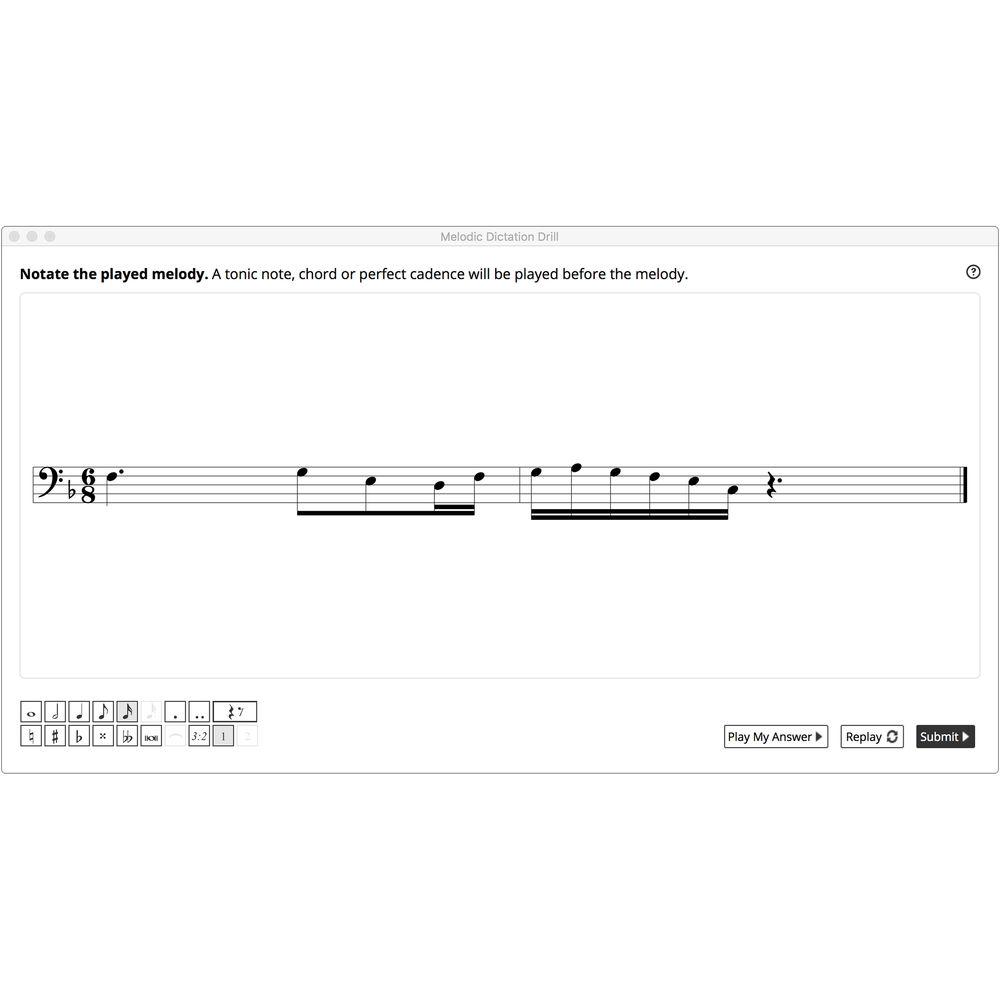
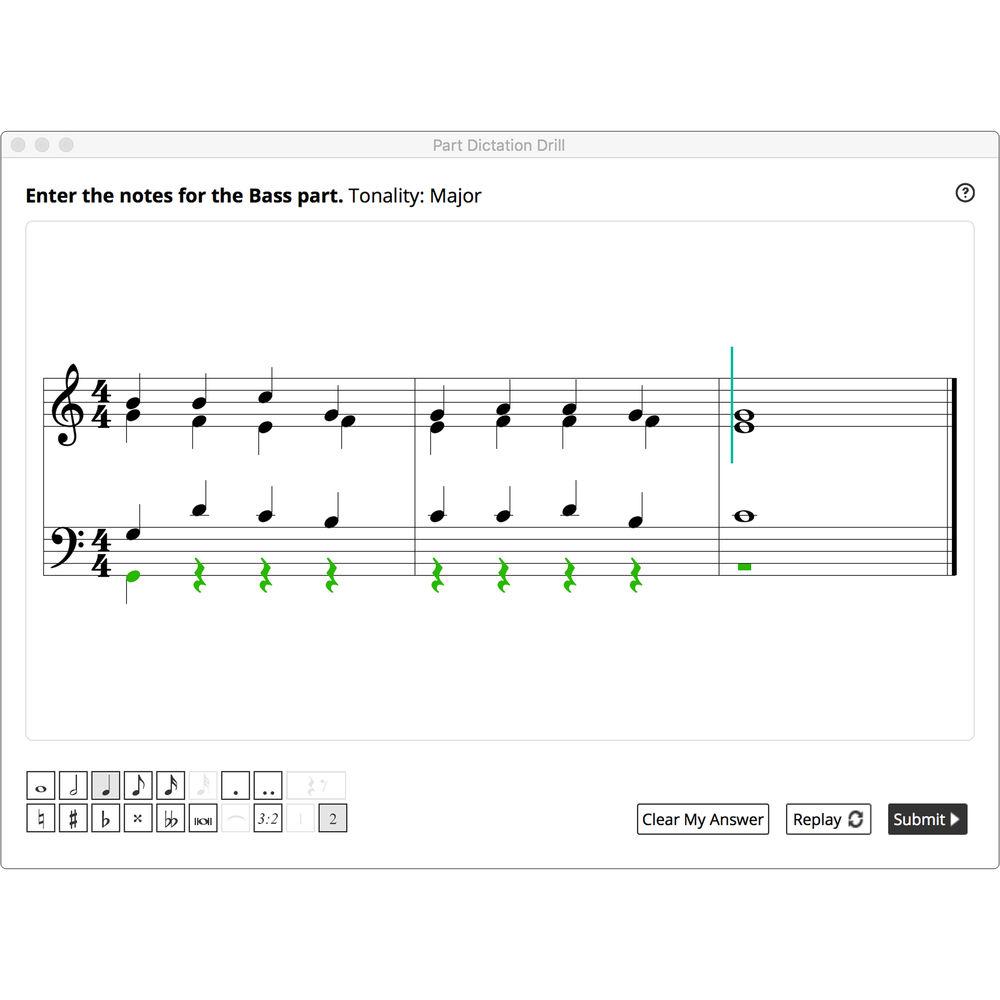
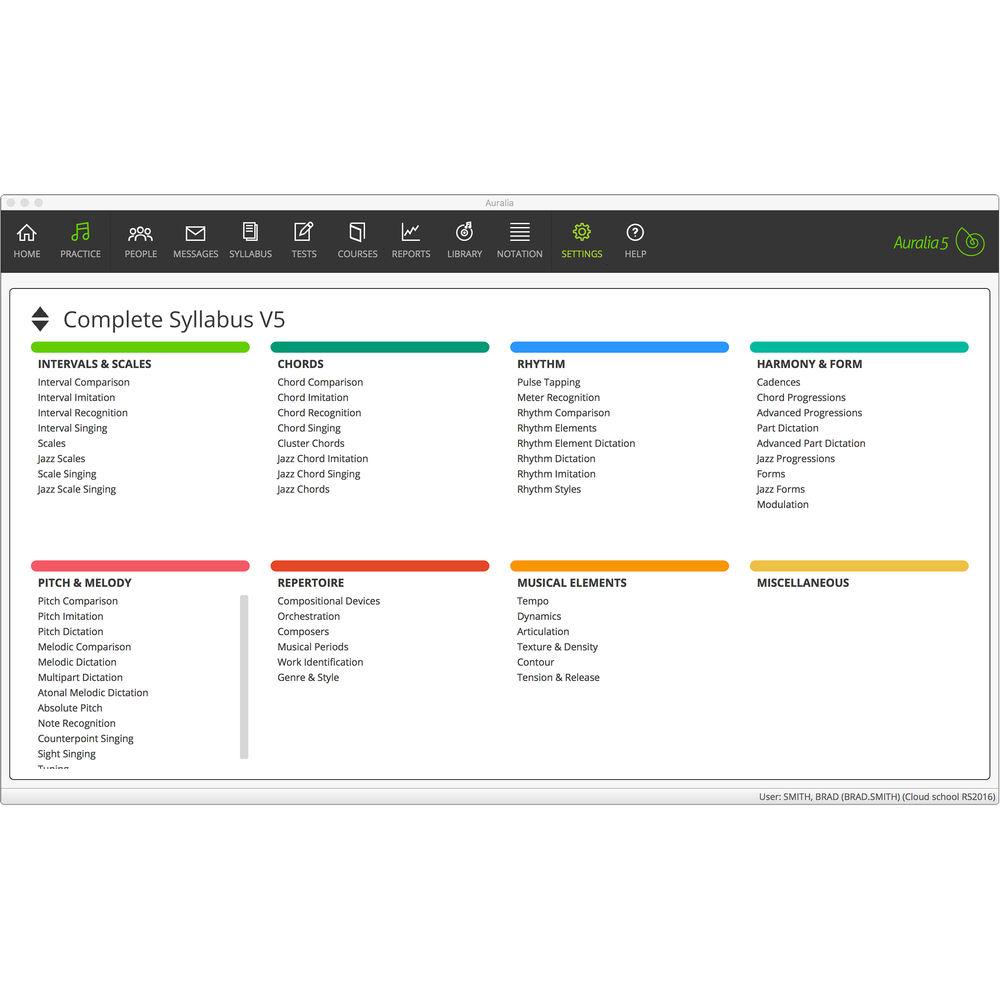
Product description Musition 5 from Rising Software is a comprehensive music theory learning software designed to teach musicians the skills to read sheet music, recognize time signatures, notate rhythms, understand intervals, match key signatures, and more. It offers students of all ages and abilities a drill-based approach to contextual learning, and a fun, engaging way to expand their knowledge and practice. It gives teachers powerful tools to create customized syllabuses, set tasks and assignments, run exams, and track and assess the progress of their students. Musition 5 comes with 38 topics divided into five groups: Pitch, Rhythm, Terms & Symbols, Harmony, and Instruments. Each topic has an accompanying lesson module where students can learn to read and write music, understand scale and chord structures, improve their sense of rhythm, understand instrument keys and transposition, comprehend musical terms and symbols, and more. Teachers can use the included library of notations and questions, or import their own content, to create high-quality questions for their students. The clean and elegant interface is designed to provide students with feedback while keeping them focused on the essential training tasks. The software provides carefully sequenced levels that gradually introduce students to more difficult drills, allowing them to learn at their own pace. It also records student's activities such as what and when they practiced, how long they practiced, and their scores. Summary and detailed reports showing student progress can be easily generated and reviewed by both teacher and student, with no grading to be done. Note: This product is an educational discounted version available to qualified, accredited academic institutions only (not for individual teachers or students). Proof of current educational status is required. A Multi-Seat License has a minimum of five (5) seats, and can be used on desktop and laptop computers. Pricing is per copy/seat. It can be networked and supports unlimited student record keeping. - What's New in Version 5
-
- New content library has hundreds of pieces of repertoire ready to use – notation excerpts, images, questions
- Import notation and images to create questions, and map content to curriculum
- Library questions: Any library item can be used to create high-quality questions, from simple, multiple choice to harmonic analysis – notation entry, notation highlighting, chord symbol entry, tapping
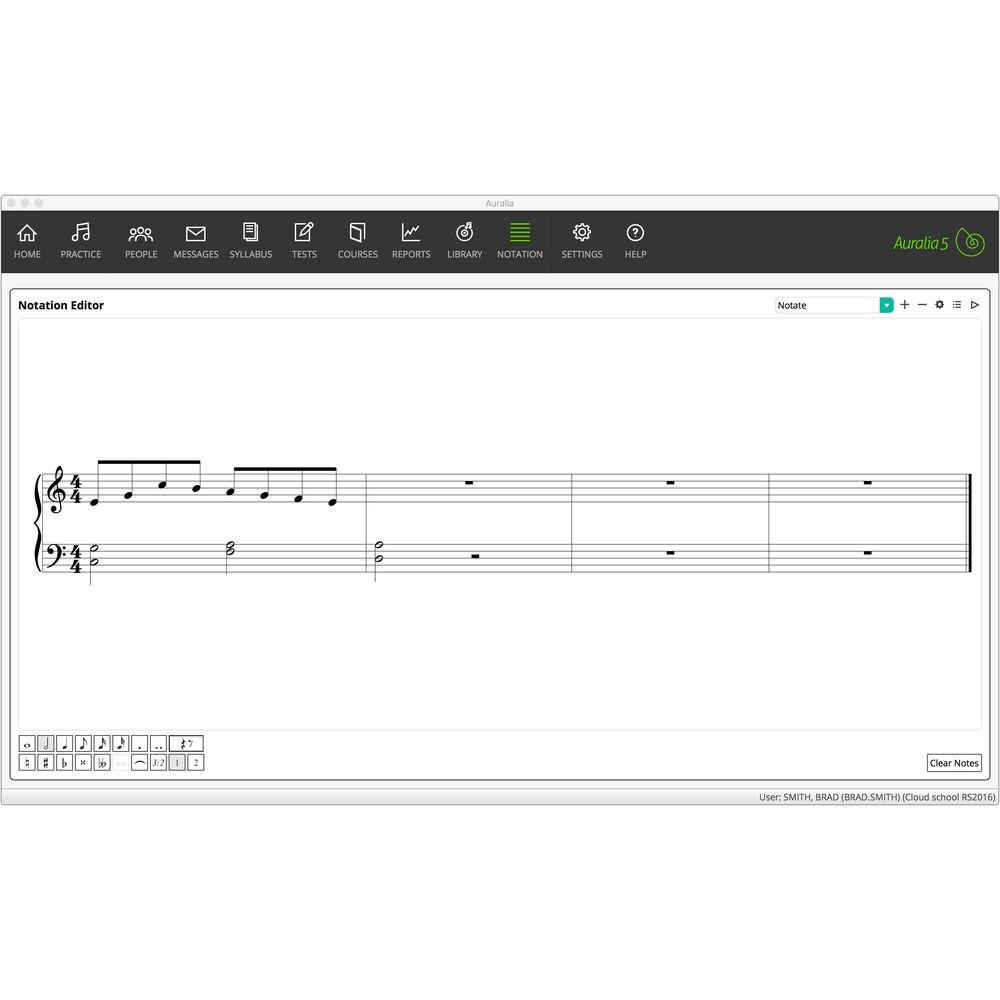
- Notation editor: Create simple scores inside Musition, save them to the library, and use the score in your own questions – with unlimited parts, unlimited bars, beaming options & anacrusis support, ties & tuplets, MusicXML import, chord symbols (both contemporary and classical)
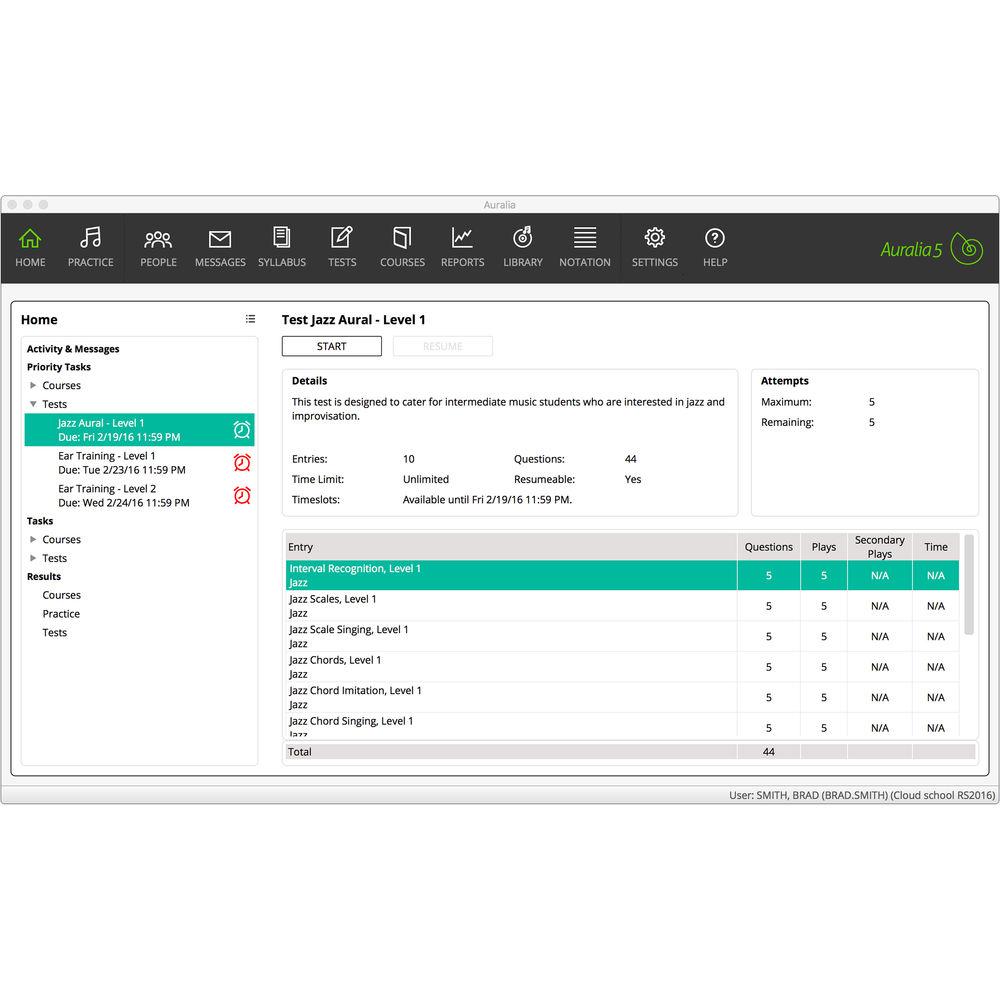
- Tests & courses: Integrated library questions, question banks using library questions, time limits (entire test or individual entries), custom courses (perfect for school curriculum mapping), test & course groups for easier navigation, enhanced reports
- Student tasks: New student 'Home' area shows all tasks, tests, and courses that have been assigned to each student – the most urgent tasks are right at top of the list
- Students can see their most recent practice and task activity, complete with scores and timing information – messages from their teacher appear right below
- Historical practice, test, and course results are also available, allowing students to review their progress over time
- New interface blends simplicity with a modern clean feel
- Interface features include: Improved student feedback (simpler with less clutter), drill revisions with an emphasis on consistency, administration changes (workflow improvements and handy shortcuts)
- Practicing
-
- Drill-based learning provides a fun and easy way to practice, assess, and teach music theory
- 38 music theory topics, each with carefully sequenced levels that gradually introduce students to more difficult drills – beginners and advanced students learn at their own pace
- In addition to the provided syllabuses, teachers can easily create their own syllabus and custom levels
- Students receive feedback when answering incorrectly
- Includes playback, notation, and text explanations
- Content
-
- Content library contains hundreds of audio recordings, notation excerpts, and questions for your students to practice
- Teachers can import their own items into the library and use them in any topic, test or course, ensuring that curriculum requirements are met
- Integrated notation editor – unlimited parts and bars, control over beaming and grouping, anacrusis support, and ties allow you to create examples quickly and easily
- Import and export MusicXML files – reuse any existing notation that you may have
- In the Classroom
-
- Student have virtually unlimited theory drills to practice, with all their questions, scores, and progress recorded, and automatically graded
- Assessment is simple using the tests and courses, and curriculum customization ensures that students stay on track
- Easy creation of worksheets, quizzes, and tests
- Flexible and comprehensive administration tools
- Syllabus Support
-
- Designed to support multiple syllabuses, so that students can practice ear training topics relevant to the curriculum they are using
- Create your own syllabuses that match your curriculum – use in your and tests and courses
- Once you have assigned the syllabus to your classes, students will only see topics that you have chosen for them, ensuring focused practice
- Syllabuses Included
-
- Musition 5 Complete
- AP* Music Theory
- Band
- Jazz
- Florida State MTA
- GCSE
- New Zealand
- Trinity
- VCE
- Western Australia
- Queensland
- Solfege – Fixed Do
- Solfege – Moveable Do La
- Solfege – Moveable Do
- South Australia
- Lessons
-
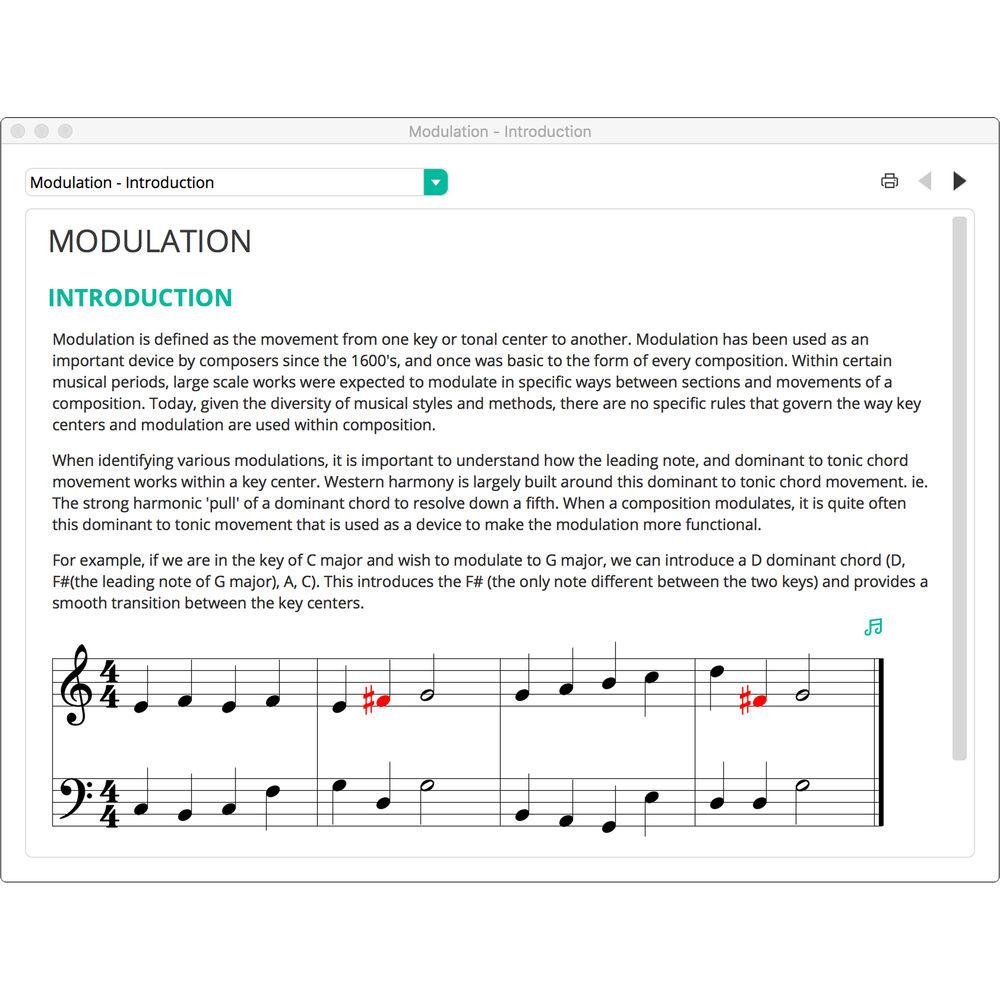
- Each topic has an accompanying Lesson screen containing notation and audio examples, plus detailed explanations of the relevant music theory subject
- Topics such as Instrument Recognition, Chords and Scales also feature a reference page where all instruments, chords and scales can be viewed and played back
- Reference pages will also automatically show any customized Chords or Scales that you may have entered into Musition
- Courses
-
- Courses provide a structured learning sequence for your students, allowing you to integrate lessons, drills, library questions, and tests, in the one task
- Create your own course, assign them to your students and monitor their progress
- Teacher can set thresholds that must be hit before a student can progress to the next stage
- Solfege, Piano, and Guitar Input
-
- Onscreen Solfege controller allows students to enter their answers using Solfege note names (Do, Re, Mi, Fa, etc.), as well as allowing for questions to be displayed on the Solfege controller
- Allows students to see their correct and incorrect answers in two ways, using both traditional notation and Solfege note names
- Choice of onscreen piano keyboard or guitar fretboard
- Pitch
-
- Note Reading: Identify notes on a staff, or enter notes on a staff
- Scale Degrees: Recognize a key signature and then identify the scale degree that a given note occupies within the key
- Enharmonic Notes: Identify enharmonic variations of notes
- Advanced Note Reading: Identify notes on a staff, or enter notes using the tenor and alto clef
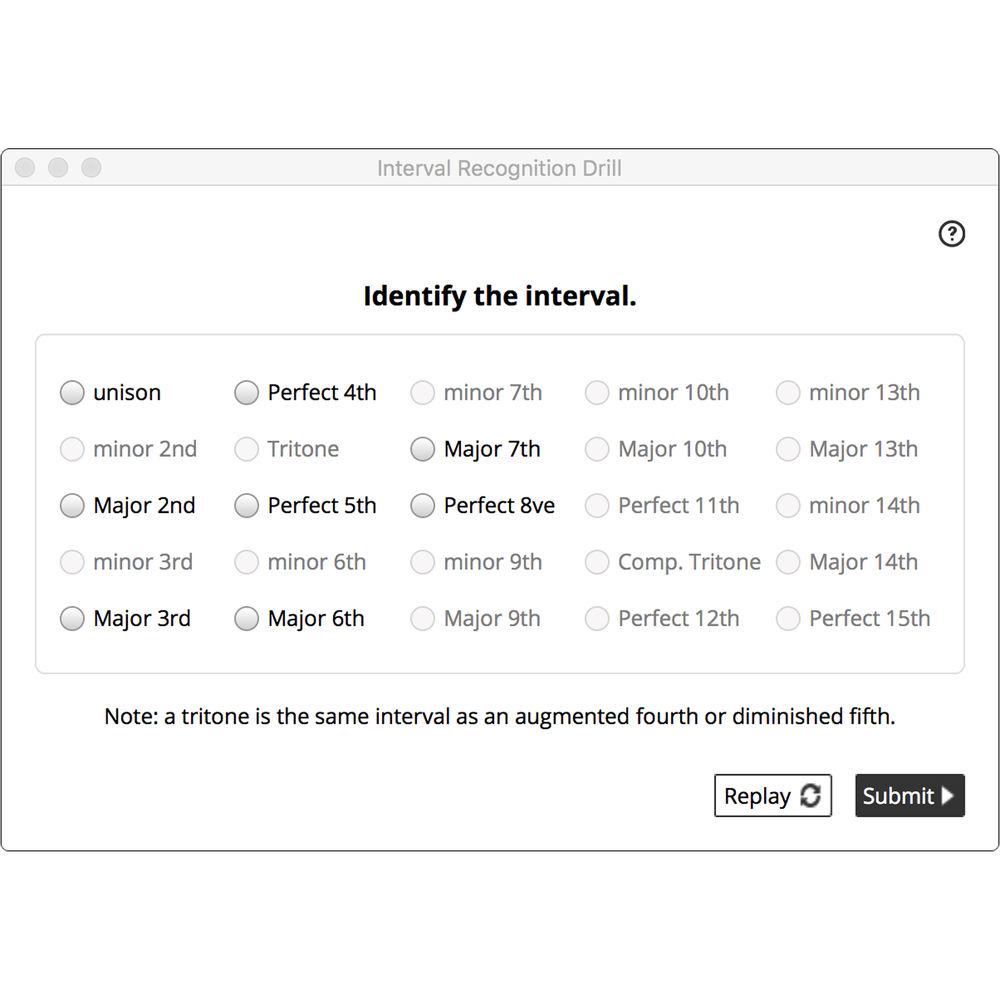
- Intervals: Identify an interval that is shown on a staff, or enter an interval on a staff
- Jazz Scales: Identify a scale shown on screen, fix incorrect notes in the scale, or enter the scale on a staff
- Scale Home Keys: Relate a mode to its parent major or minor scale
- Scales: Identify a scale shown on screen, fix incorrect notes in the scale, or enter the scale on a staff
- Solfege Signing: Identify the displayed Solfege hand signs
- Rhythm
-
- Beaming: A rhythm without beams is shown on screen, and you are asked to enter the correct beams
- Meter Recognition: Identify time signatures and their characteristics
- Drum Sticking: Tap back a rhythmic pattern with your left and right hands
- Drum Styles: Tap back the rhythmic pattern shown on screen – the pattern is one part of a rhythmic style that would commonly be played on a drum kit
- Rhythm Notation: Test your knowledge of note and rest values
- Rhythmic Subdivision: Test your knowledge of note and rest values, and the concept of subdivision
- Rhythm Tapping: Tap back the rhythmic pattern shown on screen – you may also tap the rhythm using an external MIDI device such as a keyboard or wind controller, if connected
- Polyrhythms: Practice tapping more complex rhythms, with one or two hands – many common patterns such as 3 against 2 are included
- Terms & Symbols
-
- Guitar Symbols: Identify the chord that is represented by the guitar symbol
- Ornaments: Identify ornaments such as trills, acciaccatura, appoggiatura, and more
- Concepts: Test your knowledge of common musical concepts, the fundamentals of written vocabulary – questions are multiple choice
- Jazz Chord Symbols: Identify chord symbols, and the structure of the chord that they represent
- Symbols: Test your knowledge of common symbols that are found on scores – questions are multiple choice
- Terms: Test your knowledge of common terms that are found on scores – questions are multiple choice
- Harmony
-
- Chords: Identify a chord that is shown on a staff, or enter a chord on a staff
- Key Signatures: Assess your knowledge of keys, in particular, the number and type of accidentals that keys have and the order in which they appear on a staff
- Cadences: Visually identify cadence types and the chords which form them
- Chord Progressions: In Chord Progressions, 4 part harmonic progressions are shown, and you are asked to identify the chords – you will need to identify the chord quality, as well as the position
- Chord / Scale Relationships: Relate chords and scales, in a jazz context
- Diatonic Chords: Identify a chord that is shown on a staff, or enter a chord on a staff – the chords will be based on the scale degrees of the Major and Harmonic Minor scales
- Jazz Chords: Identify a chord that is shown on a staff, or enter a chord on a staff
- Advanced Chord Progressions: In Advanced Chord Progressions, 4 part harmonic progressions containing chromatic and mixture chords are shown, and you are asked to identify the chords – you will need to identify the chord quality, as well as the position
- Modulation: Identify the type of modulation (e.g. Major Tonic – Relative Minor) or identify the final key of the example
- Instruments
-
- Clef Transposition: Transpose short melodies from one clef to another
- Range: Identify the range of various instruments
- Keys: Identify the keys of various instruments, and identify the most common key
- Knowledge: Test your general knowledge of instruments – questions have multiple choice answers
- Recognition: Instrument examples are played (WAV files) and you must identify the instrument from several choices
- Transposition: Transpose to and from concert pitch and the correct key for a particular instrument
- Student Scores
-
- Records what the students practiced, for how long they practiced, and their scores
- Instructor can pull up summary and detailed reports showing student progress, with no grading to be done
- Class Management
-
- Group your students and choose content that is most appropriate for each group
- Classes allow you to select available topics, assign appropriate syllabuses, set tests & worksheets, assign courses
- The professor feature offers a simple and effective tool for guiding students through practice levels, with thresholds set by the instructor
- Students can belong to multiple classes
- Tasks & Worksheets
-
- Create theory worksheets in minutes, with automatic grading and assessment
- Allows teachers to set a particular task for their students
- Testing feature contains questions from any syllabus, topic or level, and may include library questions
- Assessment & Reports
-
- Reporting system allows you to easily monitor progress and provide the best direction for your students
- Scores are kept separately for the following areas: Practice, tests, courses
- Student reports include: Student summary, student activity log, practice results (overall score), test score (overall), course results (overall)
- Reports have many intelligent filters to reduce the amount of information to review: Percentage (highlight weak or strong students), Class (only look at your students), Date (with handy presets), Test Attempts (best, last, combined scores)
- Any report can be exported as PDF or CSV
Table of Contents
|
Upload User Manual
Have you got an user manual for the Rising Software Musition 5 - Music Theory Software in electronic form? Please send it to us and help us expand our library of instruction manuals.
Thank you, too, on behalf of other users.
To upload the product manual, we first need to check and make sure you are not a robot. After that, your "Submit Link" or "Upload File" will appear.
Technical parametersRising Software MUCEM Specs | System Requirements | Windows
7, 8, 10
500 Mb hard disk space (initial without media downloads)
Internet connection required for initial activation
Internet connection required for ongoing media downloads & Cloud edition
Screen Resolution – Students: 1024 x 768 or 1152 x 720 (minimum)
Screen Resolution – Instructors: 1280 x 768 (minimum)
Mac
OS X 10.9 and later
500 Mb hard disk space (initial without media downloads)
Internet connection required for initial activation
Internet connection required for ongoing media downloads & Cloud edition
Screen Resolution – Students: 1152 x 720 (minimum)
Screen Resolution – Instructors: 1280 x 800 (minimum) |
Rating80% users recommend this product to others. And what about you?

This product has already been rated by 92 owners. Add your rating and experience with the product.
Discussion
 Ask our technicians if you have a problem with your settings,
or if anything is unclear in the user manual you have downloaded.
You can make use of our moderated discussion.
The discussion is public and helps other users of our website who may be encountering similar problems.
Ask our technicians if you have a problem with your settings,
or if anything is unclear in the user manual you have downloaded.
You can make use of our moderated discussion.
The discussion is public and helps other users of our website who may be encountering similar problems.
The discussion is empty - enter the first post
Post a new topic / query / comment:
|
|